Christmas Decorations That Made a ’60s Living Room Feel Festive
A 1960s living room could start looking like Christmas without anyone putting an ornament on the tree.
From stenciled windows to the candy dish, these are the decorations people brought out when the holidays came.
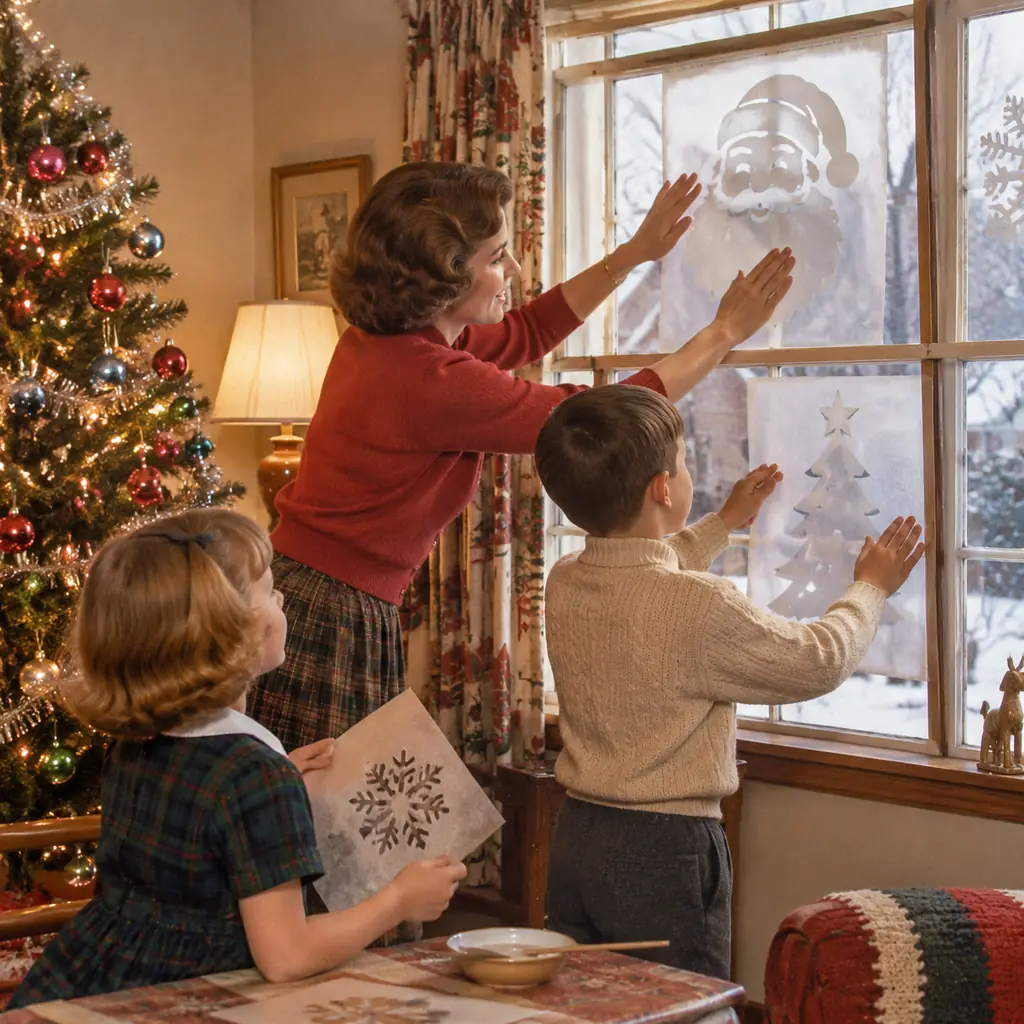
1. Glass Wax stencils on the windows
Glass Wax was sold as a cleaner, but a stencil turned an application into a frosty picture. A snowflake or a star could sit in the corner of the window after the rest of the glass had been polished.
From outside, the designs made the holidays visible before you reached the front door.
2. The revolving color wheel
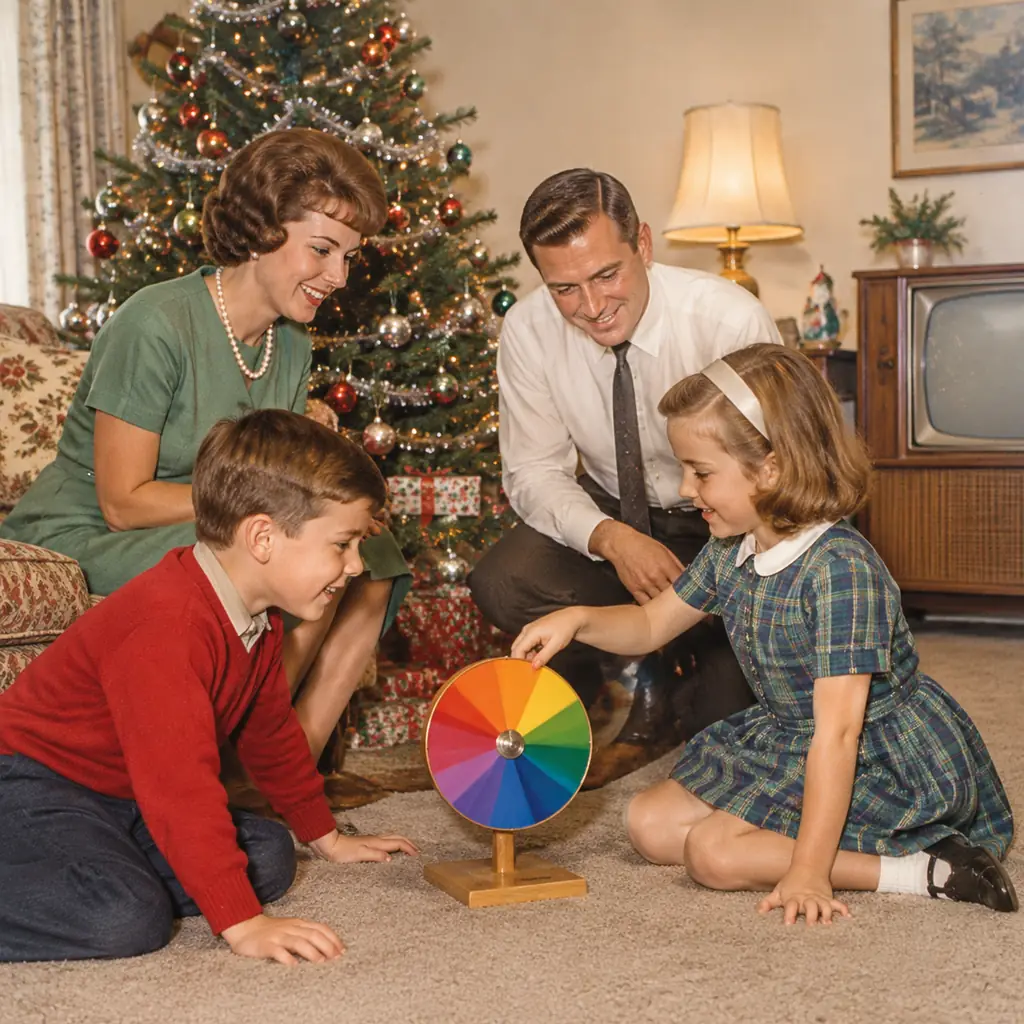
A motor turned the colored sections past a lamp so the light changed as it fell on an aluminum tree. The same silver branches could look blue when you walked in and red by the time you sat down.
A surviving color wheel at The Henry Ford belonged to a family in Selma, Alabama.
3. Gurley holiday candles
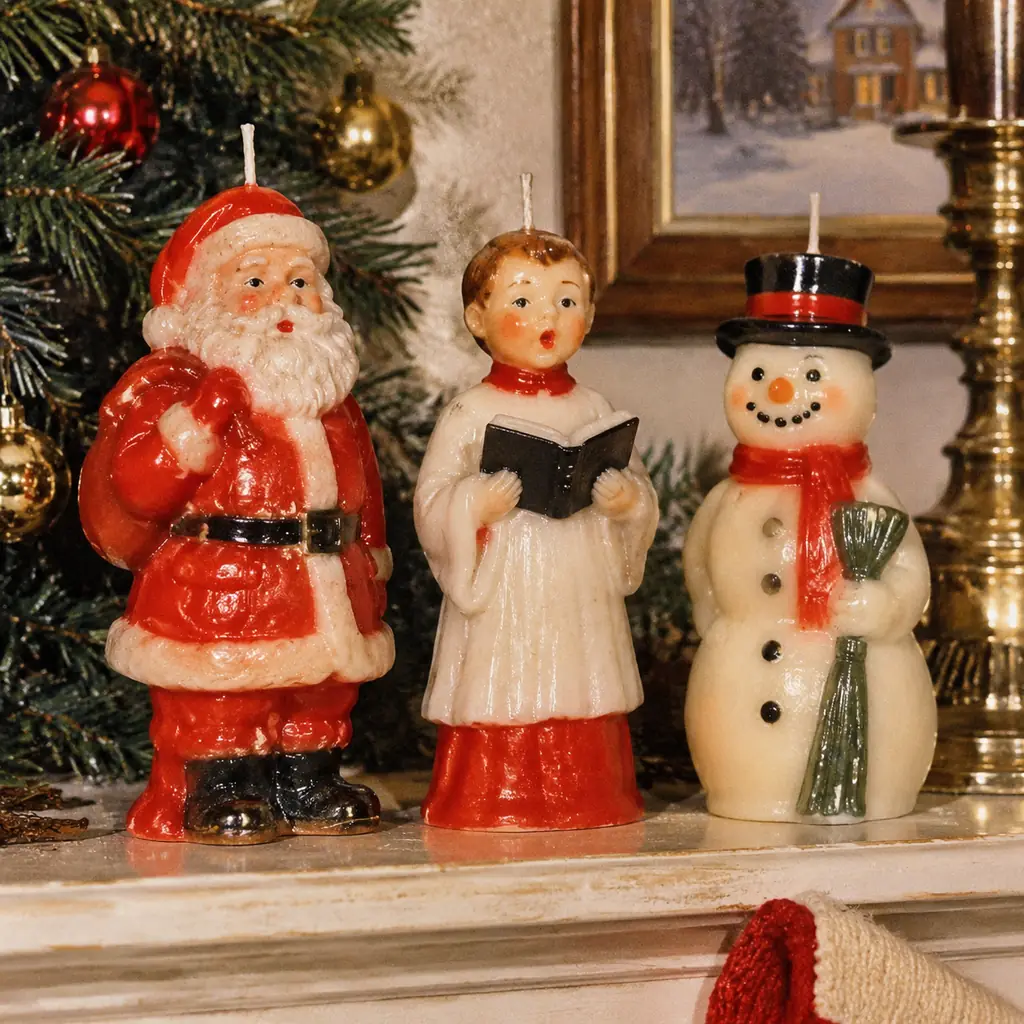
Gurley made wax figures in familiar holiday shapes. The candle could sit beside the cards for the length of the season, with its wick still white at the end.
Some people liked the little figures enough to store them away intact. You could arrange a group without deciding whether their real purpose was light or decoration.
4. Swedish angel chimes
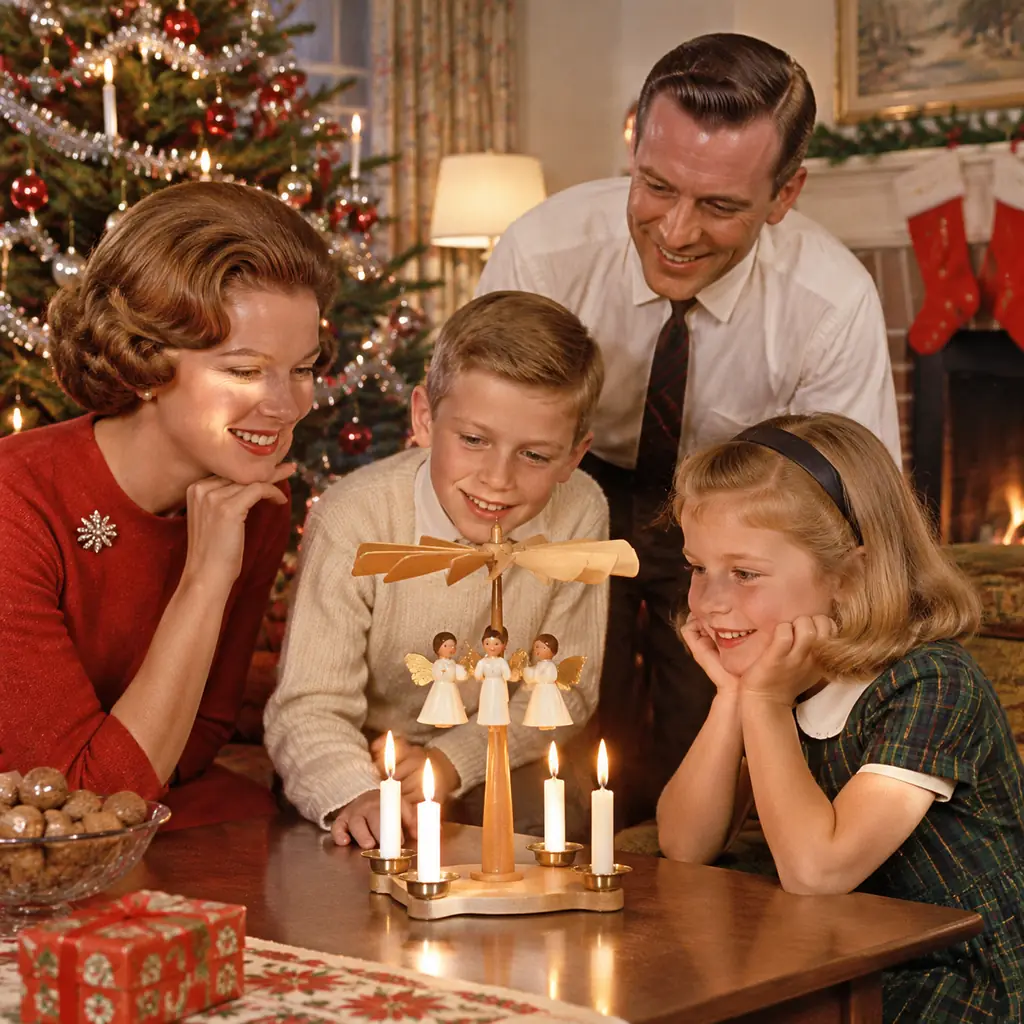
Heat from little candles moved air past the blades at the top. When the mechanism turned, pendants touched the bells and made a delicate sound.
People put angel chimes where they could both see and hear them. They were a small decoration with movement in a room full of things that stayed still.
5. A poinsettia beside the sofa
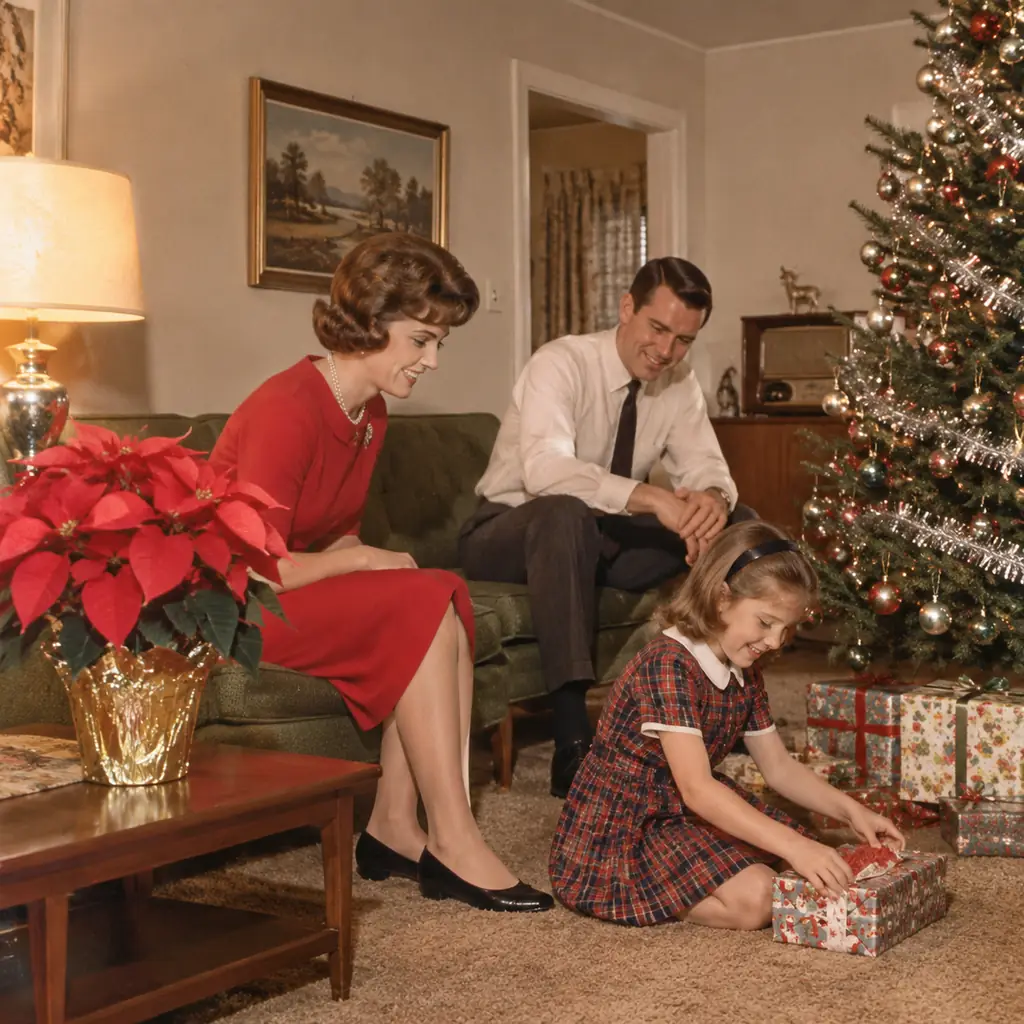
A poinsettia brought color to the side of a chair or the edge of a window. The colored leaves around its small flowers gave the plant a broad, bright shape.
A foil wrapper could make the pot feel like a present. It was one of the easiest ways to decorate a part of the room that was far from the tree.
6. A ceramic Christmas tree
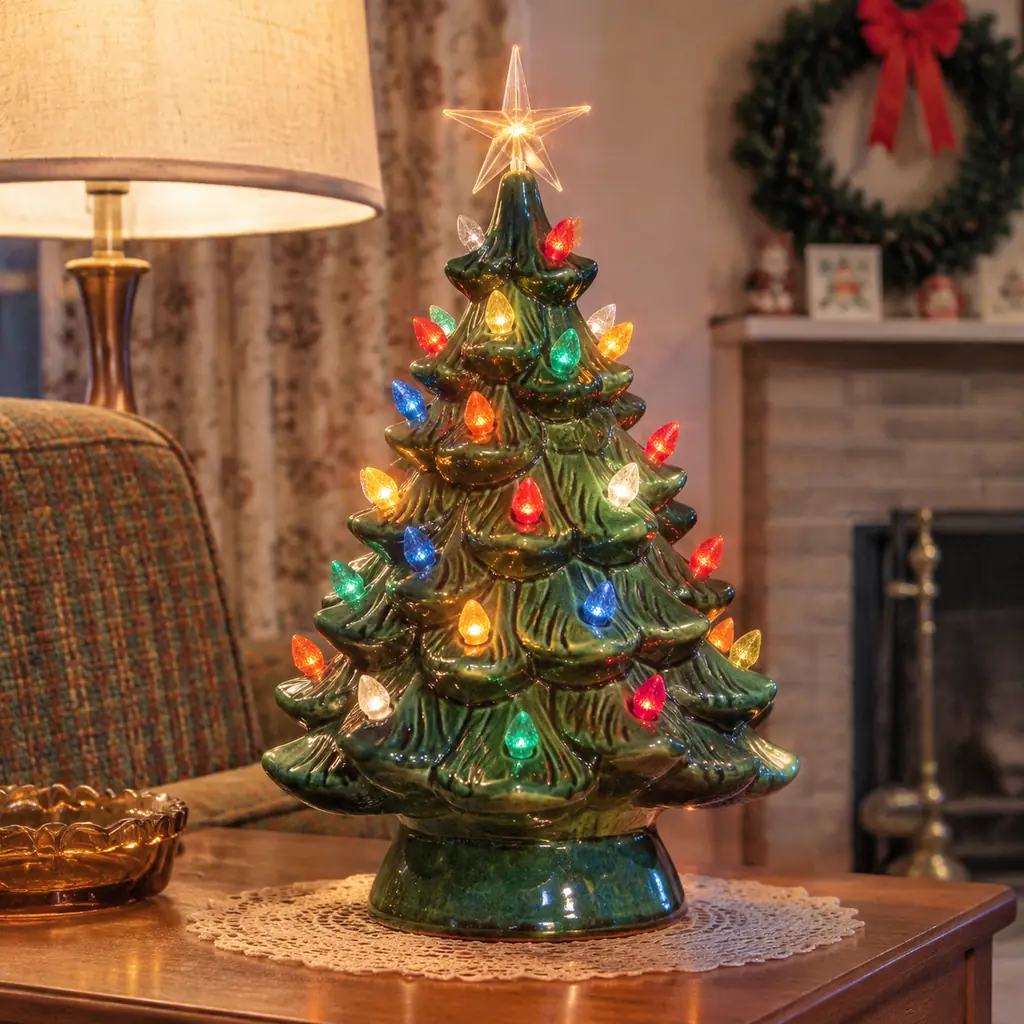
Small colored pieces came through holes in glazed ceramic branches. The light often came from a source inside, so the decoration could glow without wires draped over each tier.
Some families remember trees made in ceramics classes. Others kept a store-bought one in the holiday box and took care not to lose any of the little pieces.
7. Holt-Howard Santas and angels
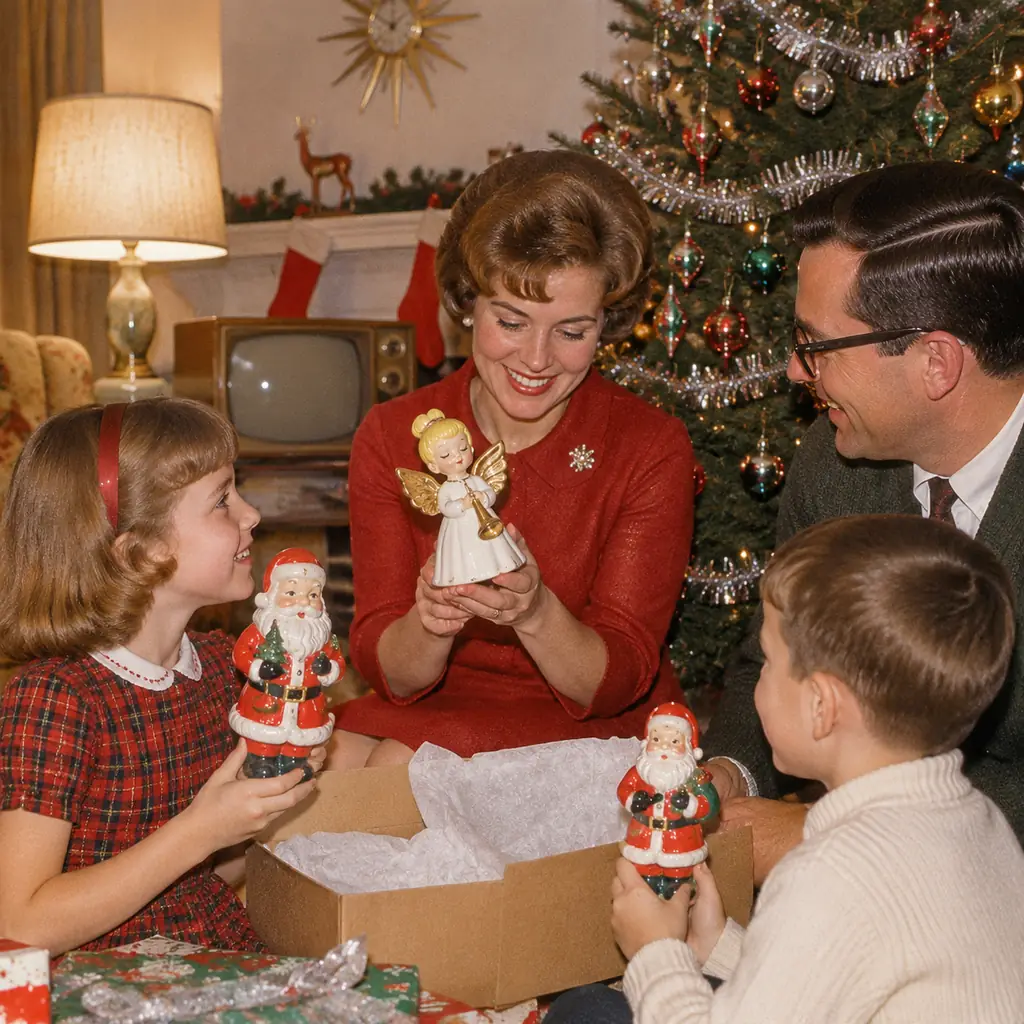
Holt-Howard pieces gave Santa and other figures a playful face and a pose that read from the far side of a room. Their ceramics could stand on a shelf, support a candle, or form part of a word display.
The appeal was a particular cartoon personality. One piece could make a plain end table look like someone had meant to decorate it.
8. Lefton and Napco ceramic angels
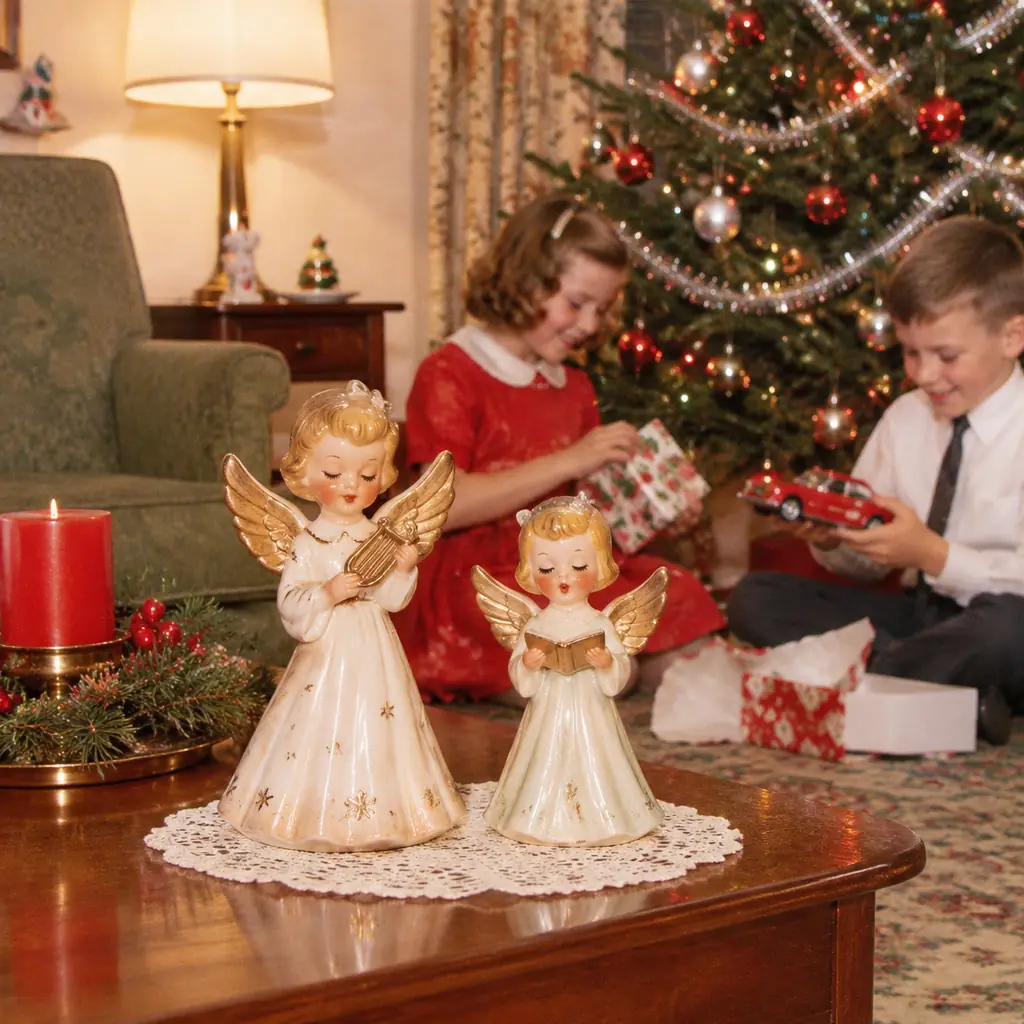
Lefton and Napco both sold small ceramic figures, including angels associated with Christmas. A row of them could share shelf space with a card stand or candle.
Collectors can look for marks on the underside today. In the living room the main decision was where the delicate wings could survive visitors.
9. Pixie elves with their knees pulled up
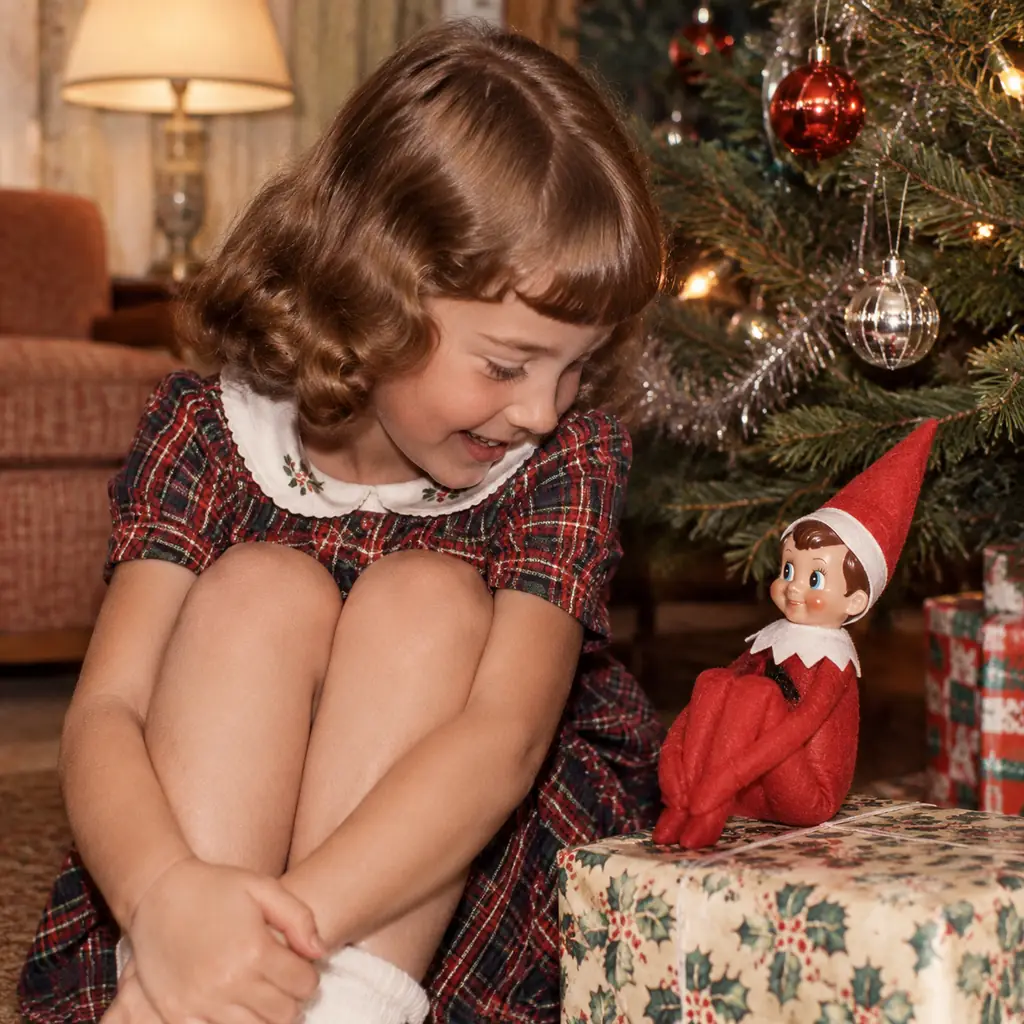
A small elf with folded legs could perch just about anywhere. Its arms wrapped around its knees, and a branch, shelf, or edge of a curtain gave it a place to sit.
The pose made the toy seem ready to peer down into the room. A child could move it to a different spot with very little rearranging.
10. Honeycomb paper bells
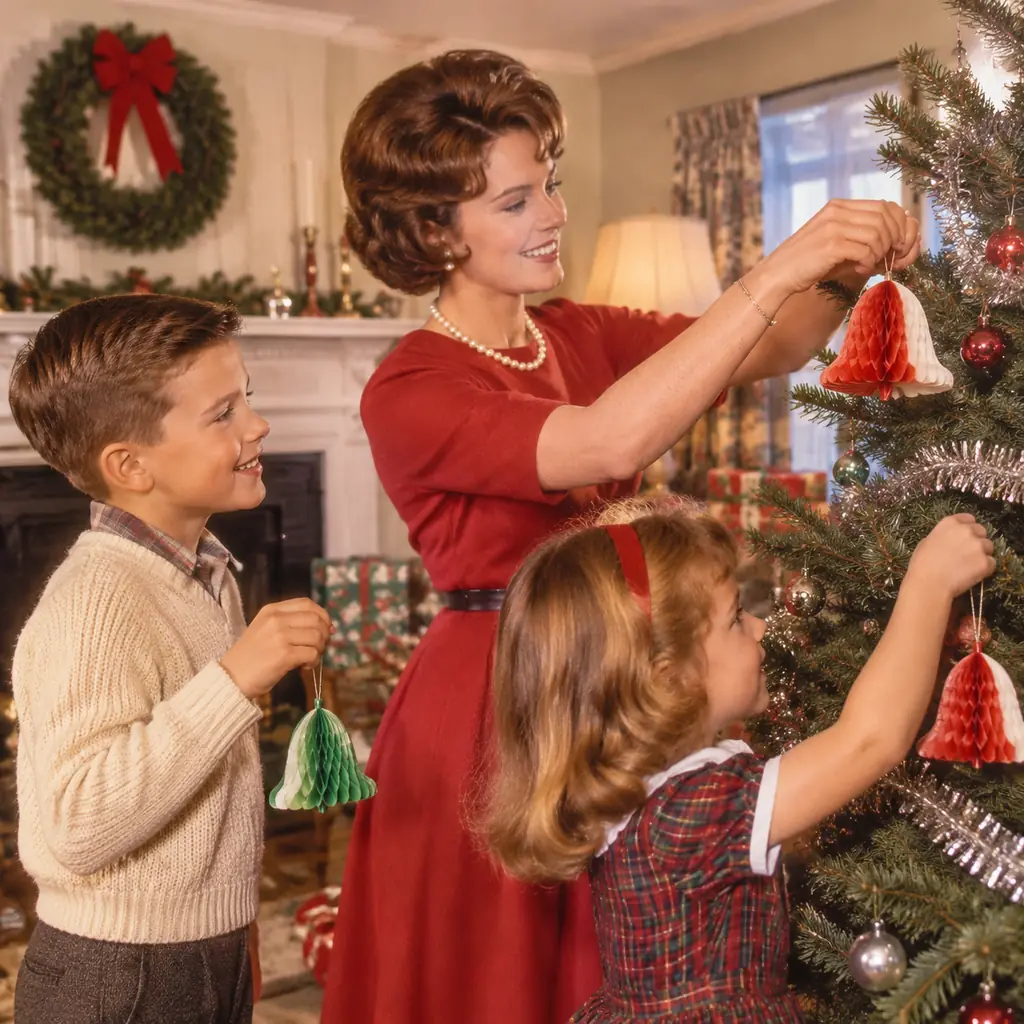
Honeycomb paper expanded into a bell or ball shape when its flat sides were opened. Folded up, it took practically no room in the box at the end of the holiday.
The light weight let people hang a bell from a doorway or curtain rod. A draft could make the whole shape turn slowly.
11. An Advent calendar
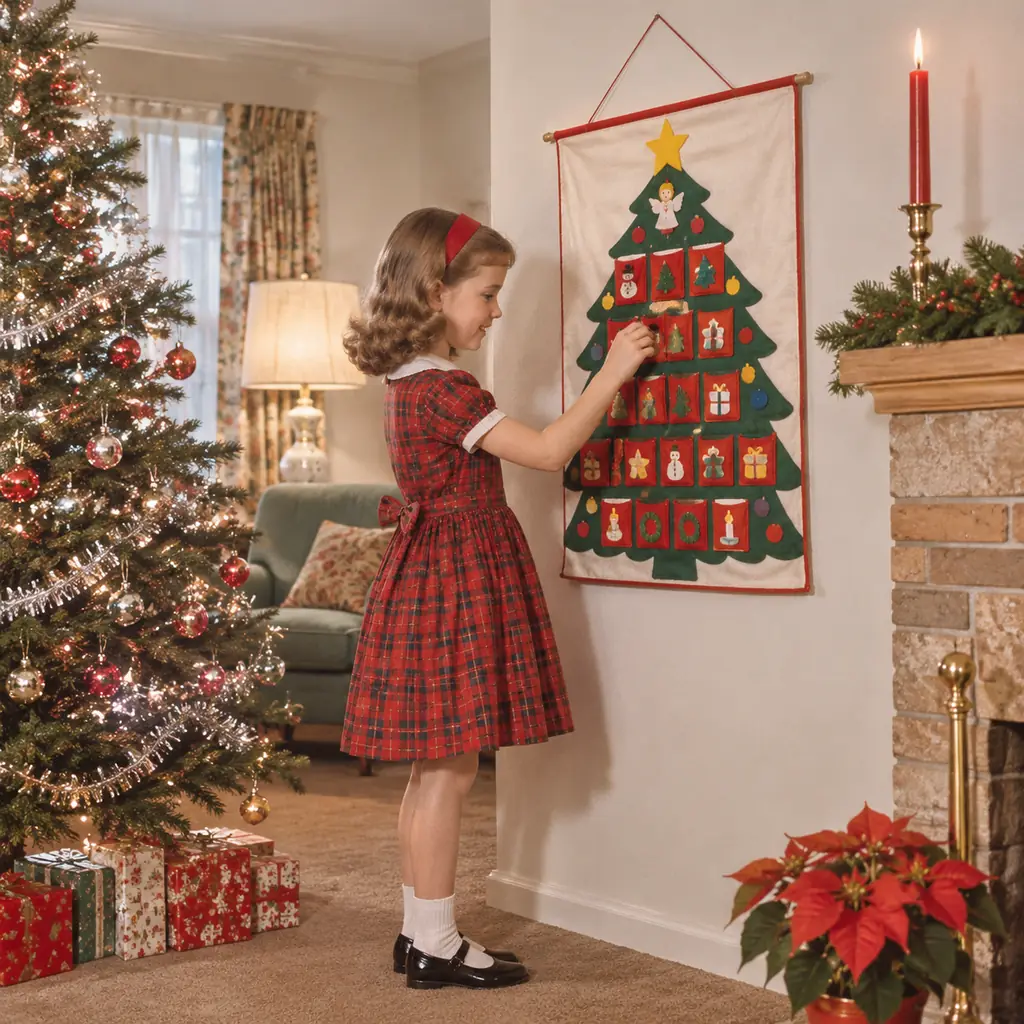
Open a paper door and you might find a printed picture rather than a piece of candy. The calendar gave a child a small thing to do before the day had properly started.
The doors looked alike from across the room. Up close, marks in the paper showed where impatient fingers had been picking at tomorrow.
12. Christmas cards displayed on the wall
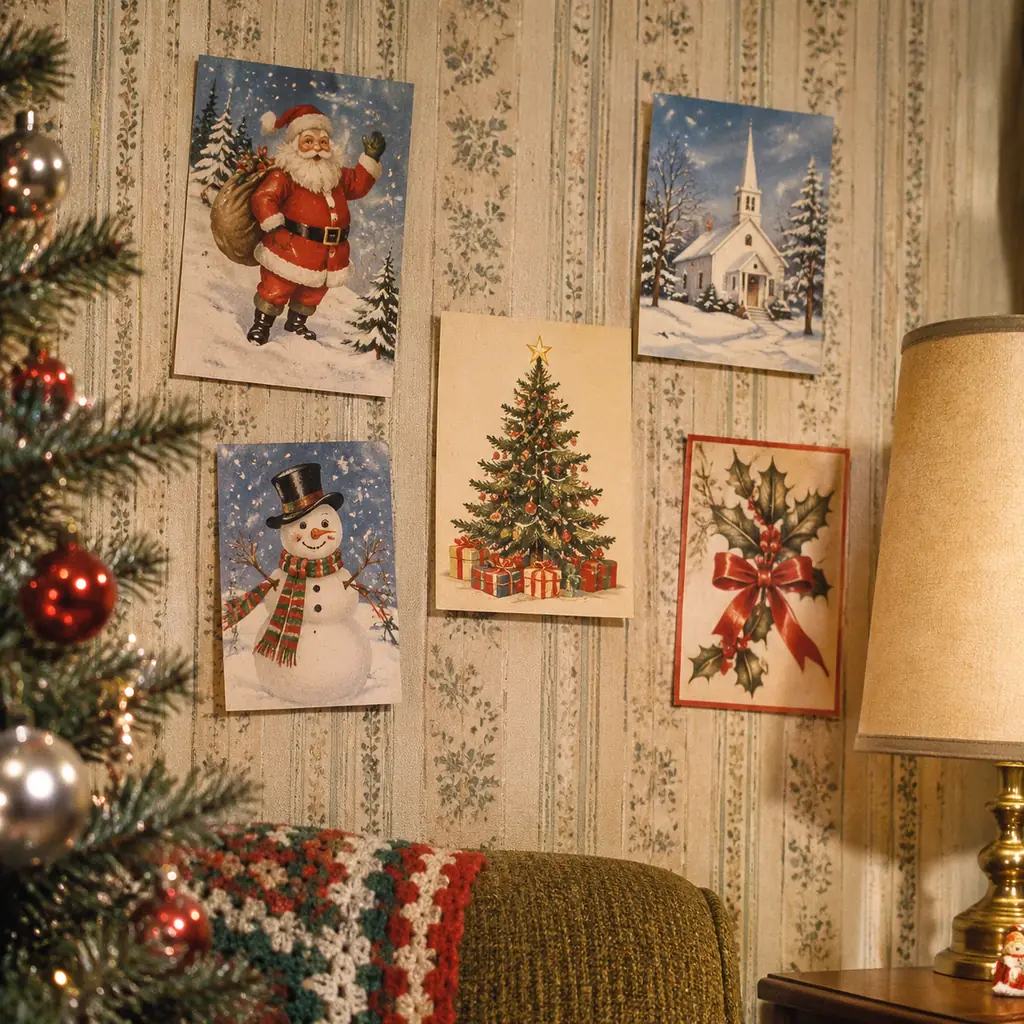
When cards came in the mail, a shelf could fill before the holiday had even begun. Tape or a hanging string put a second row along the wall or doorframe.
The display mixed formal greetings with humorous pictures and family news. A return address sometimes meant more than the design printed on the card.
13. Glittered Japanese cardboard houses
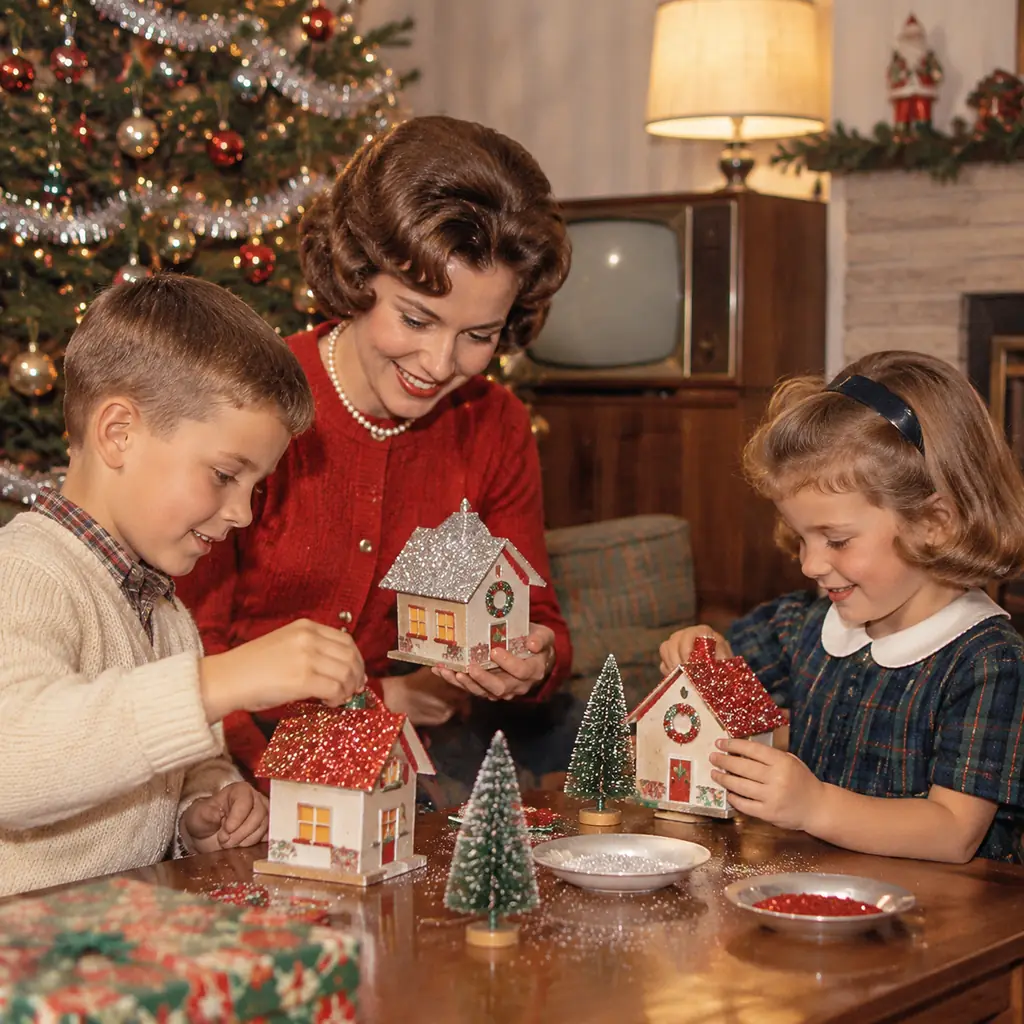
Cardboard houses had an improbable amount of sparkle for something that weighed so little. A row of them made a small village on a mantel or under a tree.
Many surviving pieces were made in Japan. Their windows and doors suggested a whole street even when the room had space for only two or three houses.
14. Bottle-brush trees
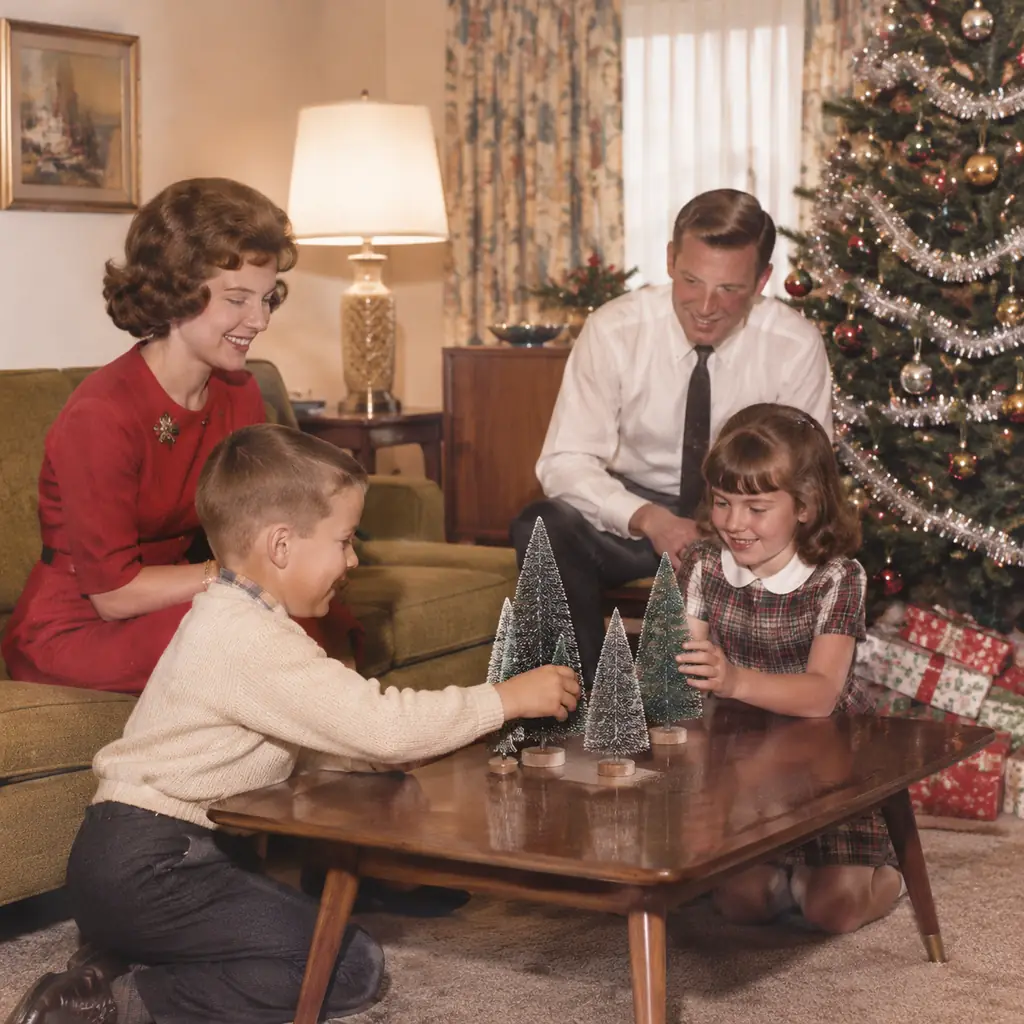
Stiff bristles made a quick little evergreen that could hold the look of snow. Different sizes gave a village a bit of depth without requiring more houses.
A family could also put a single brush tree beside a candle. The shape was recognizable long before you got close enough to see how it was made.
15. A plastic village under the tree
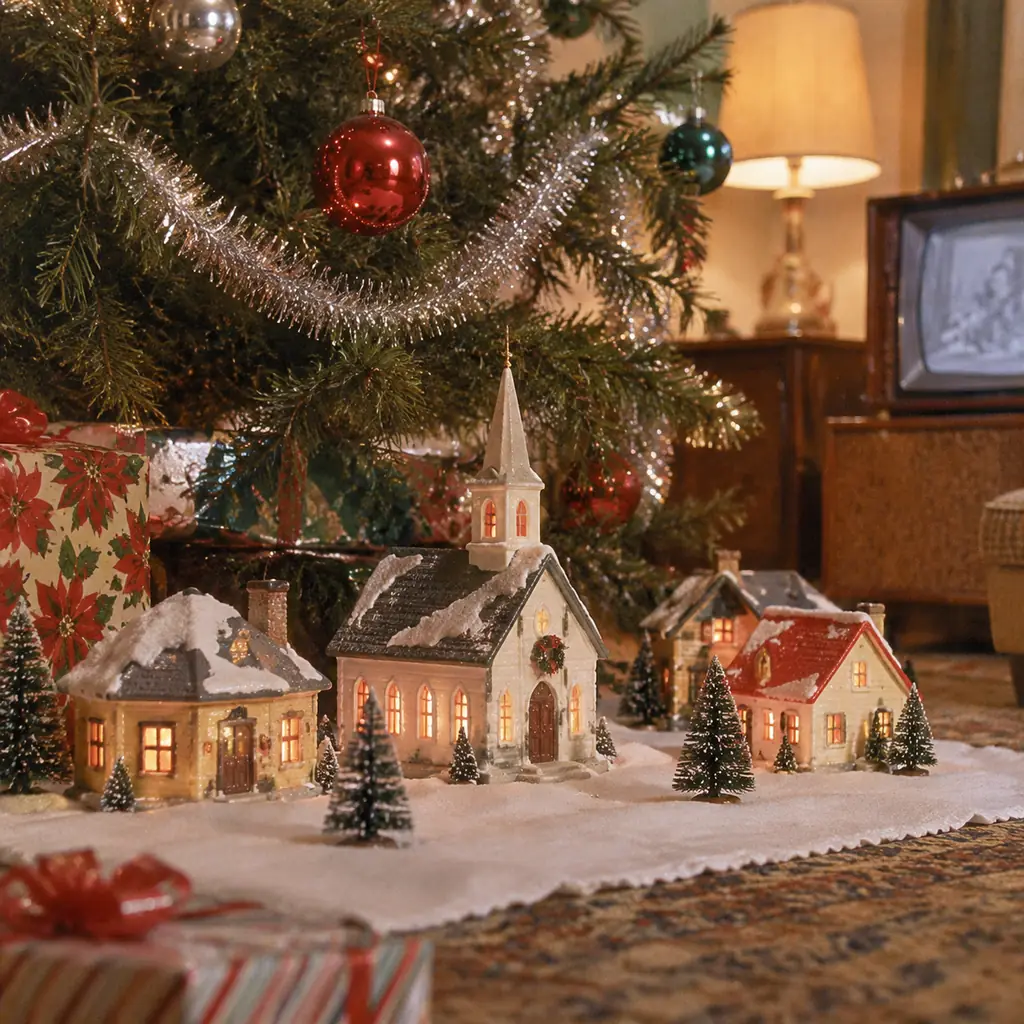
Fences and tiny buildings from plastic model-village sets could move beneath a Christmas tree during the holidays. A path through the arrangement made extra room for a locomotive if the family set out a train.
Even without the train, there was something to slide, straighten, or change after somebody brushed past.
16. The televised Yule Log
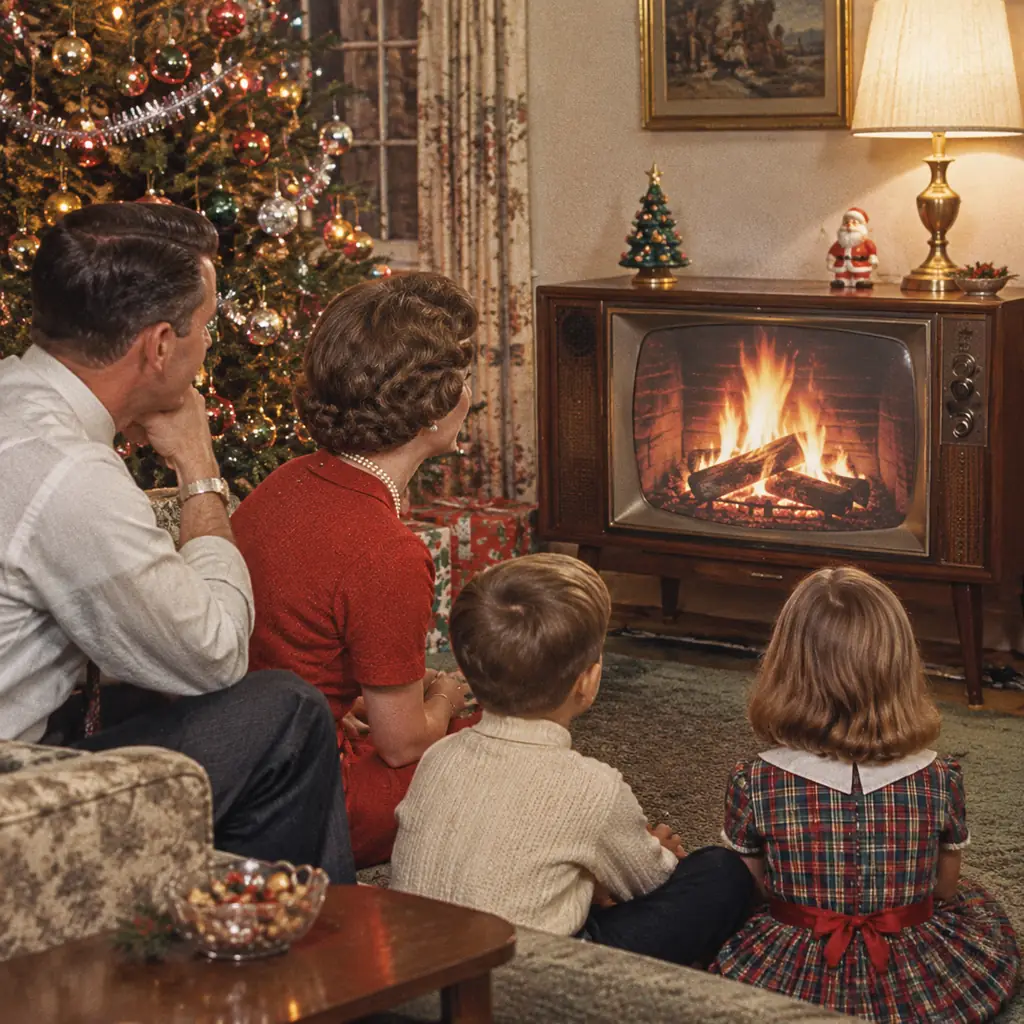
A television could borrow the look of a fireplace on Christmas Eve. The WPIX program that began in 1966 turned the movement of a log and holiday music into background for the rest of the room.
You could keep talking and still look up whenever the flame shifted.
17. Nutcrackers on display
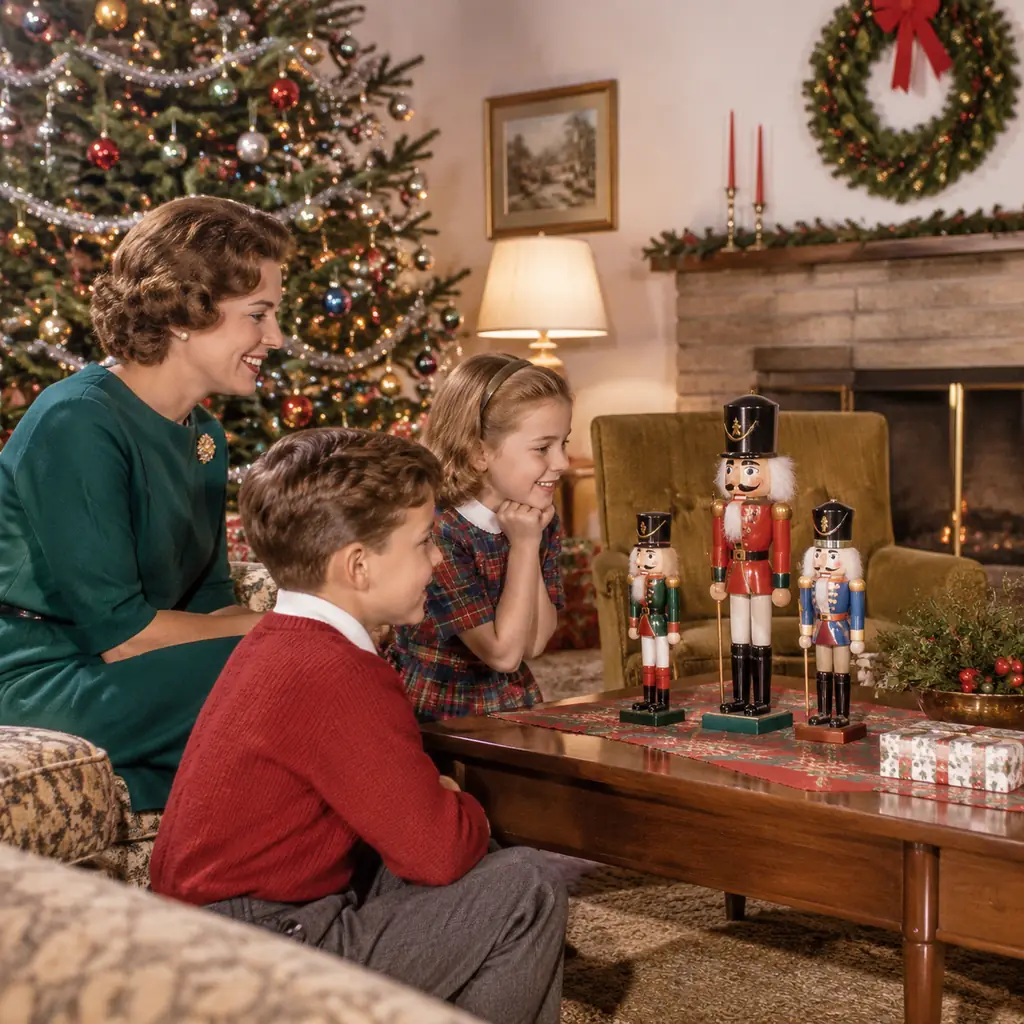
A nutcracker took up more space than an ordinary figurine. The wide face, painted coat, and hinged mouth made it recognizable from a hall or doorway.
Nutcrackers became associated with the holiday through ornament traditions and performances of the ballet. In much of the living-room display, the figure’s job was mostly to stand there and look splendid.
18. Hard-plastic Santa candy holders
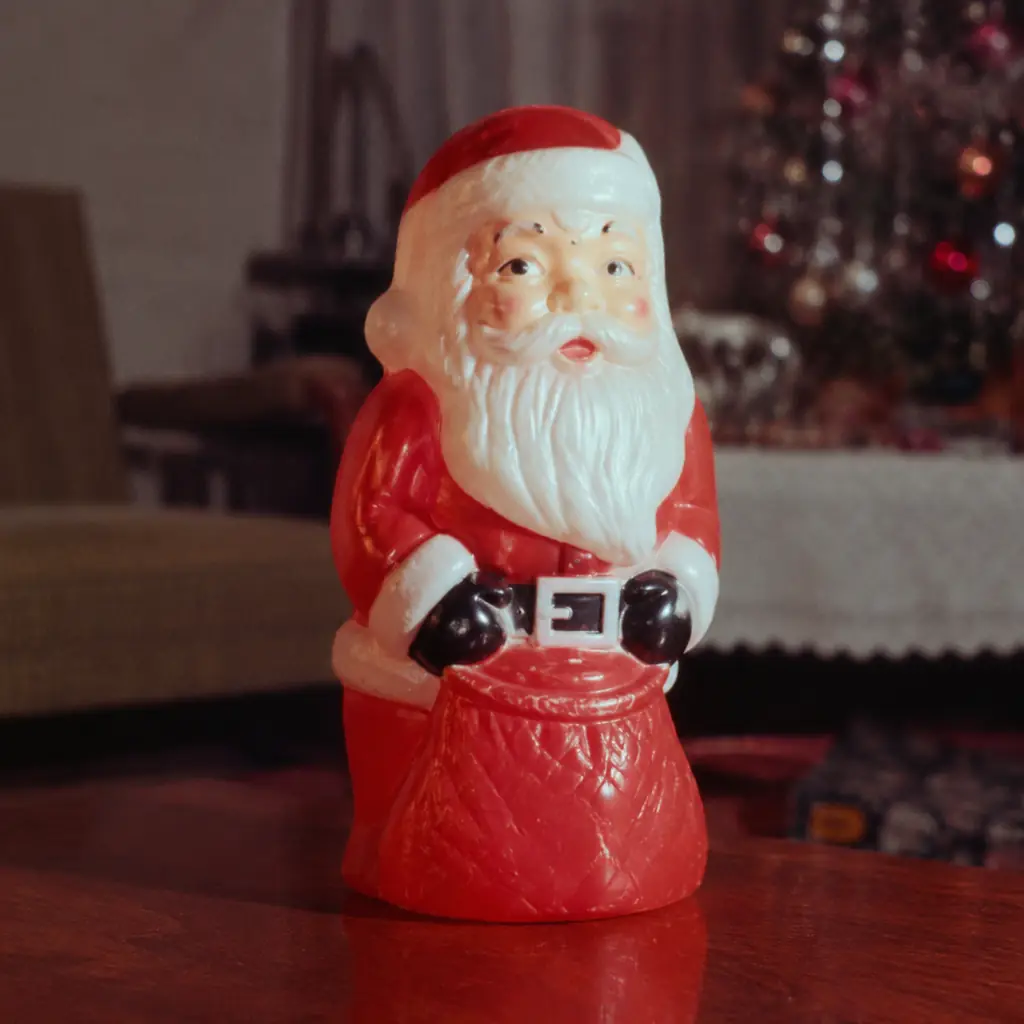
A hard-plastic Santa could have a cavity inside for candy. The decoration then served the same purpose as a gift box, with the extra pleasure of being able to stand it nearby after opening it.
A clean surviving container can still hold small wrapped pieces. Its holiday shape did most of the work of the wrapping.
19. Light-up NOMA decorations
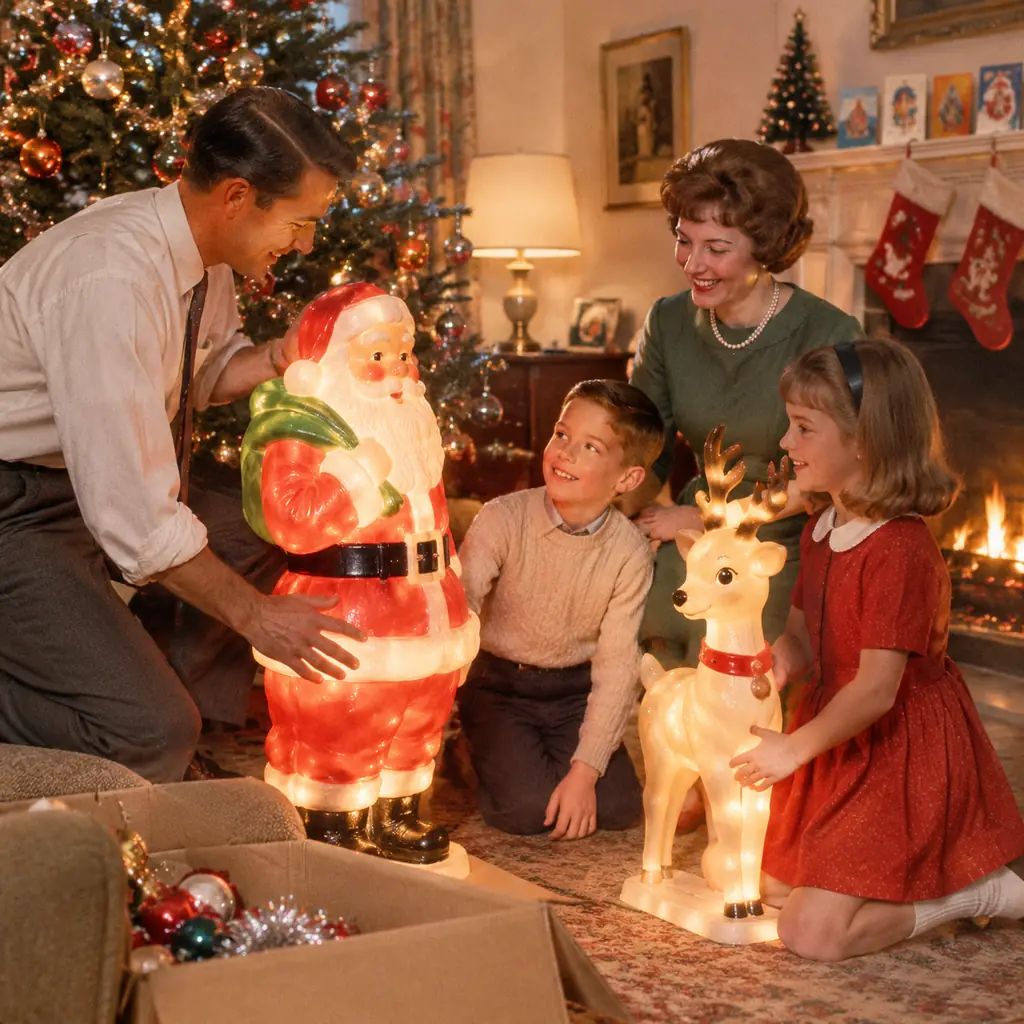
NOMA sold a range of electrical Christmas decorations, including lighted figures. Their softly lit shapes could pull attention to a window or a shelf even without a larger display around them.
The effect depended on seeing the figure from several feet away. Old electrical decorations need an inspection before anybody connects them again.
20. Felt stockings with sequins
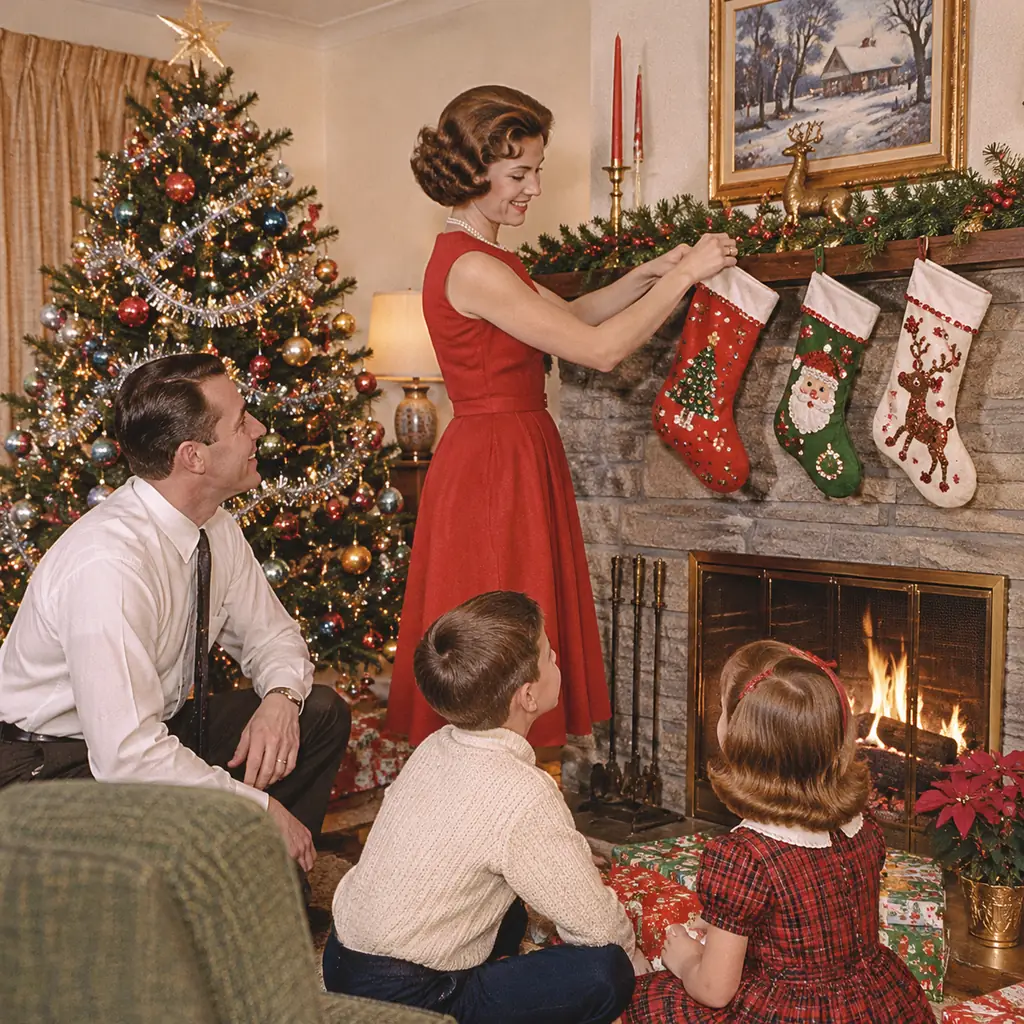
Felt stockings offered a flat surface for stitched figures, names, and sequins. The shiny pieces moved with the stocking when it was picked up, especially near a lamp or tree.
Some came from kits, and some came from scraps and a pattern. The effect could be personal even when the overall design matched one from a store.
21. A dish of ribbon candy
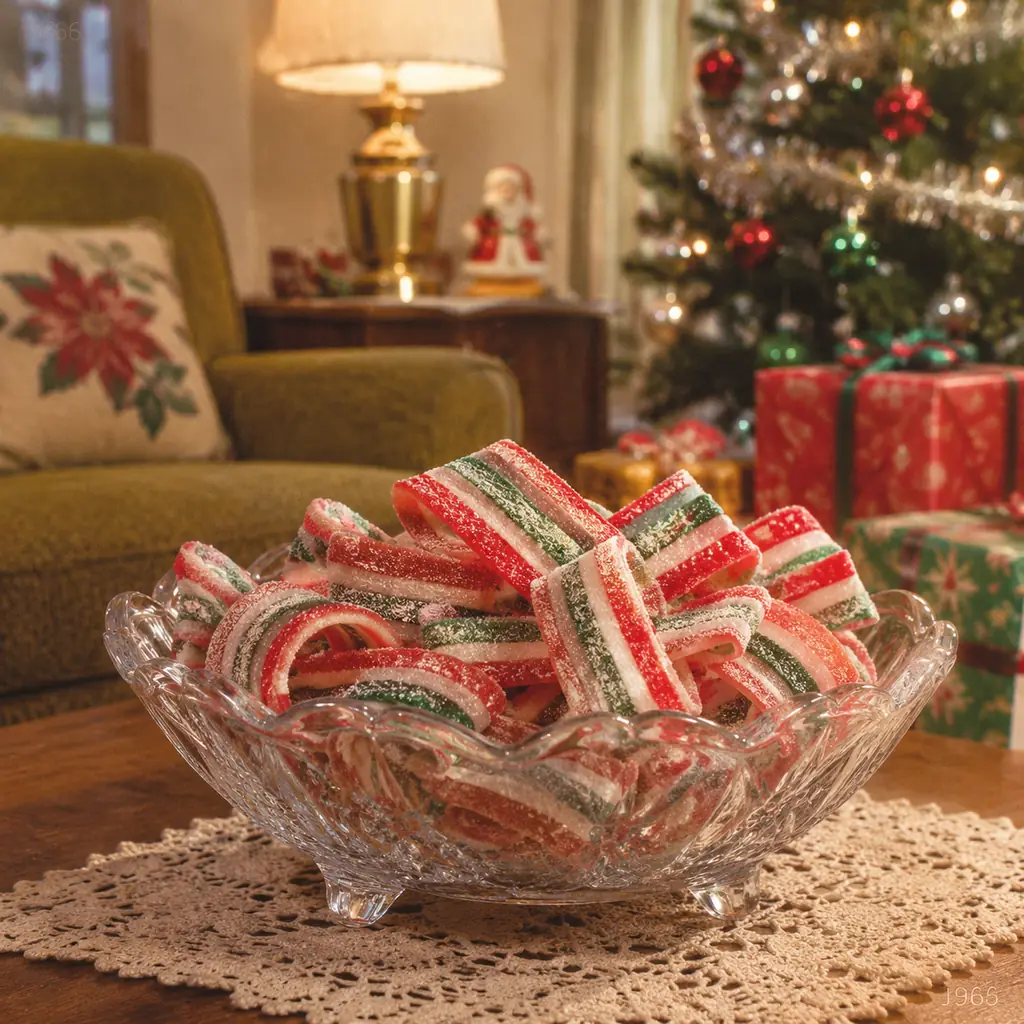
Ribbon candy made a glass dish look dressed up before anybody reached for a piece. The loops raised the sugar into a small arrangement rather than hiding it under a lid.
Which pieces went first depended on who was visiting. The longest loops often arrived at the hand already split along a bend.
22. Snow globes on a shelf
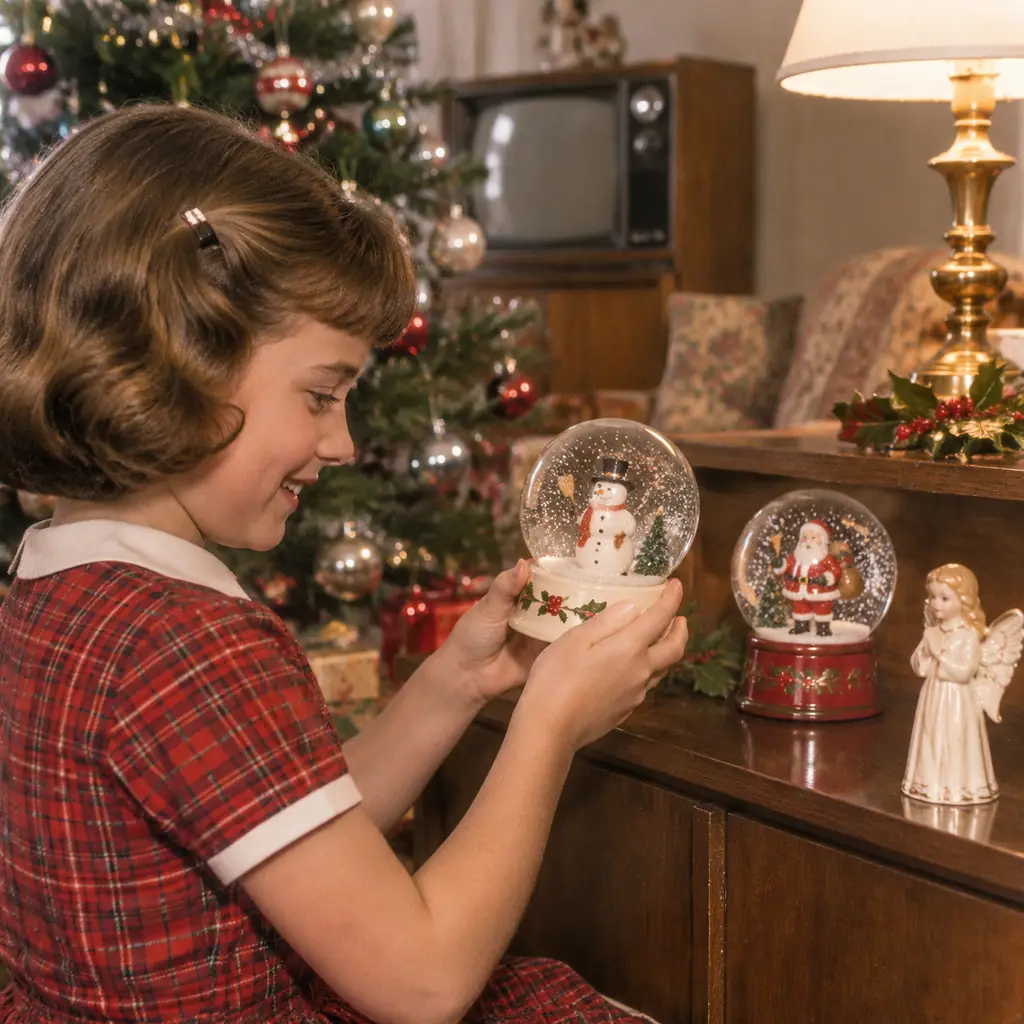
A shake sent a brief snowfall across a scene small enough to sit on an end table. After a while, the pieces settled back on the bottom and the room inside went quiet again.
People bought holiday globes or set out one they already had. Their season lasted as long as the little scene was left within reach.
23. Christmas Ideals on the coffee table
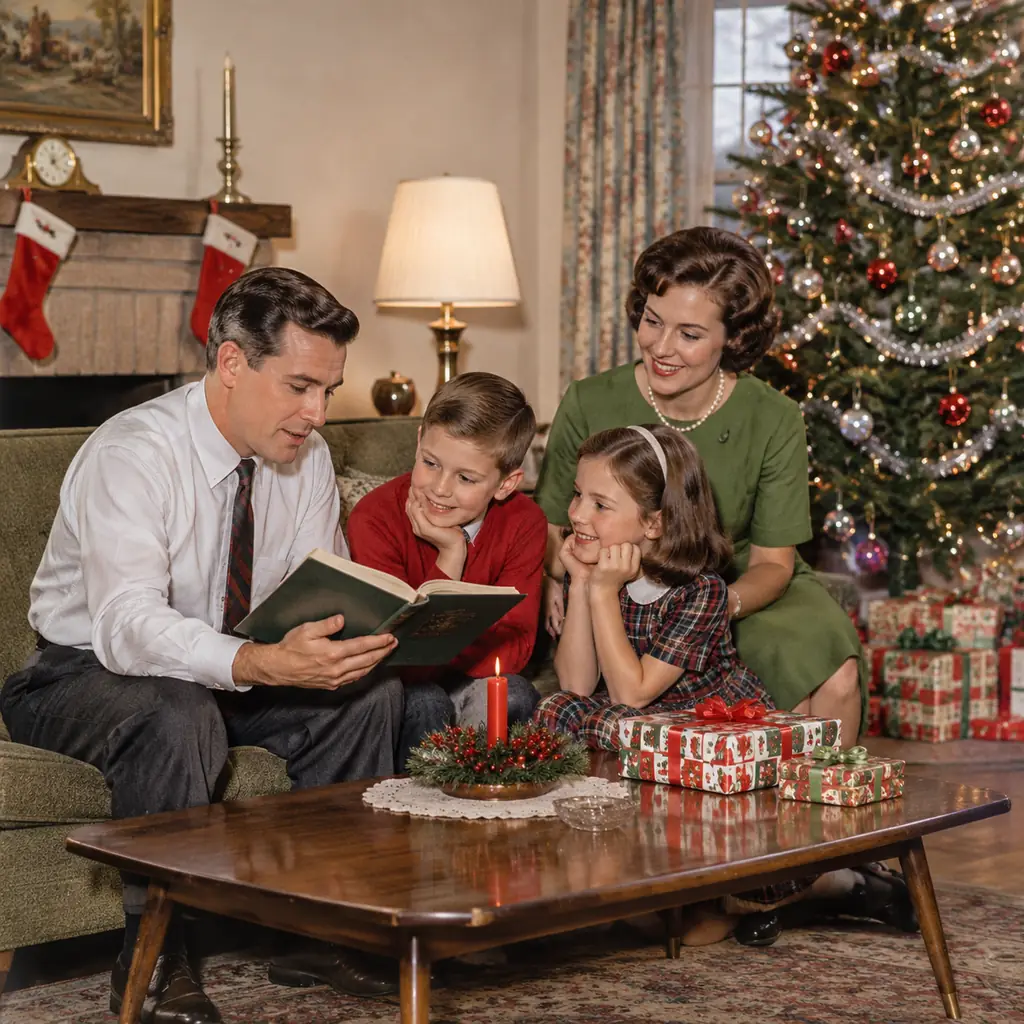
An issue of Christmas Ideals could lie open on a piece of winter art or a holiday poem. The soft pages gave guests something to pick up even when the rest of the room was full.
The publication belonged to a style of decorating that included what you placed on a coffee table along with what you hung on a wall.
24. Blue-and-white Danish Christmas plates
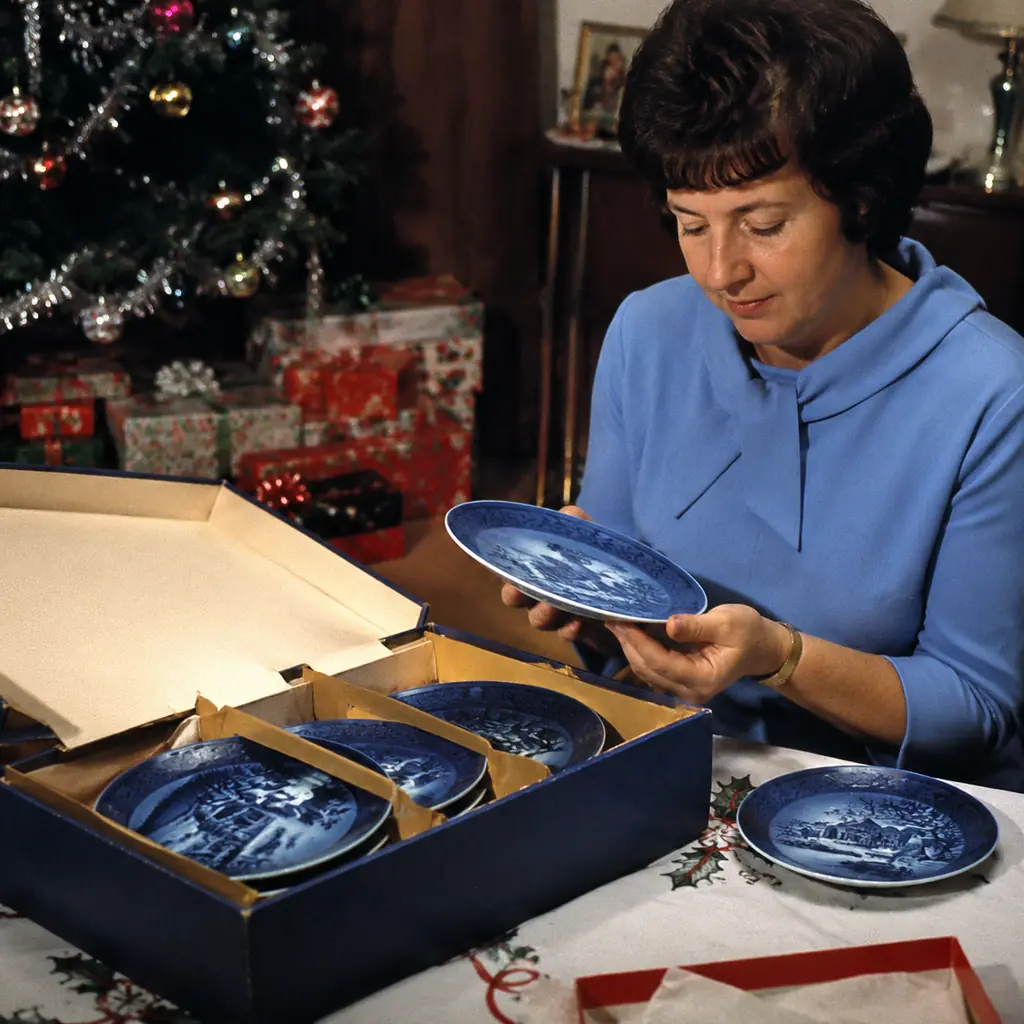
A wall or shelf gained a bit of color from a blue-and-white Christmas plate. Danish makers such as Royal Copenhagen produced plates identified with particular years.
Putting several together made the display a small family record. A plate could stand for the year someone found it as much as the scene it showed.
25. A centerpiece from a magazine idea
A magazine photograph gave a family ideas for a low bowl, candles, greens, or a neat arrangement of fruit. The display landed wherever people could see it from more than one chair.
At home, the materials might come from a garden or the last holiday box. The magazine was a starting point for making them work together.
26. A metallic foil wreath
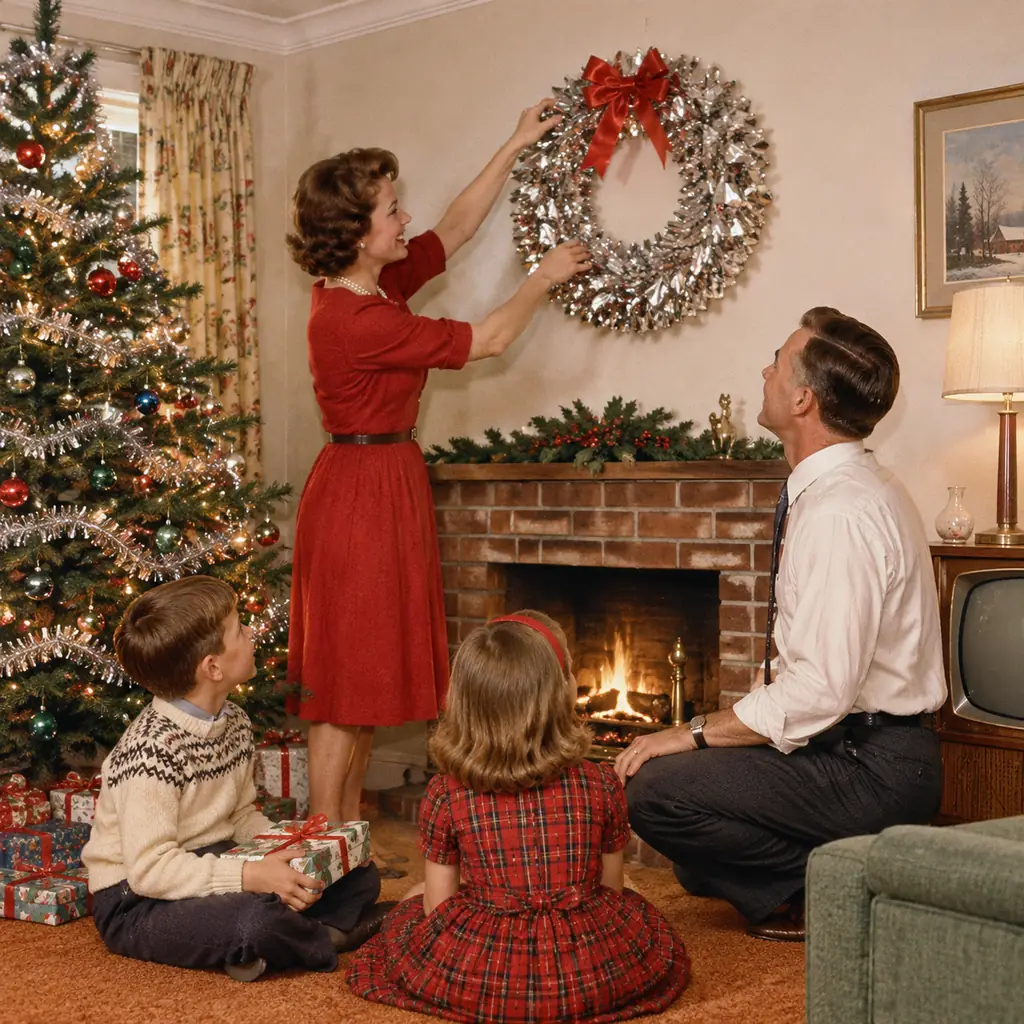
A foil wreath reflected the light along its edge and did not have needles to drop. On the inside of a door it could give a small apartment a bright spot without taking up useful floor space.
The metal look fit easily beside the silver and colored surfaces already popular in mid-century decorations.
27. A felt holiday table runner
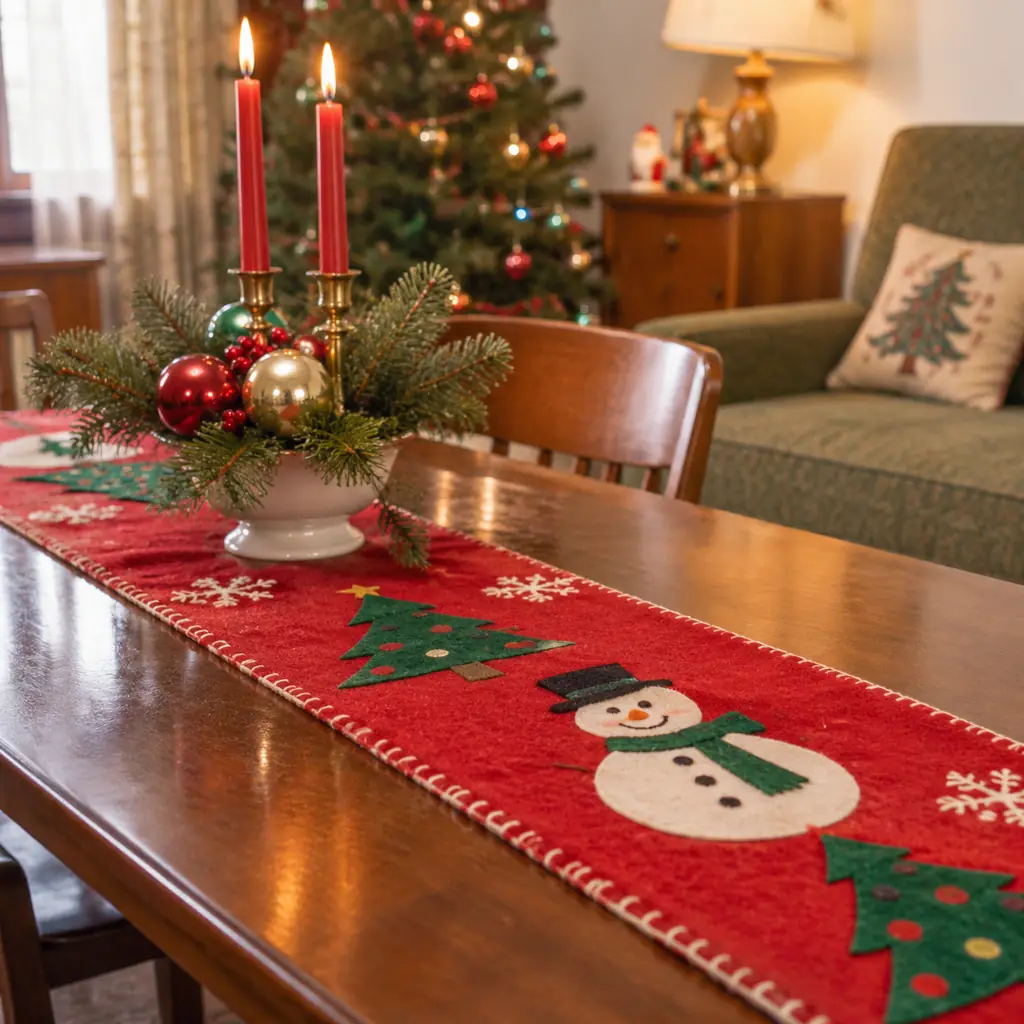
A felt runner gave the mantel or side table a holiday color for the length of the season. It could be cut or sewn with familiar shapes and stored flat with the stockings.
It was an easy way to make an existing piece of furniture the place guests expected to find the cards or candy.