What It Took to Cook Christmas Dinner Two Centuries Ago
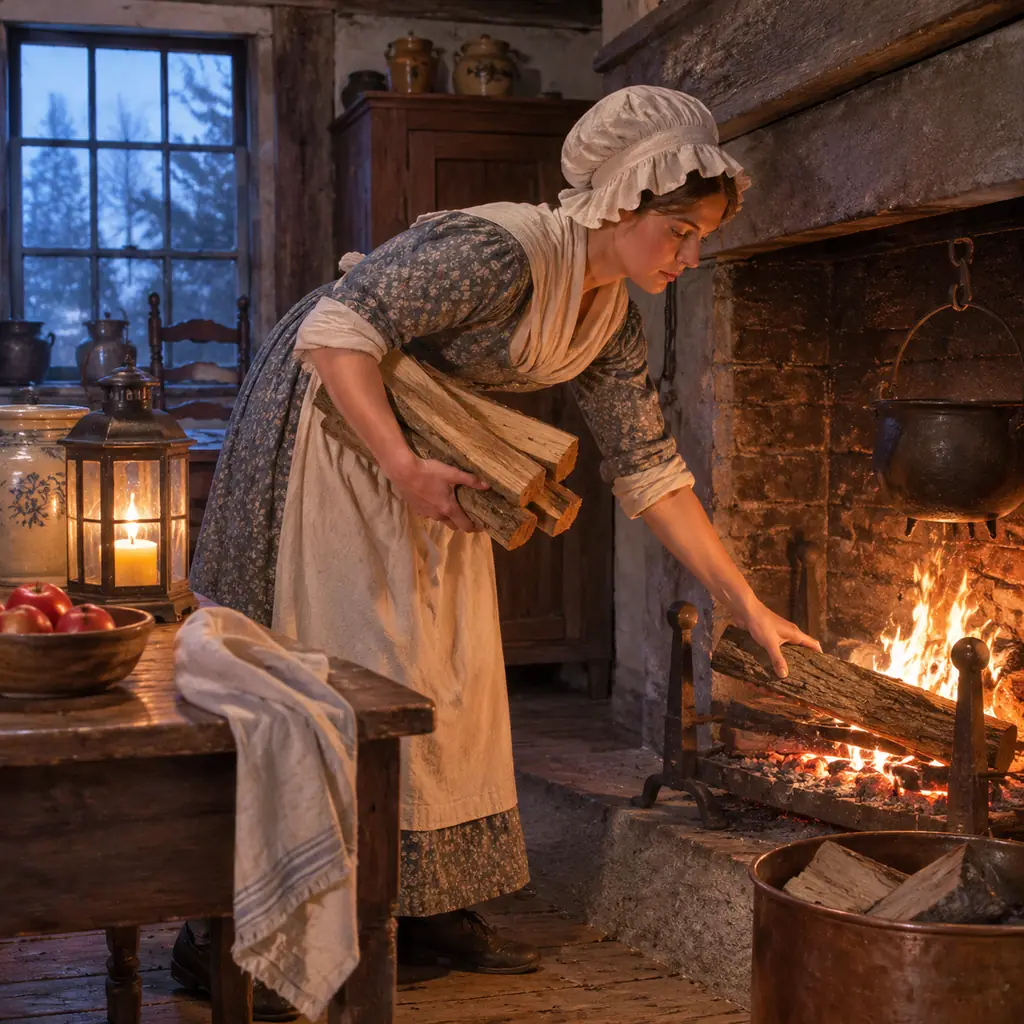
By the time anyone sat down to Christmas dinner in the 1820s, someone had already hauled water, tended a fire, and spent hours getting the main dish ready.
Follow the work from the first embers to the meal that came out of yesterday’s leftovers.
1. Getting up before daylight to cook
The daylight of late December was short. A cook with pudding, a roast, and several smaller dishes to manage had a reason to begin while the kitchen was still dark.
Household schedules varied. The pressure came from the number of jobs that depended on a fire or a pot of water being ready first.
2. Starting the hearth fires
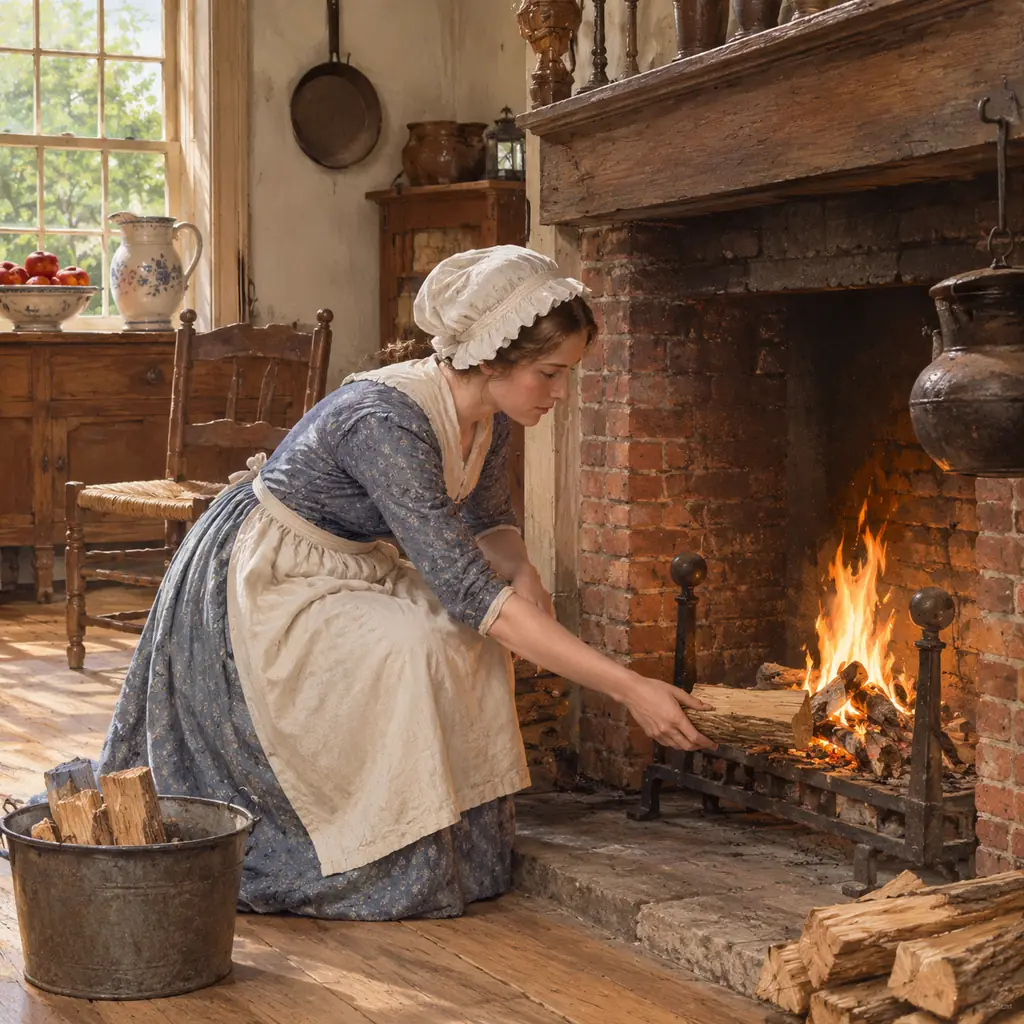
The condition of the embers determined how much work the day’s first fire needed. Someone had to bring in fuel, clear space in the hearth, and build enough heat for cooking to begin.
A large household might have fires in other rooms as well. Which ones were lit depended on the building, available fuel, and who was expected.
3. Boiling Christmas pudding for hours
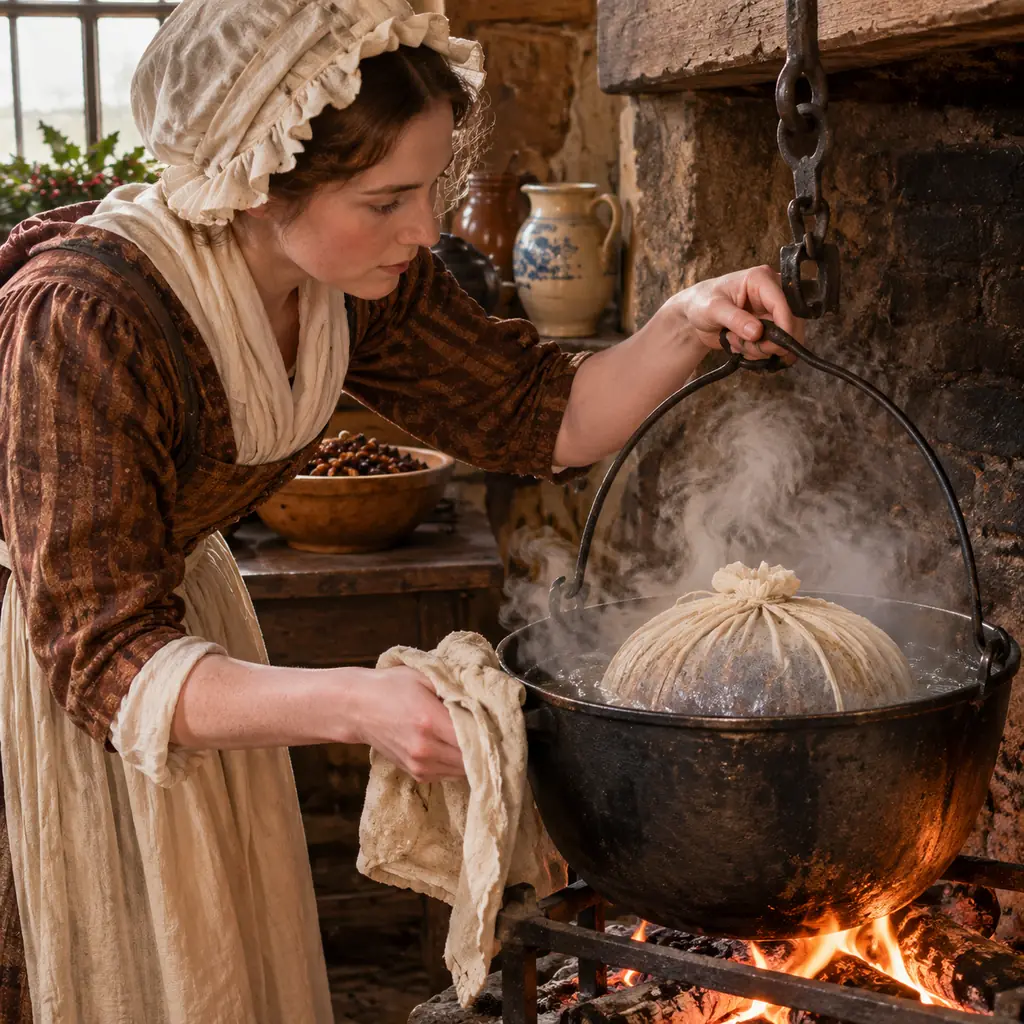
A pudding wrapped in cloth could occupy a boiling pot for much of the day. The wrapping held the mixture together while the cook attended to work elsewhere in the kitchen.
Recipes called for different boiling times depending on size. A long-cooking pudding shaped the way the rest of the meal had to fit around it.
4. Chopping suet by hand
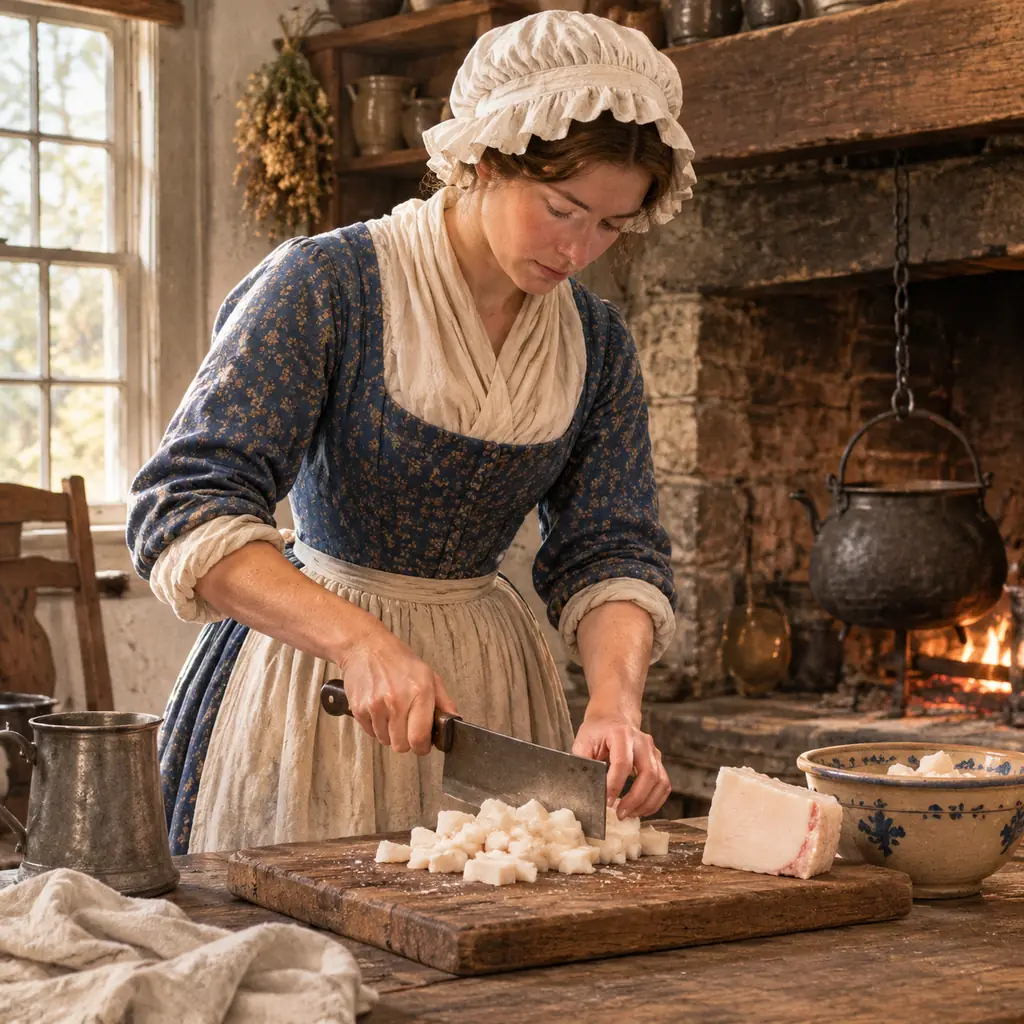
Suet is the firm fat found around the kidneys of animals such as cattle and sheep. In a period kitchen it was often chopped finely by hand before it could be stirred into a pudding.
Chopping it while cool made the work easier. In the finished food, the small pieces were part of what gave it a rich texture.
5. Picking the seeds out of raisins
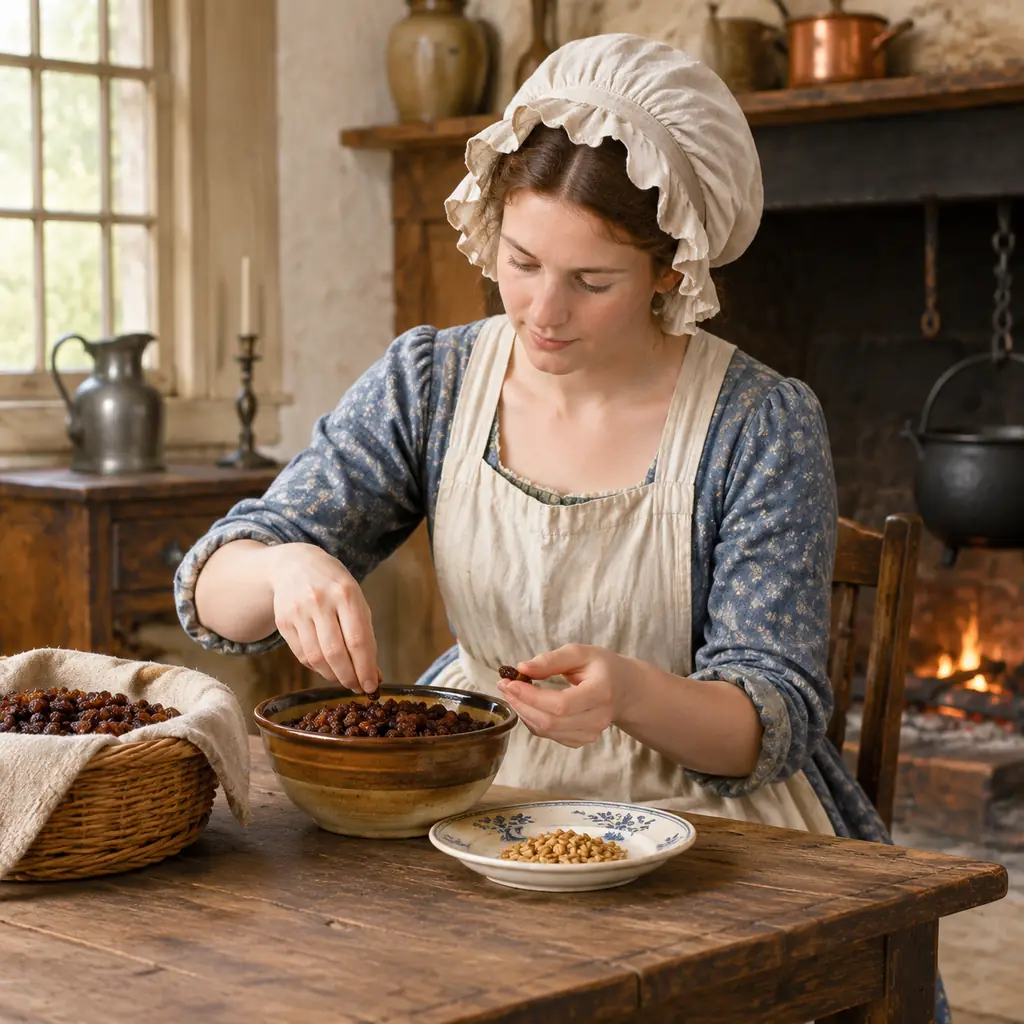
Raisins with seeds took time to prepare. A cook might have to pick seeds out one by one before the fruit went into the pudding or pastry.
Some period recipes distinguished between kinds of dried fruit. That distinction meant something to the person who had to prepare a large bowl on a short morning.
6. Keeping food without a refrigerator
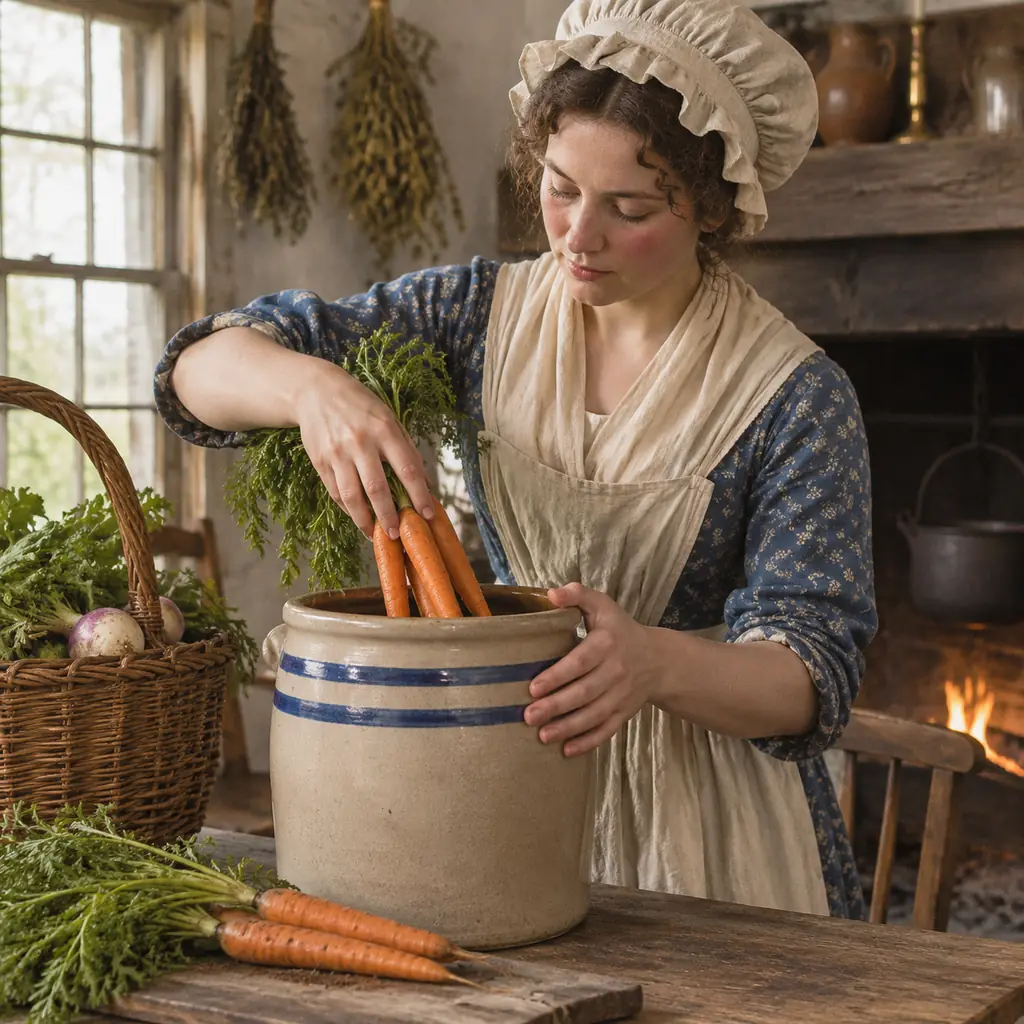
A cellar, pantry, cool weather, salt, drying, and vinegar all helped a household keep food through the season. The calendar mattered as much as the menu.
Some choices depended on what could be kept fresh until the day it was needed. Others had been planned weeks earlier, when preserving the ingredient was still possible.
7. Butchering a hog in cold weather
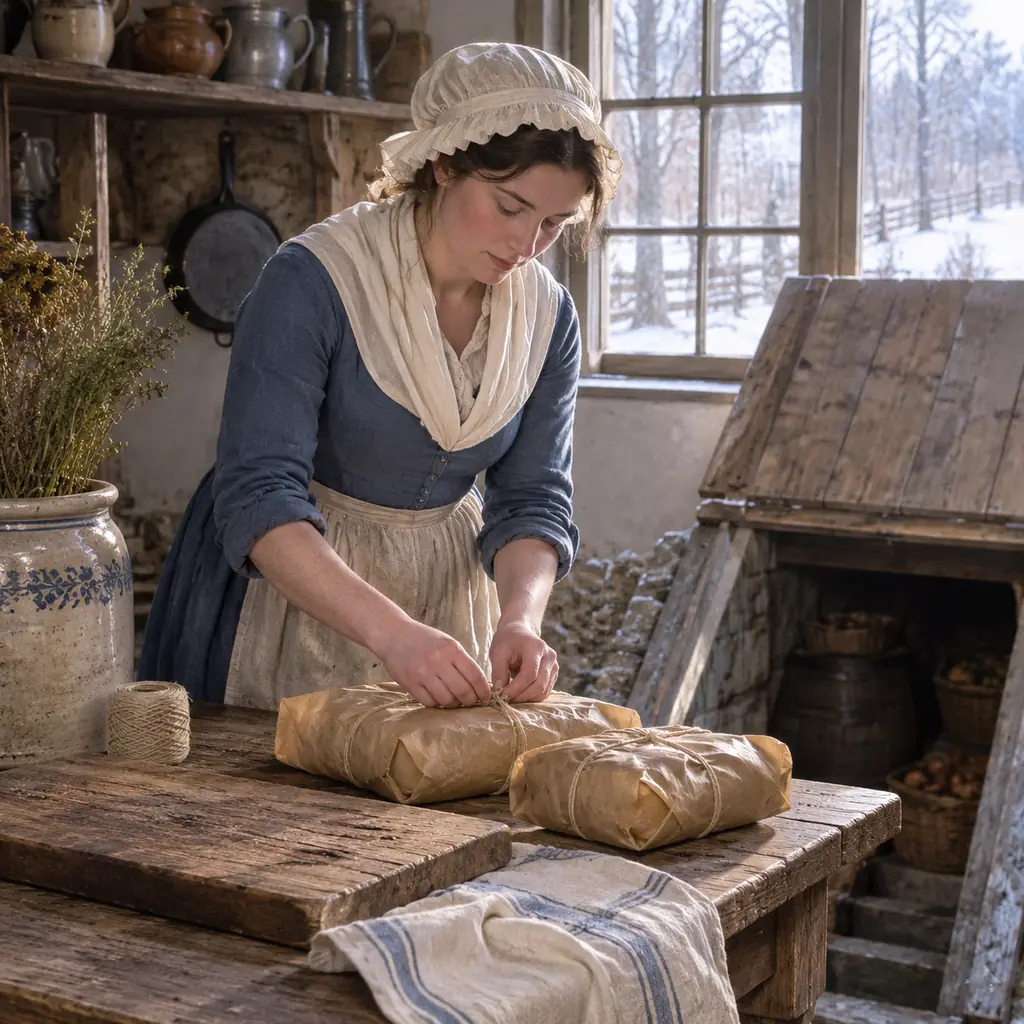
Cool weather made the work of butchering and processing meat easier to manage. In pig-raising households, a cold-weather slaughter made cuts available for immediate cooking and others for preserving.
Timing depended on climate and local custom. A household might be deciding what it could eat that week and what had to last much longer.
8. Making goose the centerpiece
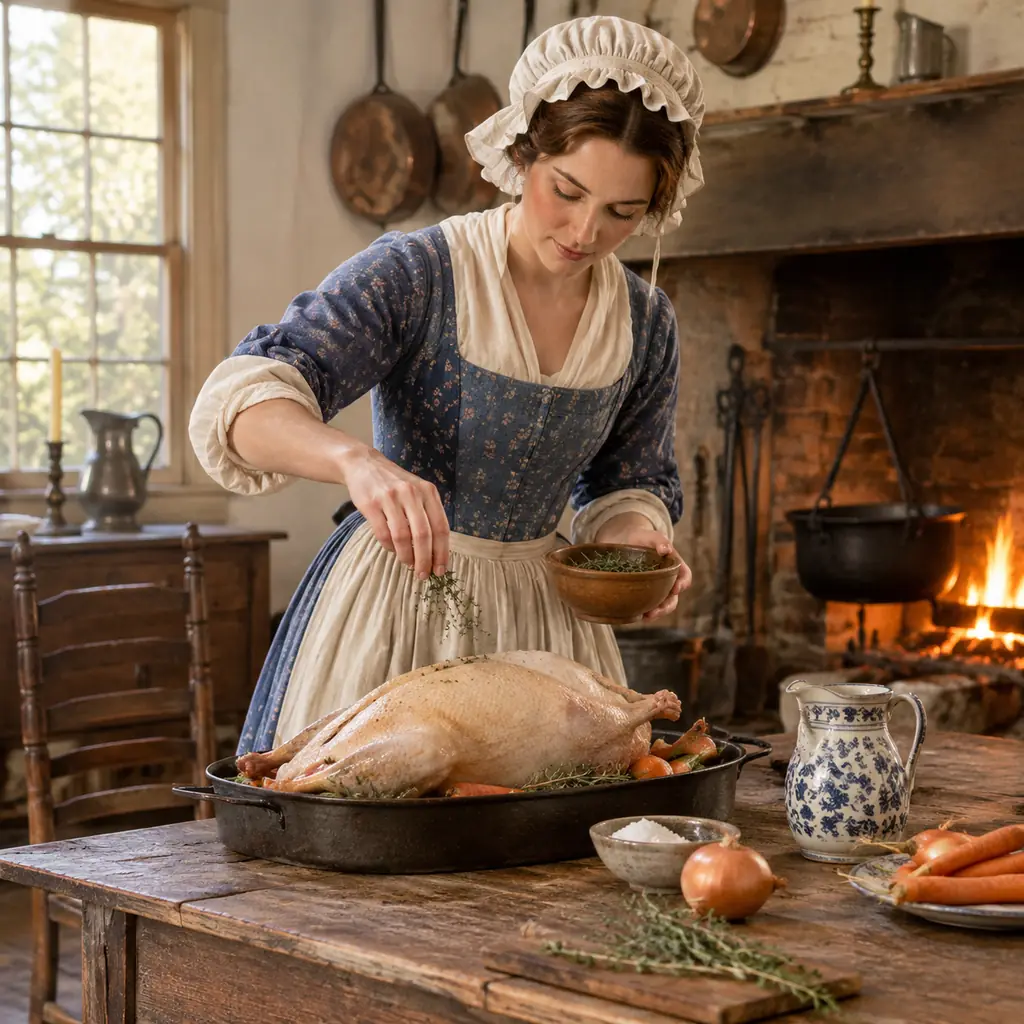
Roast goose was an established part of some British Christmas meals. The bird’s size and richness gave it an obvious place in the middle of the table.
Other households served turkey, another bird, or whatever meat was procurable. A single price or menu would miss how much the feast depended on the household.
9. Using a wild goose in America
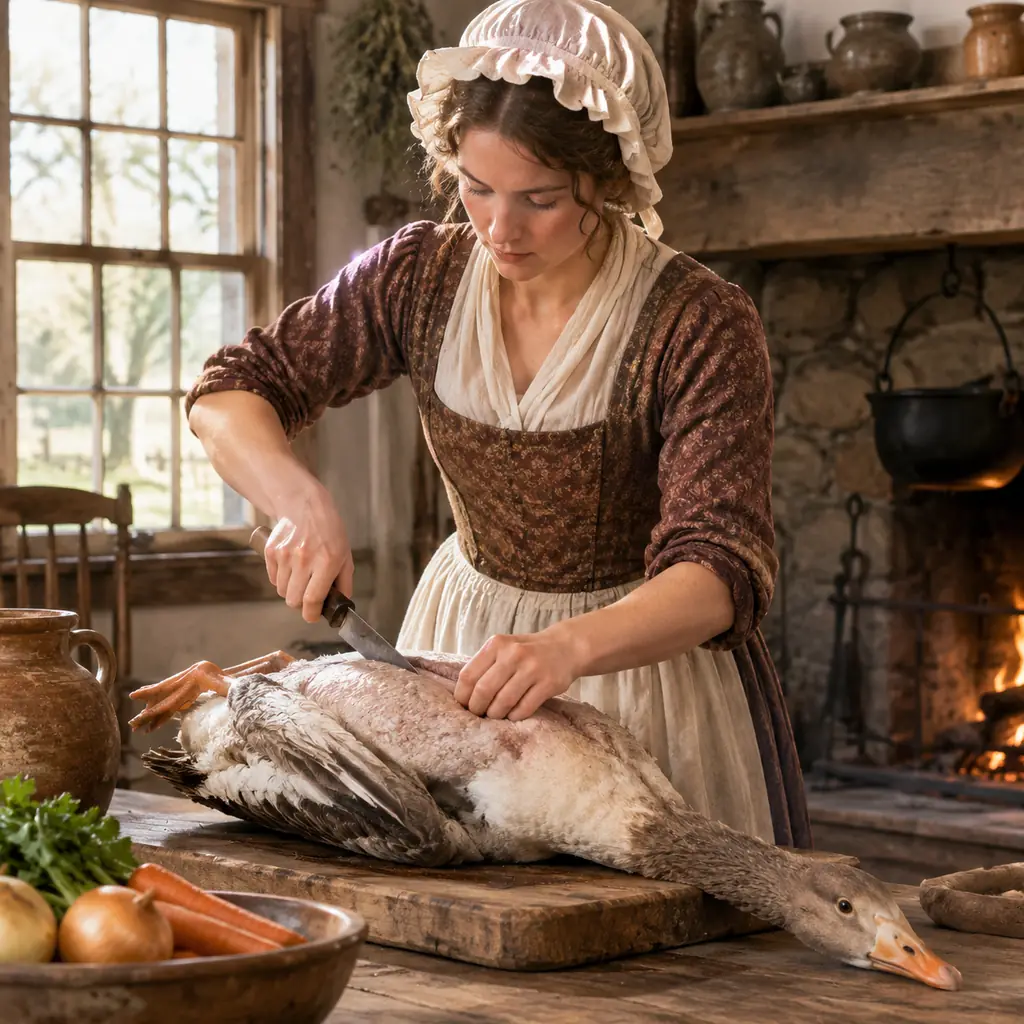
Where wild geese were hunted, a bird for dinner might have come from a local wetland or market. Species, hunting conditions, and access differed across early America.
The cook still had to judge the bird that came in. A wild bird could have a different amount of fat and require different attention at the roast.
10. Hanging a bird before cooking
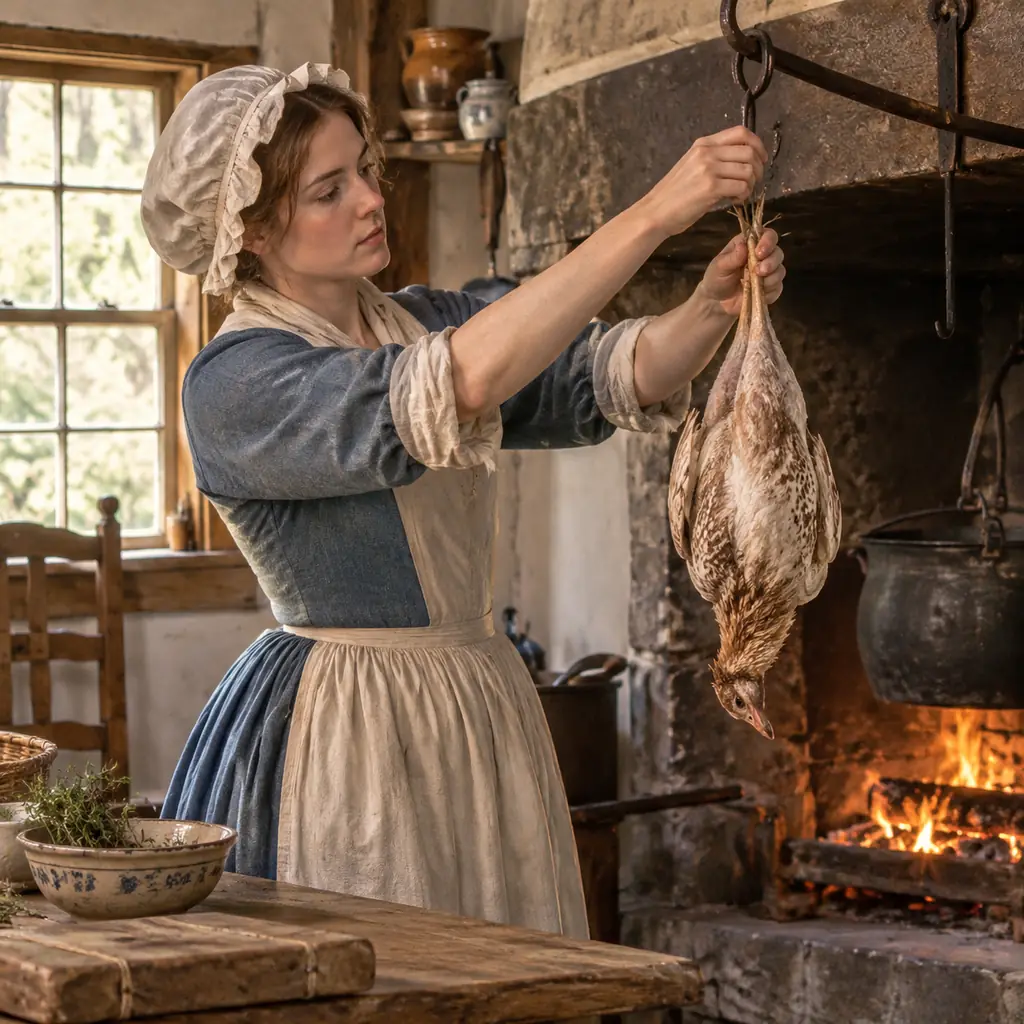
Period cooks sometimes hung game before preparing it. Manuals discussed how weather and the kind of bird changed their judgment about timing.
The practice depended on conditions the cook understood locally. Modern handling guidance uses different controls, so the old language is best read in its historical setting.
11. Plucking a bird by hand
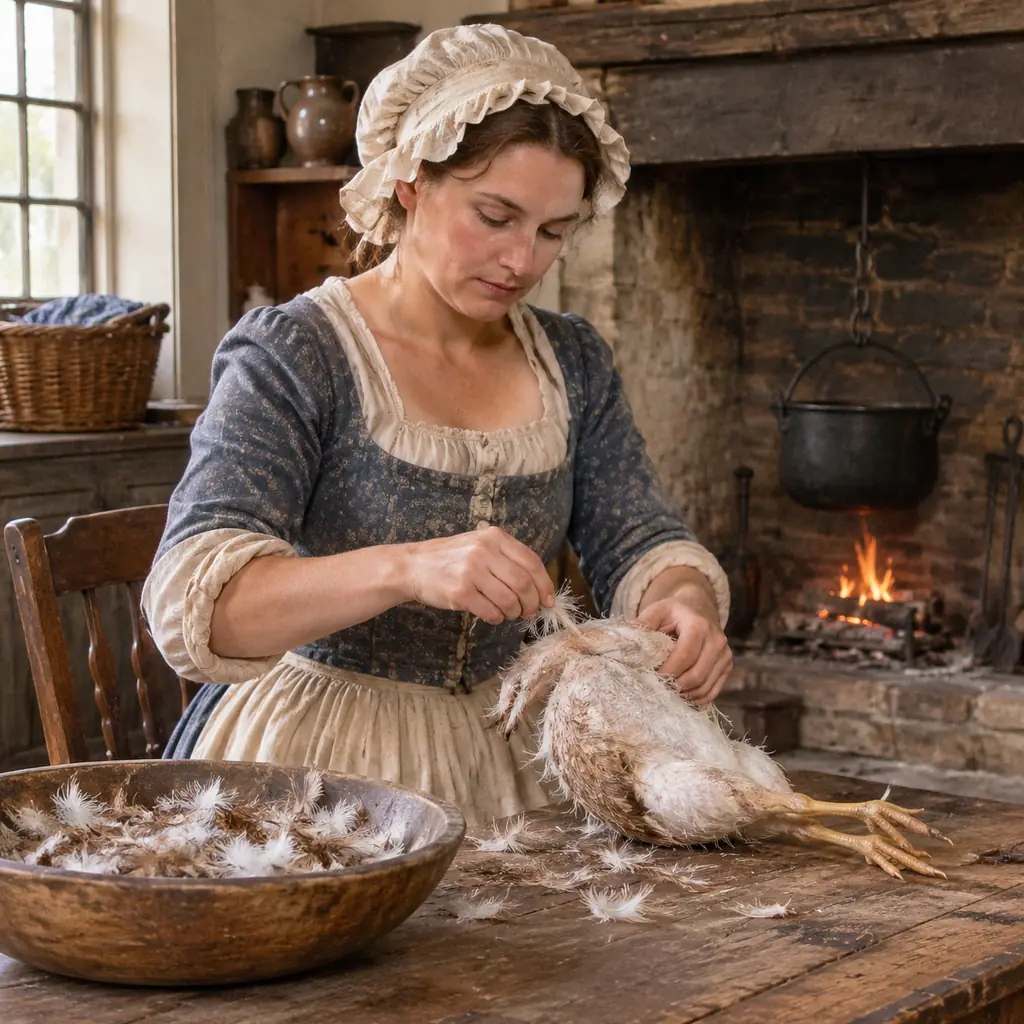
A whole bird brought a lot of work before it reached a spit or pan. The feathers had to come off, and the smaller ones at the neck and wings could take patience.
Speed depended on the bird and the person preparing it. A cook who bought poultry already prepared had paid someone else to do a substantial job.
12. Turning a turkey on a spit
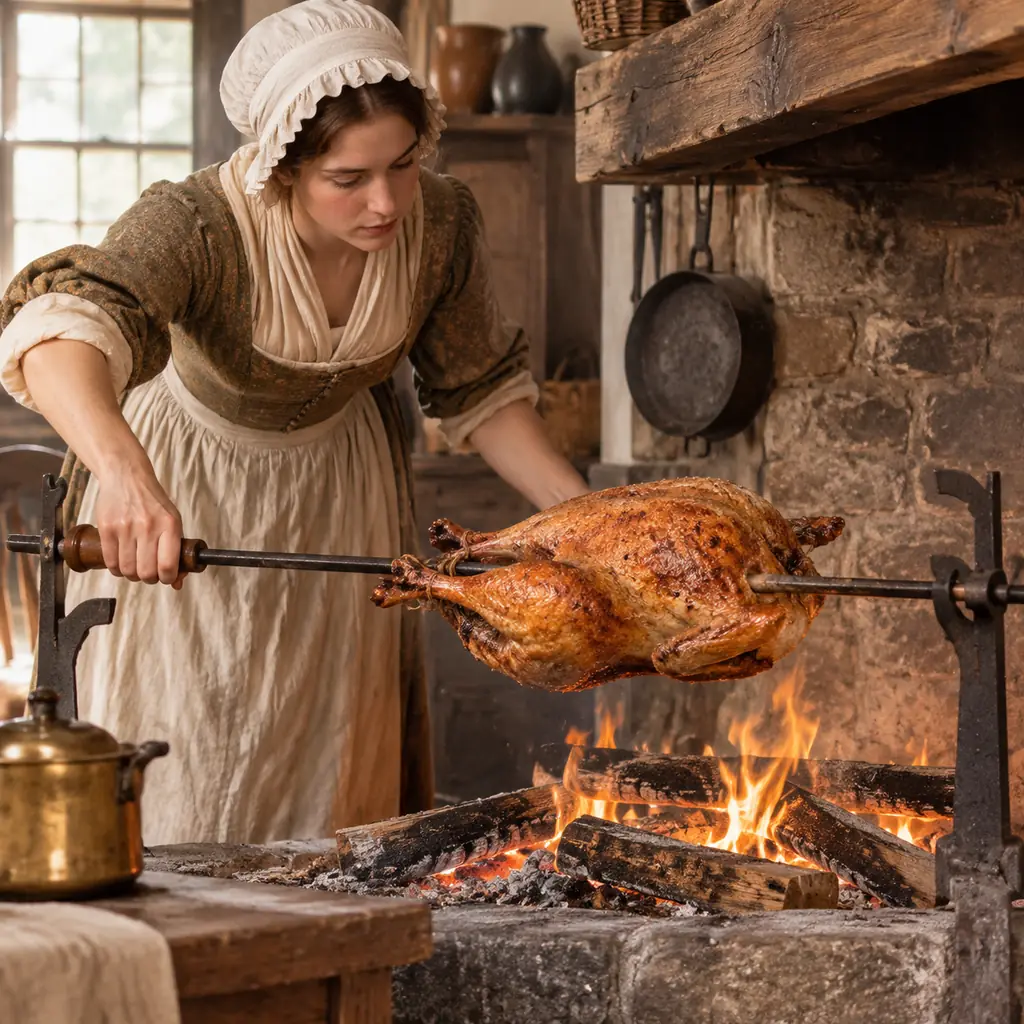
A spit held a bird in front of the fire so it could turn and cook more evenly. Turning took effort, whether someone did it by hand or used a mechanism.
The drip pan caught fat beneath the roast. Its position mattered whenever the person tending the fire had to move a log or shift the bird.
13. Basting roasting meat at the hearth
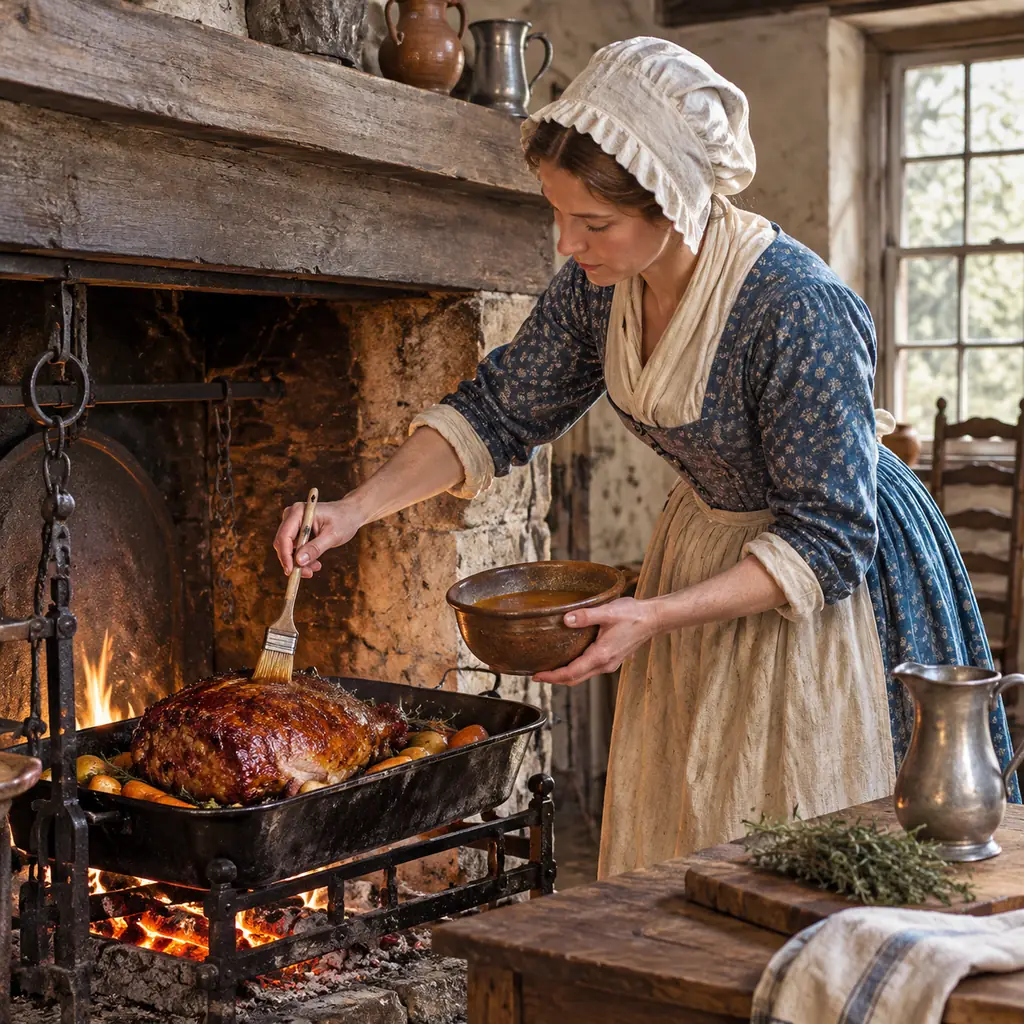
A long-handled spoon let a cook bring hot drippings back over the surface of a roast. The process took a bit of attention because the cook had both the heat and the motion of the spit to judge.
The frequency was a matter of recipe and experience. It was another small task that had to happen while the rest of dinner was underway.
14. Judging the hearth heat by experience
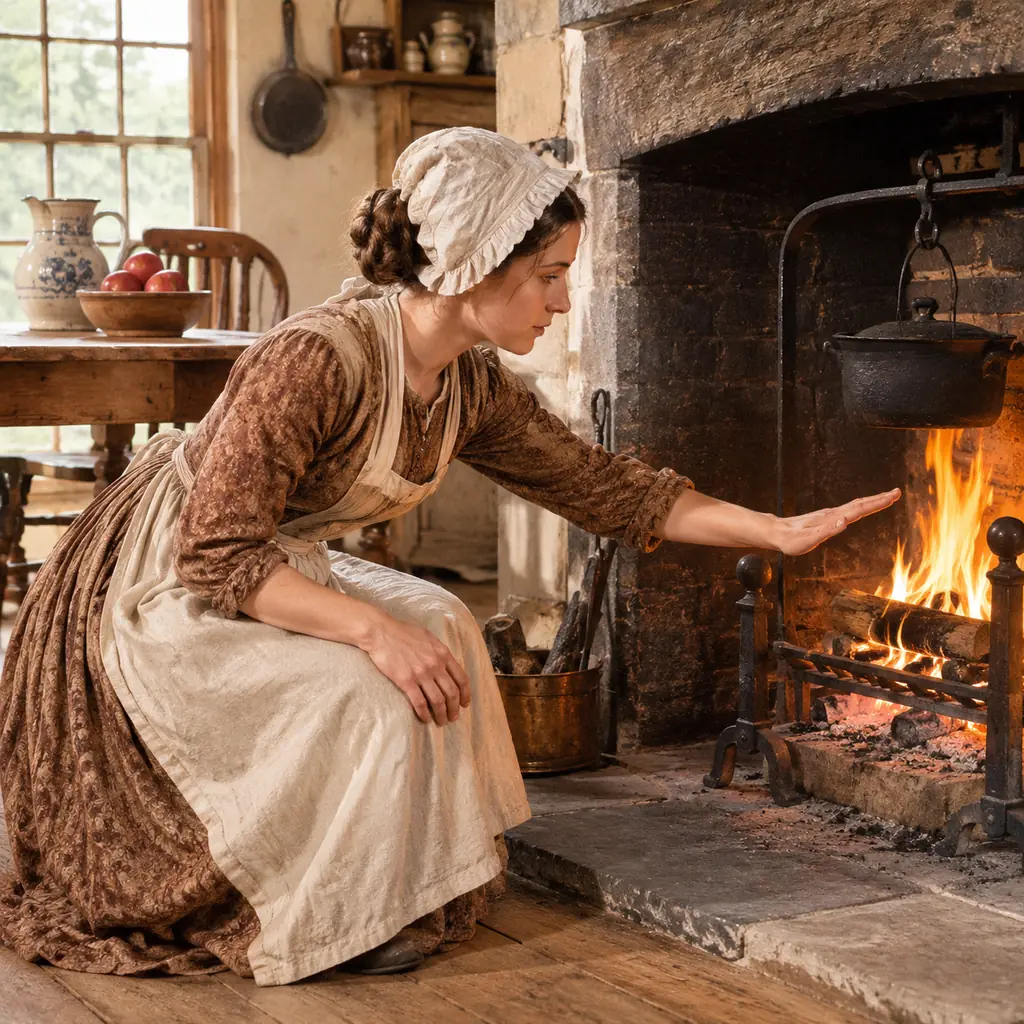
A cook could move a pot toward a hot part of the fire or away from it. At a hearth, heat came from the fuel, the position of the vessel, and the cook’s feel for timing.
Period cookbook instructions often assumed the reader already knew what a brisk or slow fire looked like. The technique was part of the person’s experience.
15. Serving fruit with meat
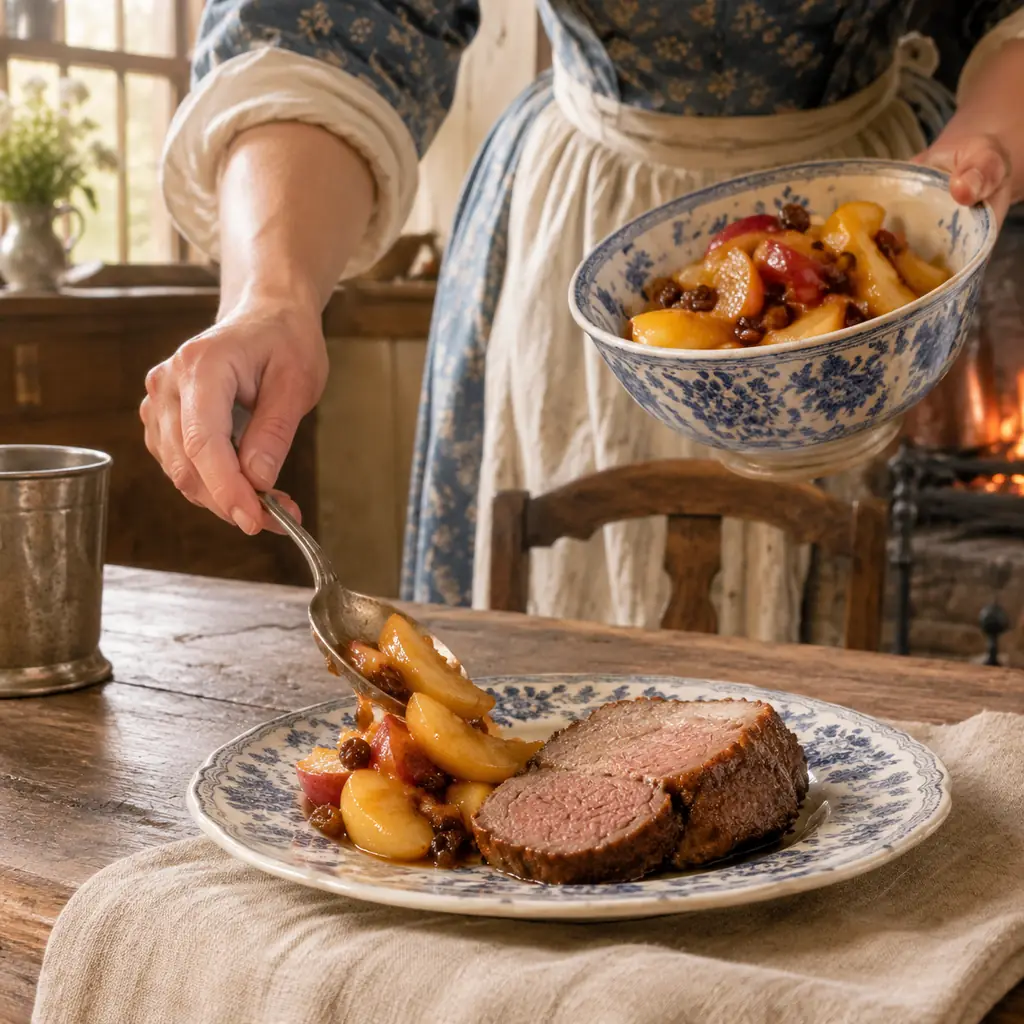
Sweet and savory could share the same dish. Dried fruits went into some meat-based mincemeats, and fruit or a sweet sauce could accompany a roast.
These combinations made sense to people used to preserving fruit and using the available spices. They say as much about what was in the store cupboard as about anyone’s taste.
16. Making cakes from field peas
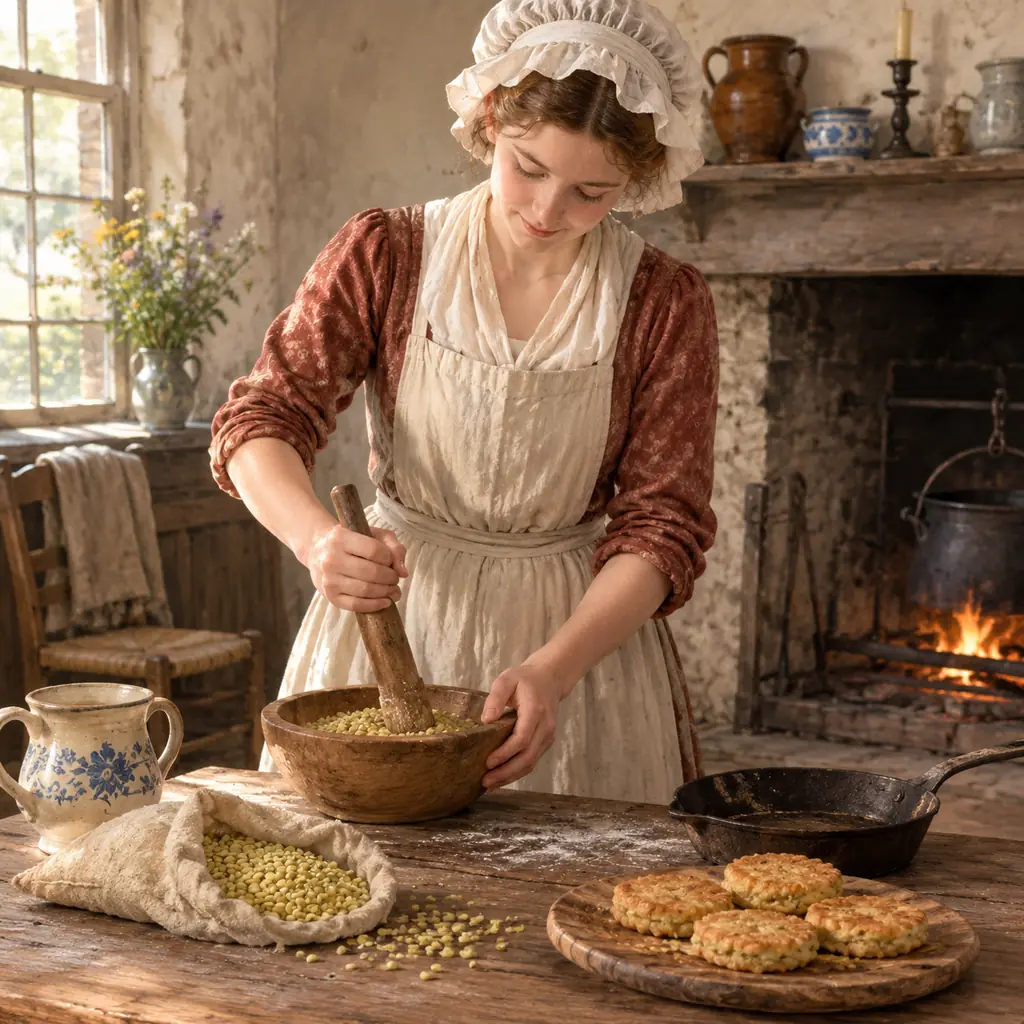
Period recipes show peas and meal put to a wide range of uses. A cook could mash cooked peas and use the thick mixture to make a more substantial accompaniment than a loose spoonful.
Recipes differed across households and regions. The important thing was that dried peas kept through the winter and could be used in several forms.
17. Cooking with rendered animal fat
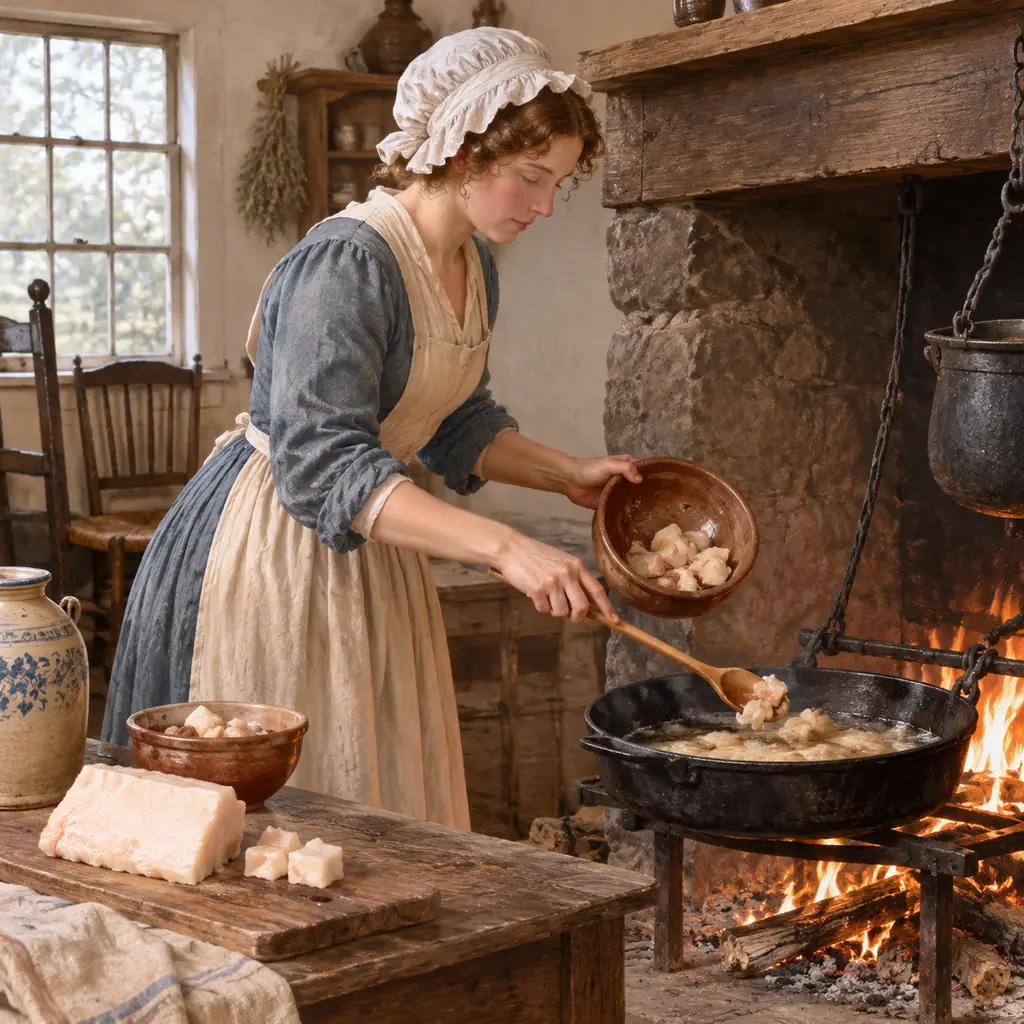
Lard, suet, butter, and other fats served different purposes in early cookery. A cook could save the drippings from one dish and use them to flavor vegetables or a sauce.
What a household used depended on what it could buy, make, or raise. The fat that went into a pastry did not have to be the one used at the hearth.
18. Bringing vegetables up from the cellar
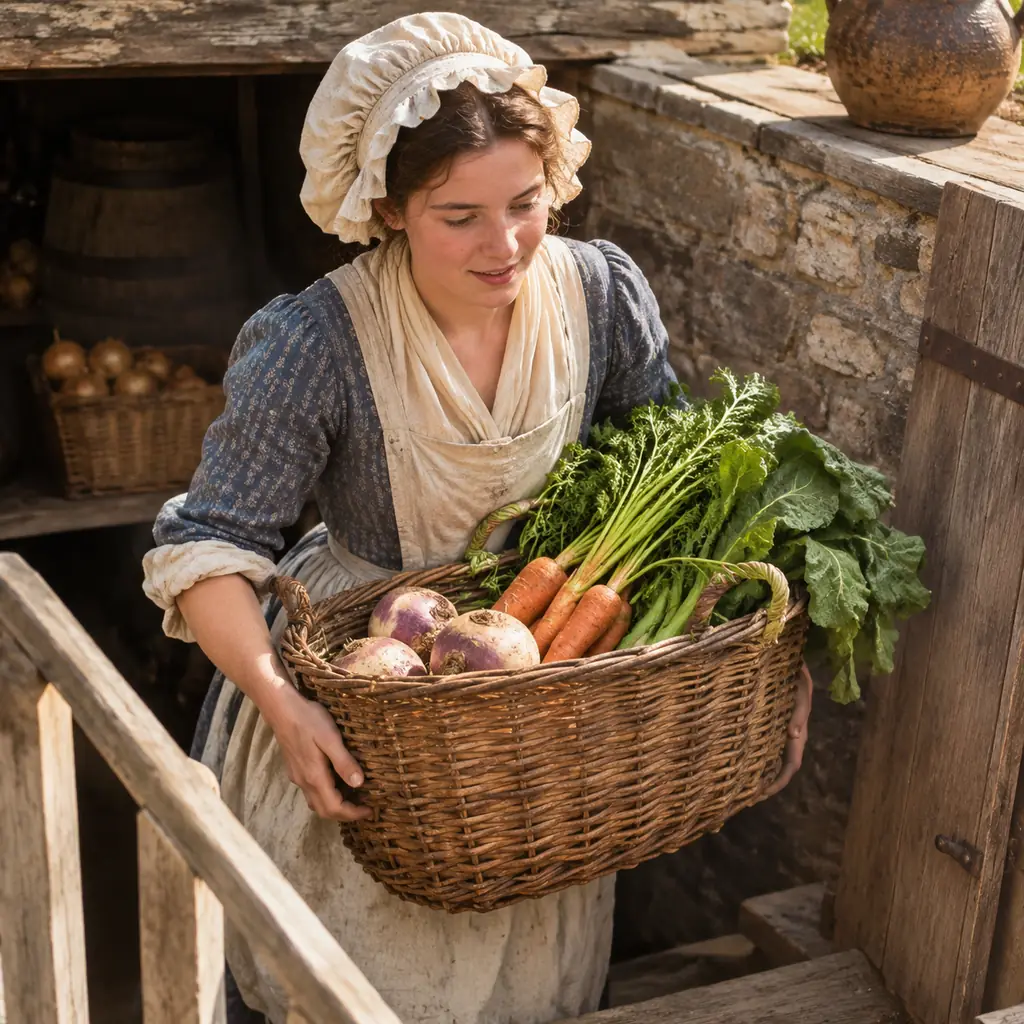
Roots kept in a cool cellar could come upstairs for the feast. Turnips, carrots, and potatoes were useful because there was a chance of having them after the garden stopped producing.
Storage mattered. A cook chose sound vegetables from the supply rather than assuming every basket had survived the winter equally well.
19. Flavoring gingerbread with caraway
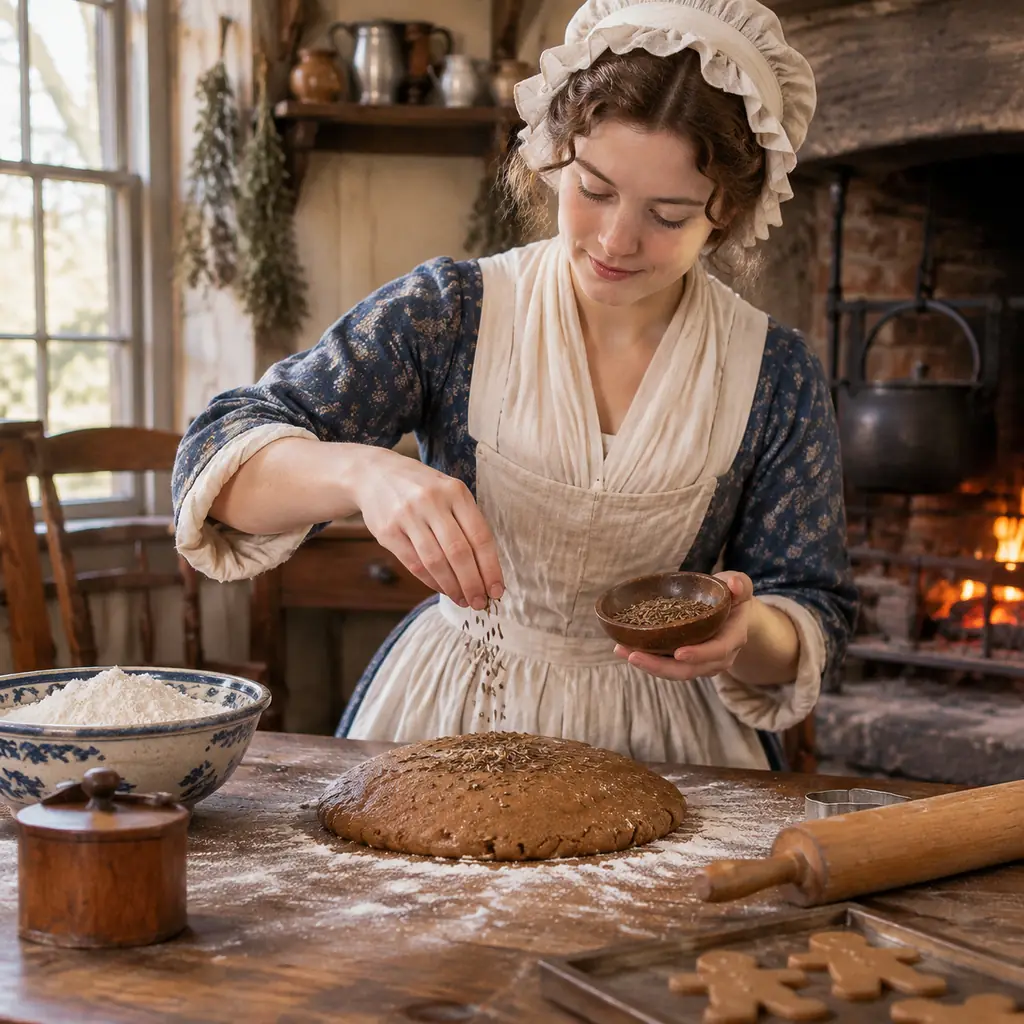
Caraway seeds appear in historical cakes and baked goods. A cook who put them into a spiced bake would have been using a flavor familiar in the period.
Gingerbread recipes varied widely. Caraway was one possible addition, and there is no single spice list that fits every kitchen of the 1820s.
20. Hanging edible treats from an early Christmas tree
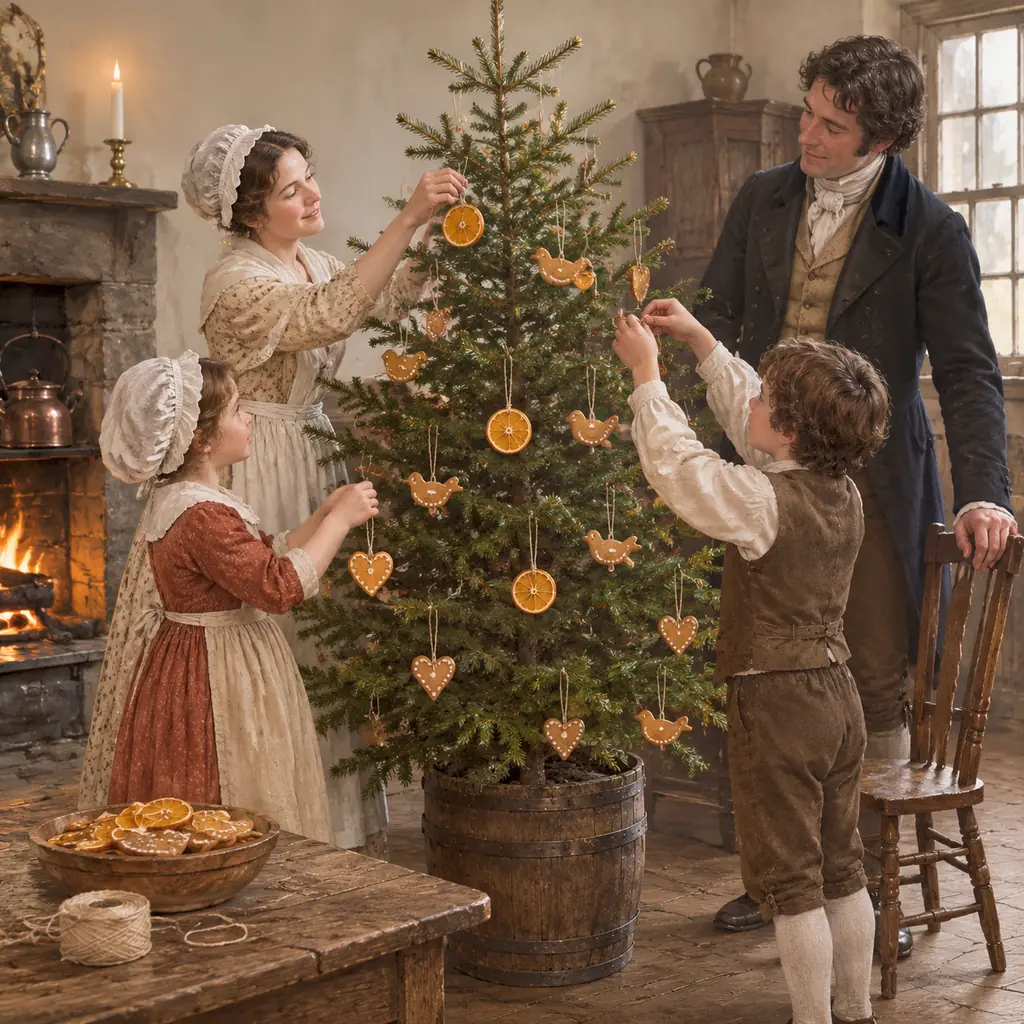
Candies, fruit, nuts, and other treats could serve as ornaments on early indoor Christmas trees. The decoration was still a household and community custom rather than a universal feature of a British or American dinner.
Where a tree was present, the branches gave children a second reason to pay attention to what was hanging there.
21. Baking in a Dutch oven with embers
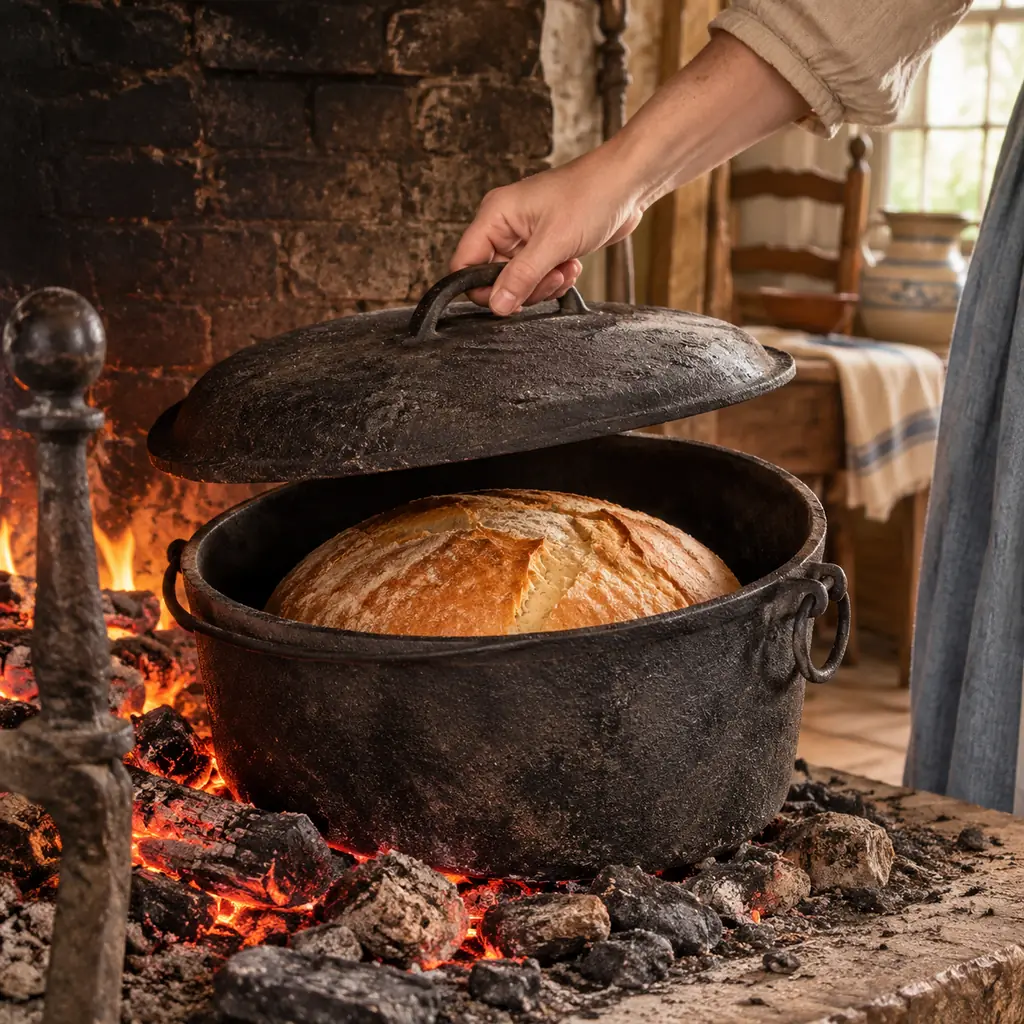
A covered cast-iron pot could sit with embers below it and some above. Heat coming from both directions made it possible to bake certain foods at a hearth.
The cook had to manage the fuel as part of the recipe. Turning or moving a pot could change which part of the food received the strongest heat.
22. Moving a heavy cast-iron pot
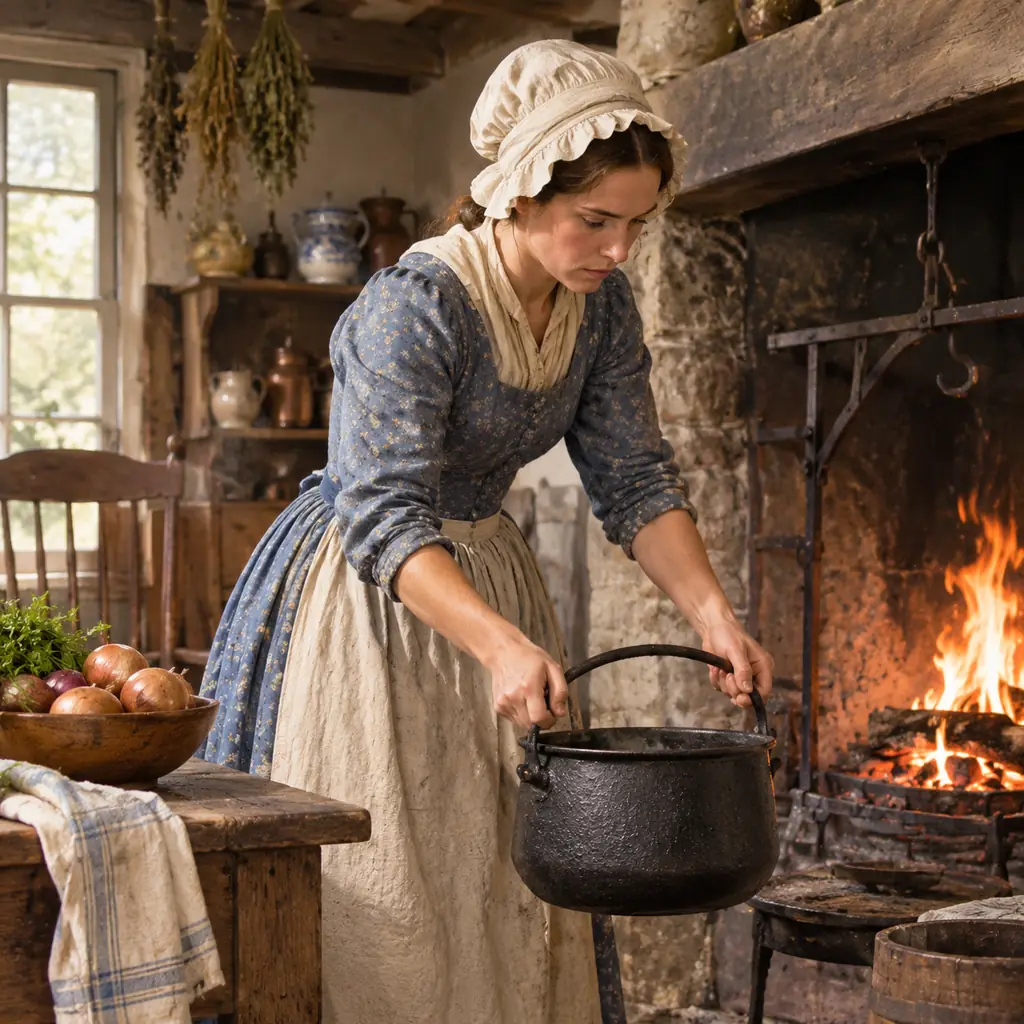
An iron vessel was already substantial before a cook filled it with water or food. Moving it across a hearth required a place to set it down and enough room to keep the handles clear.
Exact weights depended on the vessel. The burden was real whenever one person had to shift a full pot while watching the rest of the fire.
23. Keeping long skirts clear of the hearth
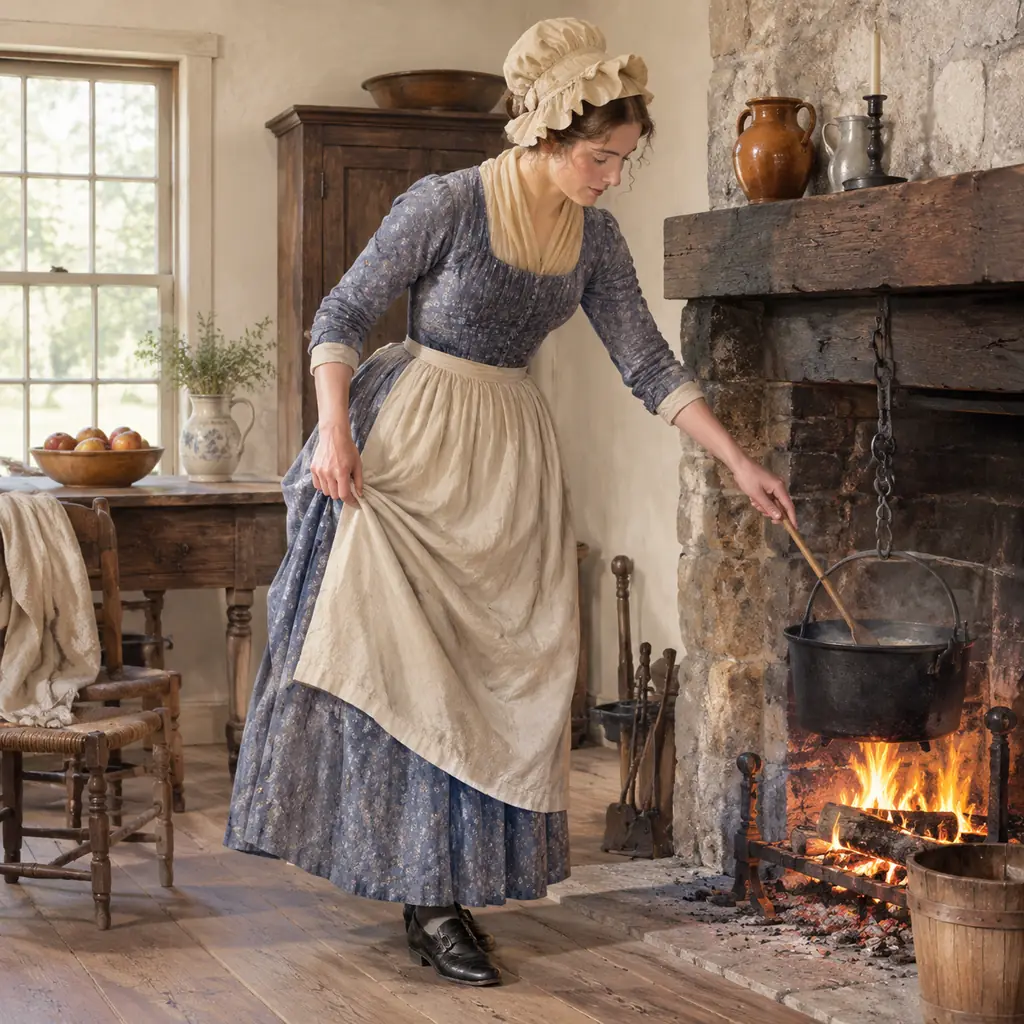
Long clothing could get close to an open fire during kitchen work. A cook moving between a pot, a table, and a hearth had to keep track of more than the food.
The risk was especially serious when a task required bending over. It is one reason to notice how open-hearth cooking was positioned in the room.
24. Carrying water for the kitchen
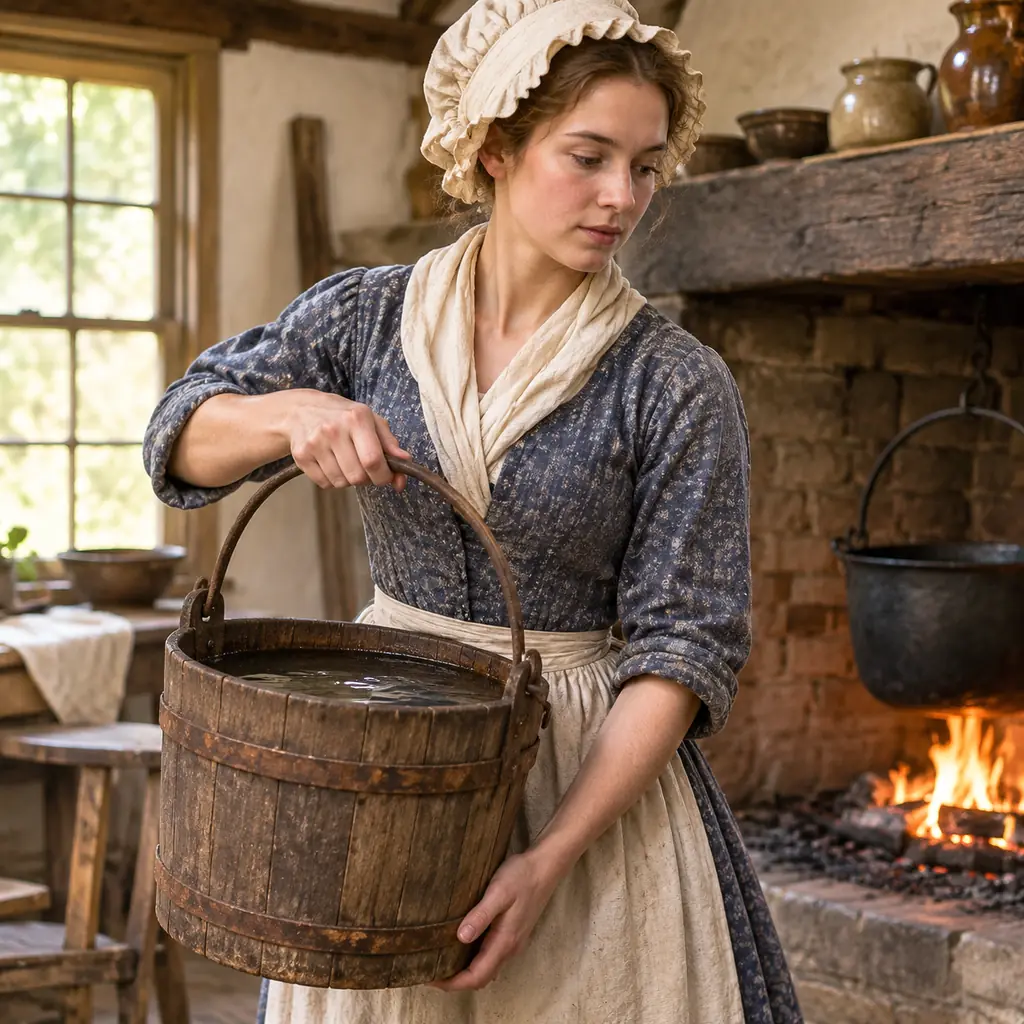
In kitchens without piped water, every pot of water had to be carried in. Washing vegetables, boiling a pudding, and cleaning dishes all drew on the supply.
The person making those trips might not be the person pictured in a cookbook. The feast required a great deal of work before cooking could even begin.
25. Sitting down to dinner in the afternoon
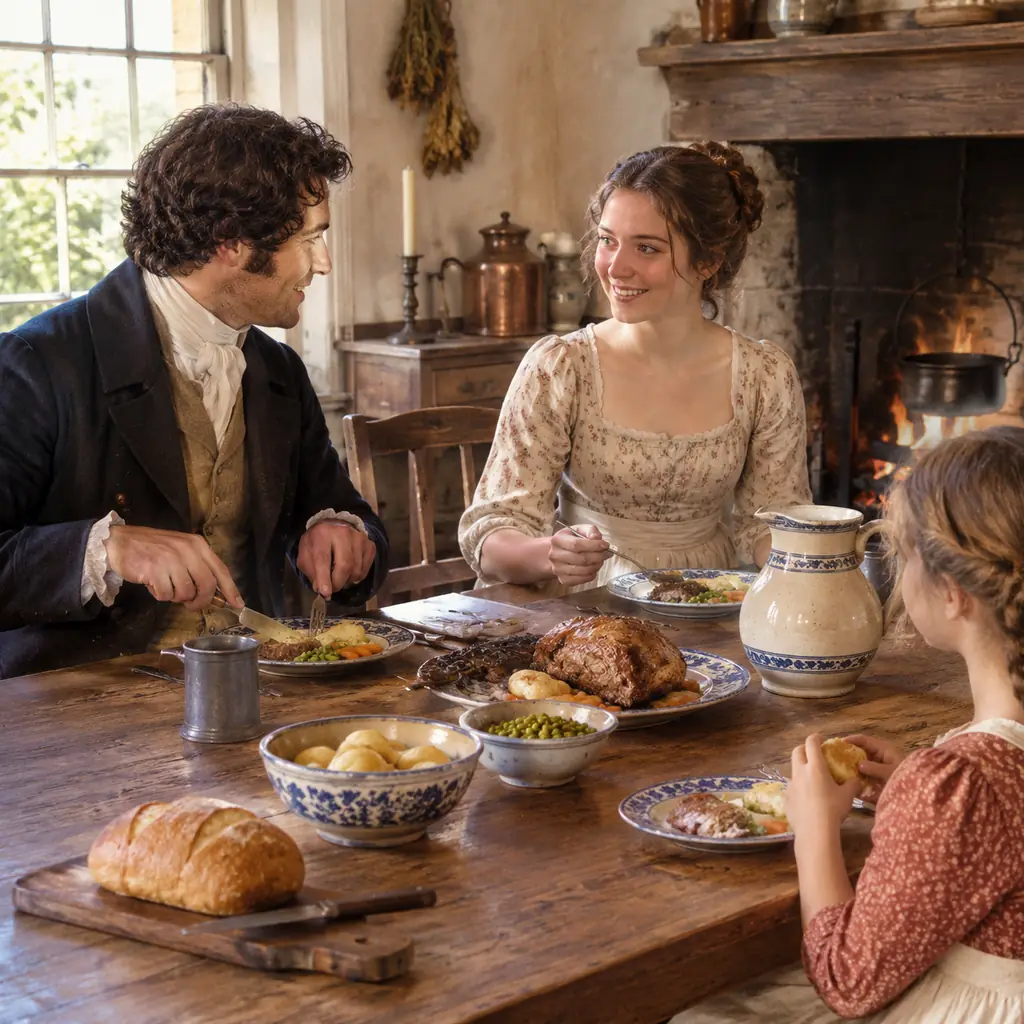
Dinner could be the principal meal of the day and be served in the afternoon. The hour varied with local custom, household rank, and what else happened that day.
For the cook, an afternoon table meant working back from the agreed time. The roast, pudding, and smaller dishes all had to arrive close enough together.
26. Dividing the work between mistress and maid
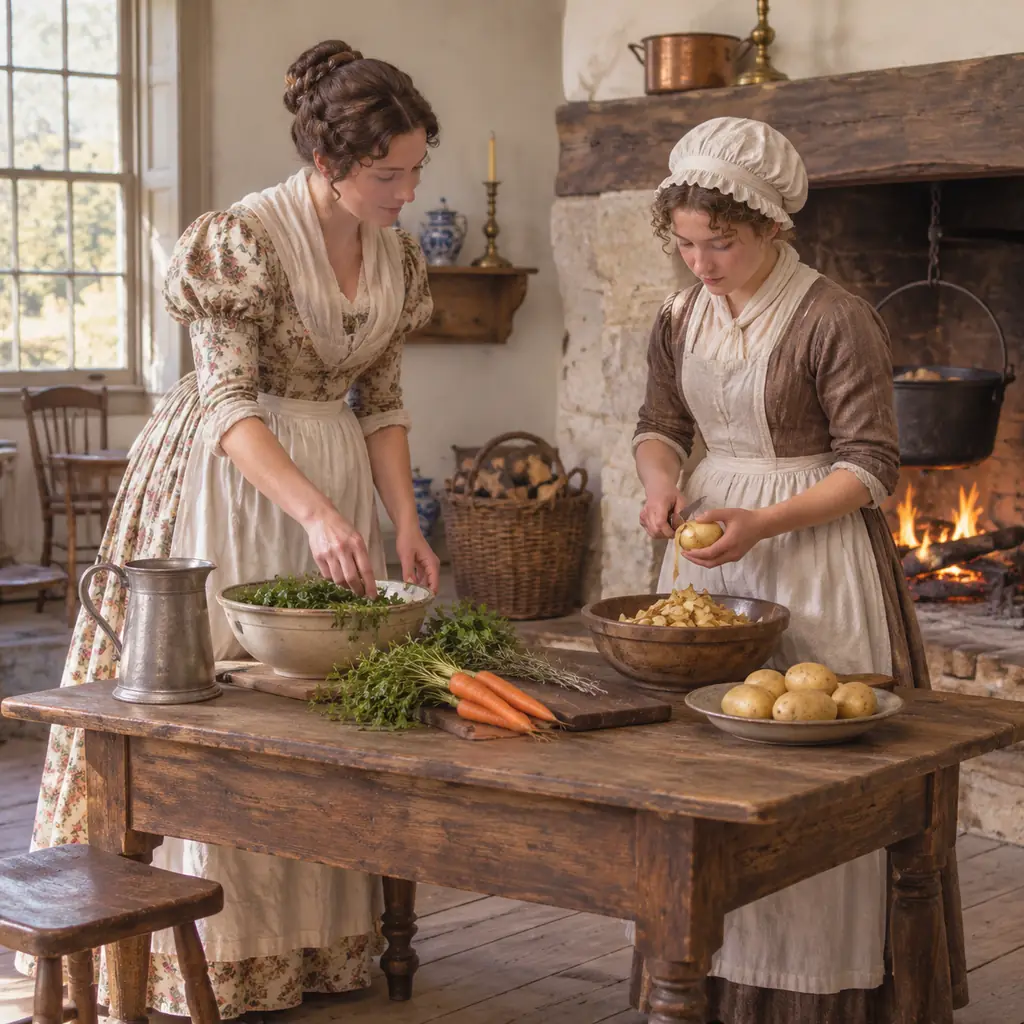
In wealthier households, the person deciding what to serve was not always the person carrying it out. A mistress could direct preparations while one or more servants worked in or around the kitchen.
Other households had no paid staff. The gap between planning and doing is visible in many published directions addressed to people who managed a household.
27. The labor of enslaved cooks
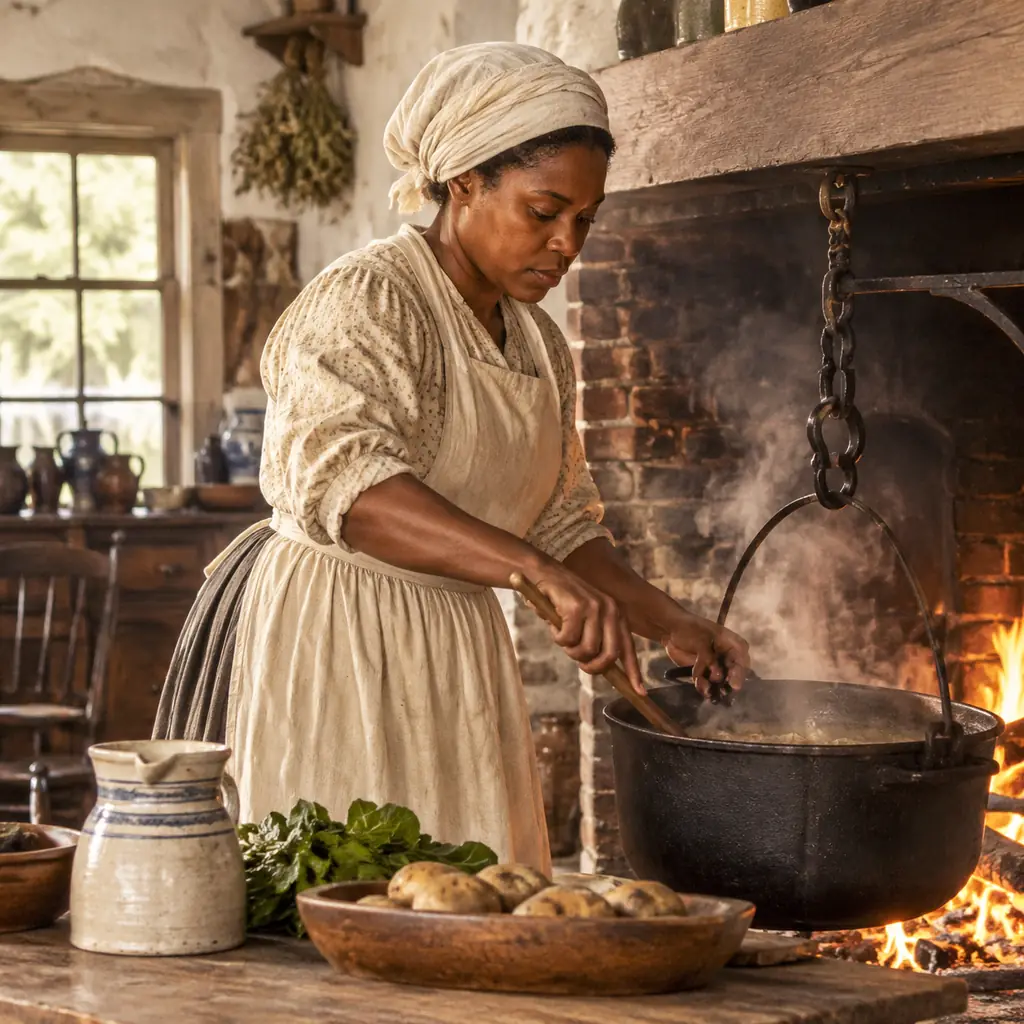
Enslaved people performed much of the cooking in wealthy Southern households, including at some plantations whose holiday tables later became celebrated. They used skill and judgment under coercive conditions.
Surviving menus and cookbooks often name the people who owned the house. The people who actually tended the fire and prepared the dishes deserve to be named wherever records allow it.
28. Keeping a wrapped pudding intact
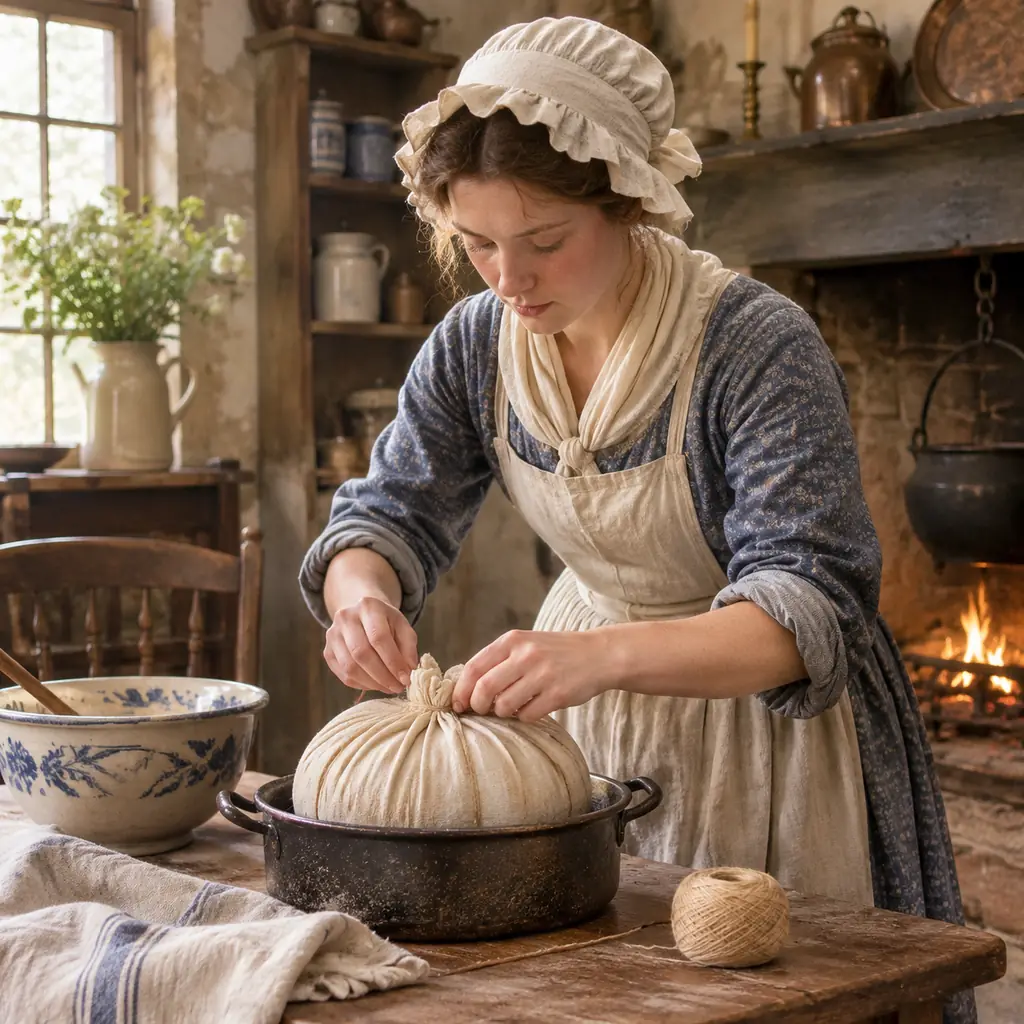
A boiled pudding relied on sound cloth and a secure wrapper. If the package came apart in the water, the appearance and texture of the result changed dramatically.
Period instructions devoted attention to the cloth and tying because problems could develop after a long wait. There was little time to start again near dinner.
29. Planning another meal from the leftovers
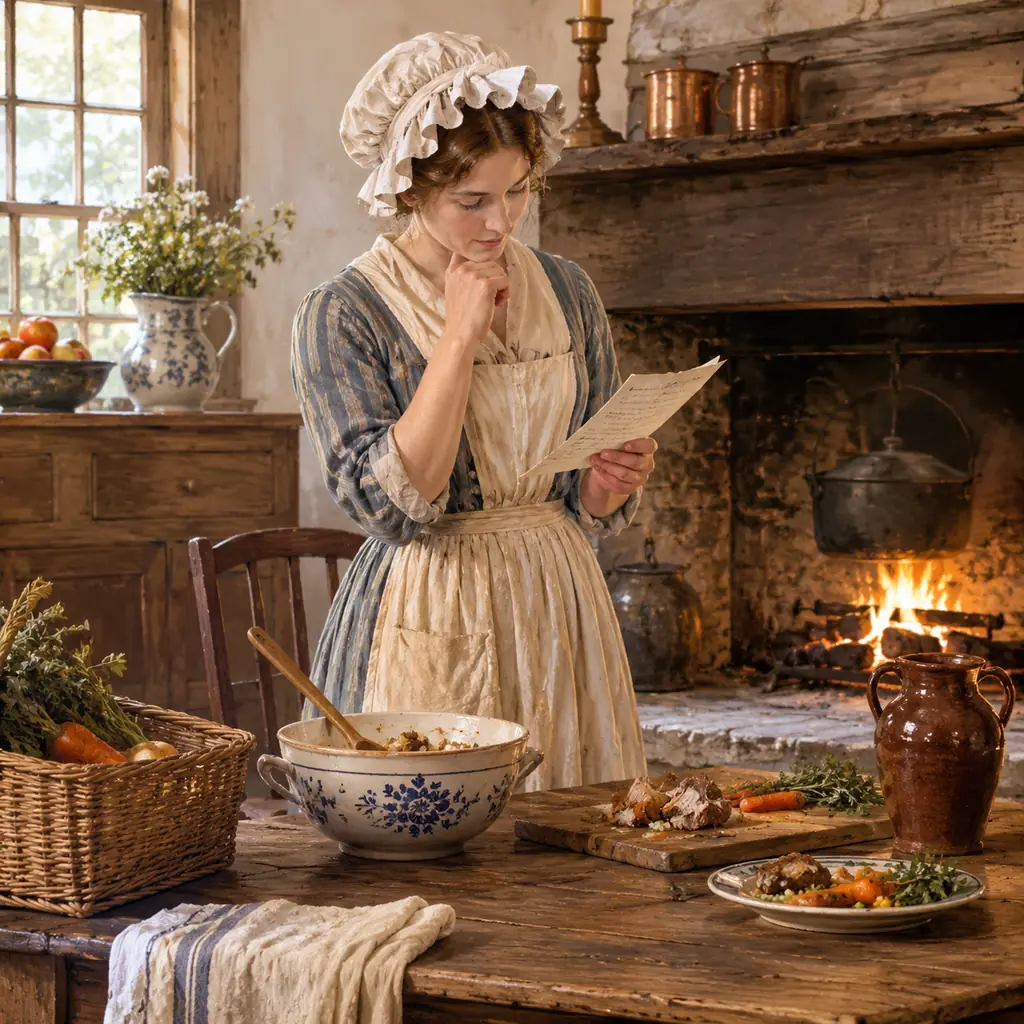
Leftover roast, drippings, bread, or cold vegetables gave a cook ingredients for another day’s meal. A prepared pie or a reheated dish could spare the household some of the previous day’s effort.
Period cookbooks include many ways to use cooked food again. Being able to plan that second use helped justify making a larger feast in the first place.
30. The cook getting off her feet at last
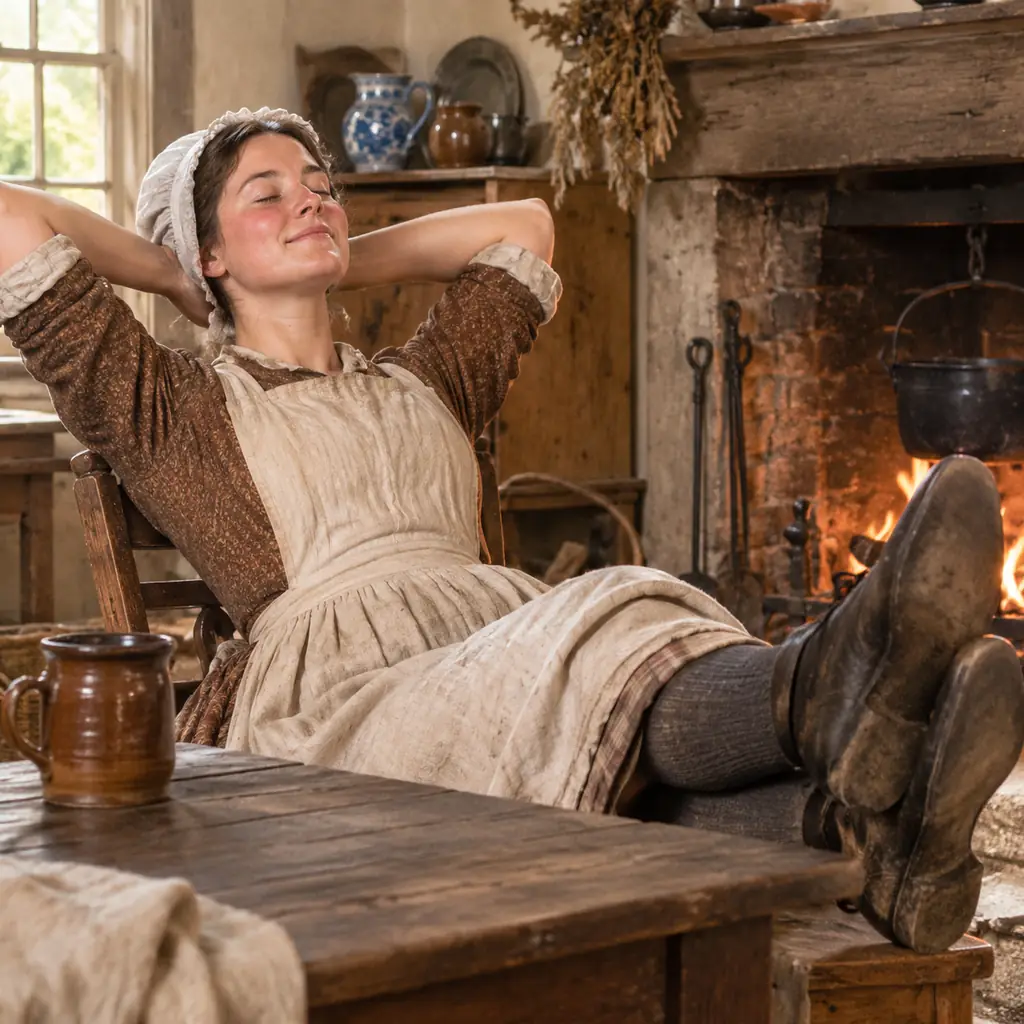
When the food arrived at the table, somebody in the kitchen still had trays to move and dishes to deal with. For the person who had been standing since before daylight, a seat could be the last thing to arrive.
Many accounts describe the food rather than the person preparing it. The schedule gives some idea of what the meal asked of that person.
31. Sifting the flour by hand
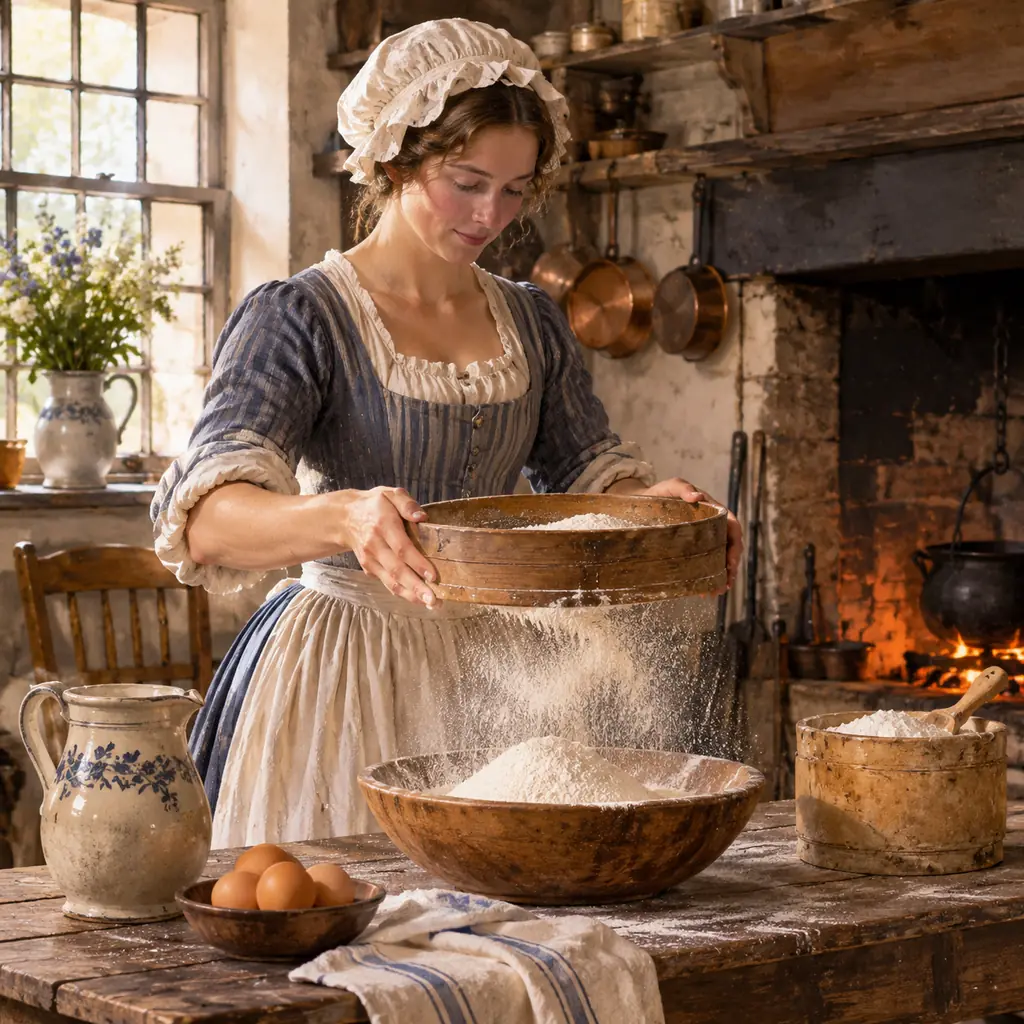
Sifting flour before mixing helped distribute it evenly and remove lumps. Mary Randolph’s cookery book expected cooks to have sifted flour ready before some cake preparations began.
For a holiday spread, it was a job worth doing in advance. It joined the little piles of measured or prepared ingredients needed once the cooking gathered pace.
32. Making gravy from the pan drippings
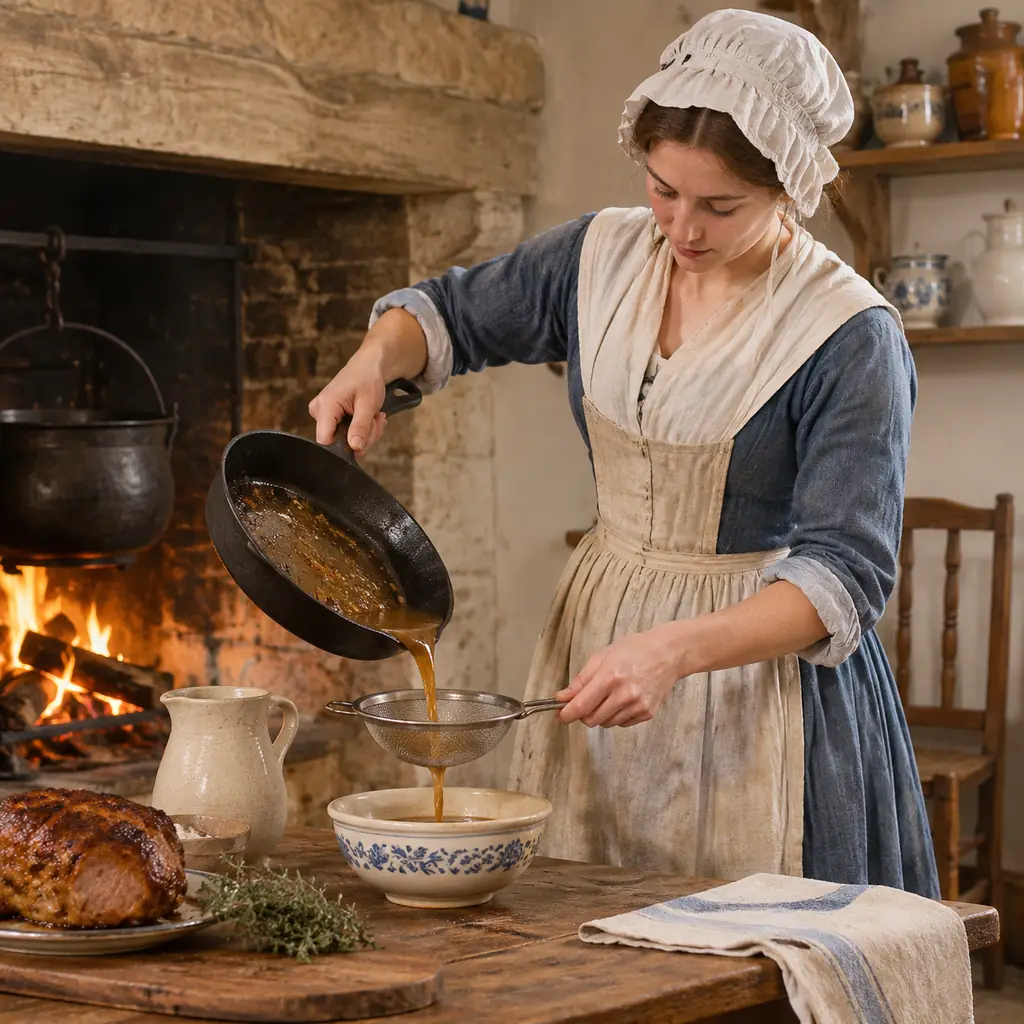
Drippings had a second purpose when there was time to turn them into gravy. Period cooks could thicken stock or cooking juices and serve the sauce beside a roast.
A small amount carried the flavor of the bird onto other parts of the plate. It was another reason to watch what collected beneath the spit.