The ’70s and ’80s TV Themes We Still Remember
 Harrison8 min read
A few opening notes could tell a household which show was starting before anyone looked at the screen. These themes span first-run favorites and older series that reached another generation through reruns.
1. Cheers made a neighborhood bar sound welcoming
The Cheers theme paired a relaxed piano opening with Gary Portnoy’s voice. Its promise of finding familiar company fitted a comedy built around regular customers and the people serving them.
The credits used old photographs of bar life rather than a fast introduction to each star. That choice let the music establish the feeling before the episode began.
For an eighties viewer, the opening could feel like settling into a familiar room.
2. The Mary Tyler Moore Show put optimism into motion
The Mary Tyler Moore Show joined its theme to images of Mary moving through Minneapolis. The tune’s bright lift suited a story about a working woman building a life of her own.
The music gave the opening a sense of forward movement without making the character seem invulnerable. A confident melody could sit beside the awkwardness waiting in the episode.
That combination helps explain why the hat toss and the music remain closely linked.
3. The Jeffersons announced the move before the story began
The Jeffersons used a buoyant, gospel-inflected opening to turn a change of address into a musical event. The song introduced the family’s improved circumstances before a single scene played.
Its force came from the vocal delivery and the sense of people joining in. The music did not need a long instrumental introduction to establish the show’s confidence.
The opening still works as a compact introduction to the family’s hopes and arguments.
4. Sanford and Son gave a junkyard its own groove
Quincy Jones composed the instrumental theme for Sanford and Son. Its scruffy, playful sound suited a comedy set around a salvage business rather than a polished suburban living room.
The theme carries a strong rhythmic personality without asking the audience to memorize any words. Short musical phrases keep nudging the tune forward.
It is a reminder that an instrumental could describe a sitcom’s character as clearly as a sung explanation.
5. The Brady Bunch explained the family at the door
The Brady Bunch originally ran from 1969 to 1974, then reached many more children through reruns. Its opening used a sung family history alongside the familiar grid of faces.
The tune handled information that another series might have needed several scenes to explain. A new viewer could understand the household before meeting its latest problem.
That practical job is part of the theme’s appeal, alongside its easy rhythm and friendly delivery.
6. Gilligan’s Island turned a mishap into a singable introduction
Gilligan’s Island premiered in 1964, so many seventies and eighties children first encountered it as a rerun. The theme introduced the stranded group and the voyage that brought them together.
Its nautical bounce made an unlikely premise easy to accept. The melody supplied movement while the opening did the work of a miniature story.
Remembering the theme does not necessarily mean remembering the show’s original broadcast years.
7. Laverne & Shirley made the opening feel like a shared plan

Charles Fox discusses composing the Laverne & Shirley theme in the Television Academy’s oral-history archive. The upbeat music accompanied a pair of friends moving through their working lives together.
The opening’s pace mattered as much as the tune. It presented determination as something the two women could share rather than an individual speech.
For viewers, the music could become inseparable from the friends’ gestures and the brewery setting.
8. Happy Days brought an earlier decade into a seventies home
Happy Days used music to help frame its picture of an earlier America. Charles Fox’s work on the show appears in the Television Academy’s interviews about television themes.
The bright, nostalgic mood made the opening a bridge between generations. A parent could recognize the older musical references while a child simply heard the start of a familiar comedy.
The show’s setting and the viewer’s own childhood were often separated by decades. That overlap between generations also runs through songs people still sing along to.
9. The Love Boat promised a holiday before the first passenger arrived
Charles Fox composed music for The Love Boat, giving its opening the polished warmth of a vacation invitation. The theme suited a show built around new arrivals, romance and temporary escapes.
A smooth vocal and sweeping arrangement made the ship feel like a destination in itself. The opening could sell the week’s mood before revealing any guest’s predicament.
Its distinctive appeal came from ease and anticipation rather than suspense.
10. The Greatest American Hero reached beyond the opening credits
The Greatest American Hero had a sung theme that became a hit beyond the series itself. Creator Stephen J. Cannell discusses that crossover in the Television Academy’s recorded interviews.
The melody offered a more earnest feeling than the comedy of an inexperienced superhero might suggest. That gap between hopeful music and awkward action helped define the opening.
Some listeners remember the recording even when they cannot recall a complete episode. The route from a screen to the radio also shaped many movie songs from the same decades.
11. The Rockford Files let the instrumental do the introducing
Mike Post discusses writing The Rockford Files theme in his Television Academy interview. The instrumental gave the detective series a relaxed toughness rather than the formality of a traditional march.
Its rhythmic pulse and changes of color make the opening easy to recognize without a vocal. The music suggests motion while leaving room for the show’s dry humor.
A theme can carry a character’s attitude without explaining the character’s biography.
12. Taxi sounded more reflective than a busy garage
Taxi opened with an instrumental that felt surprisingly gentle for a comedy about a working garage. The music gave the credits room to breathe instead of pushing toward a punch line.
That softer mood could make the city seem wistful rather than merely noisy. It suited characters whose jobs and ambitions did not always line up.
The contrast between the workplace and the opening music remains one of the show’s distinguishing touches. A gentler musical signature can be as durable as the hooks in commercial jingles.
13. Magnum, P.I. gave the action a running start
Mike Post discusses his work on the Magnum, P.I. theme in the Television Academy’s archive. The driving instrumental matched the speed and outdoor movement associated with the detective series.
The opening could build excitement without words or a spoken explanation of the central character. Its musical push helped connect quick changes of scene.
For viewers who followed action dramas, a few moments of this theme could identify the show immediately.
14. Knight Rider made electronic music part of the machinery
Knight Rider’s opening connected an electronic musical pattern with the idea of a remarkable car. Glen A. Larson discusses composing the theme in his Television Academy interview.
The repeating figure feels mechanical without becoming a background hum. Each return helps create expectation, as though something is advancing toward the screen.
The music’s identity depends on that pattern rather than a chorus that viewers can sing in the usual way. Electronic repetition also helped drive some roller-rink and school-dance songs.
15. The A-Team sounded ready to leave the driveway
Mike Post’s account of writing The A-Team theme appears in the Television Academy’s oral histories. Its assertive instrumental sound suited a show organized around a group taking action together.
The opening music gave movement and scale to the introductions. It could make a collection of brief character images feel like a single operation.
The tune remains recognizable even without the narration and other familiar parts of the sequence.
16. All in the Family put the performance inside the living room
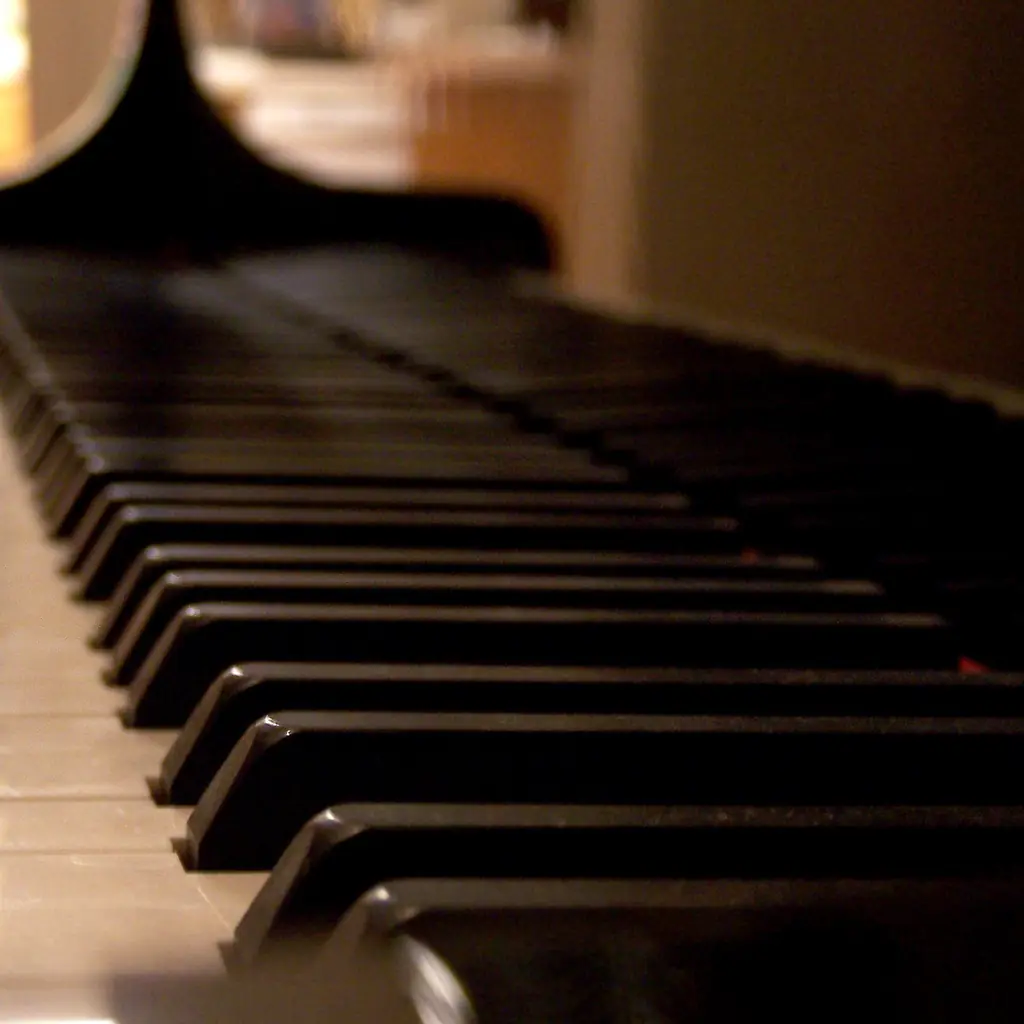
All in the Family opened with Archie and Edith performing at the piano. The presentation made the theme feel like an activity belonging to the household rather than a separate promotional recording.
Their voices carried character as well as melody. The unevenness was part of the point, bringing affection and friction into the same small space.
The opening offered a first glimpse of the relationship that the comedy would keep testing.
17. Family Ties began with the sound of reassurance
Family Ties used a warm sung opening that emphasized family connection. The Television Academy’s interviews include creator Gary David Goldberg discussing the theme and its development.
The music helped frame disagreements inside a continuing relationship. Its softer atmosphere made room for a comedy whose characters could differ sharply in outlook.
The opening is particularly effective at attaching a reassuring feeling to images of family life. A similarly reassuring mood appears in many Christmas songs and television specials.
18. Mission: Impossible made the fuse audible
The original Mission: Impossible ran from 1966 to 1973, with another television version arriving in 1988. Lalo Schifrin’s theme linked musical urgency to the burning-fuse opening.
Its unsettled rhythmic feel kept the introduction moving toward a deadline. The instrumental did not need to describe the mission because it supplied the pressure surrounding it.
Different generations could discover the same musical signature through different versions of the series.
19. The Addams Family gave the audience something to do

The Addams Family debuted in 1964, well before many later rerun viewers were born. Vic Mizzy’s theme made finger snaps part of the opening’s musical identity.
That simple physical cue invited participation without requiring an instrument or a strong singing voice. It also suited a family whose oddness was presented with cheerful certainty.
For a child discovering the reruns, an older black-and-white show could still have a very immediate hook.
20. M*A*S*H left room for a more complicated mood
M*A*S*H used an instrumental version of its theme for television. The melody’s reflective character accompanied images associated with the field hospital rather than presenting the comedy as simple escapism.
That opening could prepare viewers for humor and sadness within the same episode. Its effect depended on restraint as much as recognition.
Not every remembered television theme was built to make an audience clap, cheer or sing along. The quieter entries among the film songs people remember show that recognition does not require a fast beat.