What Christmas Sounded Like in the ’70s and ’80s
 Zarah Samson9 min read
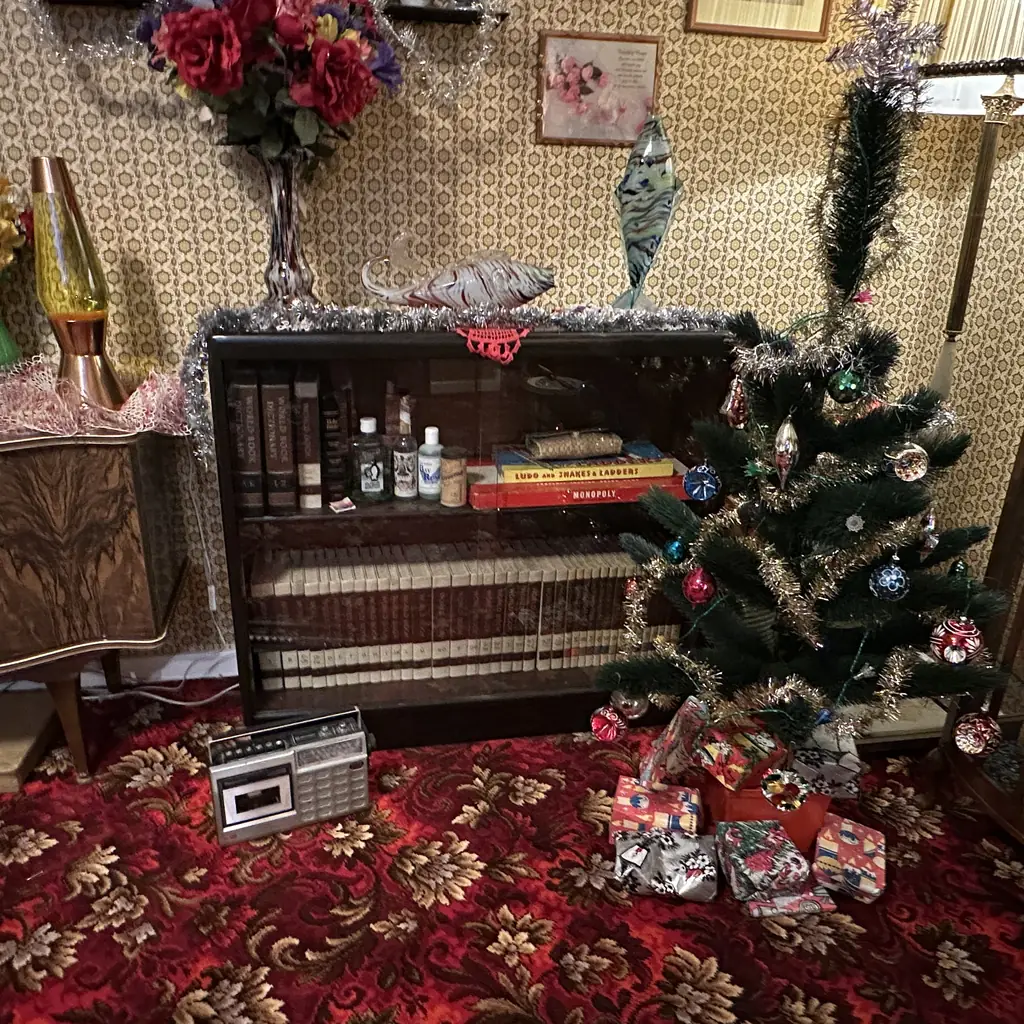
Christmas listening in the seventies and eighties mixed new pop records with much older voices and television reruns. These songs and specials show how several generations could end up sharing the same December soundtrack.
1. Rudolph the Red-Nosed Reindeer made stop-motion feel familiar
The Rankin/Bass Rudolph television special dates to 1964. Many later children met its small, dimensional characters through seasonal broadcasts rather than the original premiere.
The musical numbers gave the journey a succession of moods, from uncertainty to companionship and celebration. The characters looked like objects that could almost stand on a table at home.
That tangible quality helped distinguish the special from a drawn cartoon and made its return easy to anticipate.
2. A Charlie Brown Christmas made jazz part of the season
A Charlie Brown Christmas first appeared in 1965 with music by Vince Guaraldi. The score placed jazz beside a story about children, holiday expectations and a very small tree.
The sound was neither a conventional cartoon march nor a continuous run of Christmas standards. Quiet piano passages allowed the special’s uncertainty to remain audible.
A later-generation viewer could come to associate that reflective sound with December without knowing anything about jazz records.
3. How the Grinch Stole Christmas! gave the villain a musical portrait
Chuck Jones directed the 1966 animated How the Grinch Stole Christmas! Boris Karloff supplied the narration, while Thurl Ravenscroft performed the distinctive singing voice.
The difference is easy to miss when the sounds have belonged to one remembered program for years. The music gives the character comic scale without making the story’s change of heart disappear.
The special’s older date also explains why parents and children could recognize exactly the same performance.
4. Frosty the Snowman joined an older song to a new character story
Frosty the Snowman arrived as a Rankin/Bass television special in 1969. The animated story gave the familiar snowman a personality, companions and a problem that depended on winter weather.
Music helped keep a potentially worrying story light enough for family viewing. The snowman’s cheerful presence could feel reassuring even as the temperature became important.
Children watching in the seventies or eighties were continuing a tradition that had begun just before those decades.
5. Santa Claus Is Comin’ to Town supplied an origin story
Rankin/Bass created Santa Claus Is Comin’ to Town in 1970. Fred Astaire narrated, and Mickey Rooney voiced the young Kris Kringle.
The special approached familiar holiday details as questions with a story behind them. Its musical presentation made those explanations feel like part of a journey rather than a list of facts.
For a young viewer, the appeal could lie as much in the small towns and unusual characters as in Santa himself.
6. Emmet Otter’s Jug-Band Christmas kept the scale small
Emmet Otter’s Jug-Band Christmas was made in 1977 with music by Paul Williams. Henson’s archive identifies its first airing that year on Canada’s CBC, before its later American audiences.
The story centers on a mother and son with limited means, so the music grows from recognizable hopes rather than an extravagant holiday spectacle. A talent contest gives the songs a reason to matter.
The modest setting is part of the special’s particular emotional appeal.
7. John Denver and the Muppets made a television gathering
John Denver and the Muppets: A Christmas Together aired in 1979. The Henson archive records the holiday album, Los Angeles taping and mixture of familiar carols with Denver’s own songs.
The special allowed silliness and a more reflective mood to occupy the same room. A human singer and a crowd of puppets could take turns without needing identical styles.
That mixture made the program feel like a gathering rather than a formal concert.
8. Christmas Eve on Sesame Street put friendship beside the songs
Christmas Eve on Sesame Street dates to 1978. Sesame Workshop highlights the story in which Bert and Ernie each give up a treasured possession to buy a present for the other.
The familiar neighborhood gave the holiday ideas an everyday setting. Music and comedy could sit beside a small, understandable act of generosity.
For viewers already watching Sesame Street, the special extended a known place into a different time of day and year.
9. A Muppet Family Christmas brought several television worlds together
A Muppet Family Christmas aired in 1987. Henson’s archive describes characters from The Muppet Show, Sesame Street and Fraggle Rock gathering at Fozzie’s mother’s home.
The crowded house gave the musical numbers a social setting. Characters could interrupt, help or worry about one another while the holiday preparations continued around them.
The attraction was not simply another performance of familiar songs, but the pleasure of seeing separate television favorites share the same space. That familiarity with different casts also shaped the pull of other television themes.
10. White Christmas — Bing Crosby
Bing Crosby’s White Christmas recording dates to 1942, long before the childhood years considered here. Its continued familiarity shows how holiday listening can carry an older voice into a later household.
The unhurried performance leaves plenty of room around the melody. A radio, record player or television showing could make the song part of a room without turning it into the main event.
The memory may therefore involve an ordinary December afternoon as readily as a celebration.
11. The Christmas Song — Nat King Cole
The Library of Congress selected Nat King Cole’s 1961 recording of The Christmas Song for preservation. Cole had recorded the song earlier, so one familiar title can refer to several performances.
The lush, measured version gives small seasonal images room to register. Its mood depends on warmth and control rather than a forceful chorus.
Families listening in the seventies or eighties could be hearing a recording already established before those decades began. The same inheritance runs through many songs shared across generations.
12. Sleigh Ride — Johnny Mathis
Johnny Mathis included Sleigh Ride on his 1958 Merry Christmas album. His official discography preserves the track list, placing the song among both sacred and secular seasonal material.
The quick, crisp arrangement offers a change of pace from slower holiday ballads. The vocal can suggest movement and cold air even in a warm room.
An album like this could supply several different moods without anyone needing to change the record after every song.
13. It’s the Most Wonderful Time of the Year — Andy Williams

Andy Williams’s familiar recording was originally released in 1963. Its expansive arrangement makes the season sound busy, sociable and already in progress.
The performance gathers energy through the sense of occasions arriving one after another. It can make an ordinary shopping or decorating session feel connected to a larger celebration.
For later children, the voice may have sounded like a permanent part of December rather than a record with a particular release year. A voice becoming attached to a routine is also part of remembering commercial jingles.
14. Rockin’ Around the Christmas Tree — Brenda Lee
Brenda Lee recorded and released Rockin’ Around the Christmas Tree in 1958, when she was thirteen. The familiar voice therefore belongs to a very young performer rather than an adult looking back.
The rhythmic swing gives the holiday party a lightness that differs from a large orchestral ballad. It can support movement without demanding a formal dance.
That lively character helped an older recording sit comfortably beside newer pop music in later family listening.
15. A Holly Jolly Christmas — Burl Ives
Burl Ives’s familiar recording of A Holly Jolly Christmas carries a 1964 recording copyright in Universal’s release credits. Its relaxed, good-natured delivery gives the song a conversational welcome.
The voice does not sound as though it is competing with the gathering around it. That makes the record easy to imagine playing while people arrive or decorations come out of a box.
It belongs to a gentler part of the seasonal soundtrack.
16. Feliz Navidad — José Feliciano
José Feliciano’s Feliz Navidad was originally released in 1970. Its official recording credits identify Feliciano as the singer, songwriter and guitarist, alongside the other musicians and arrangement work.
The repeated musical shape gives listeners several opportunities to enter. Spanish and English belong within the same festive performance rather than being presented as separate versions.
The record can connect a family’s own language memories with the broader holiday music heard around them. Simple ways into participation matter in school-dance and roller-rink music as well.
17. Step Into Christmas — Elton John
Elton John’s Step Into Christmas dates to 1973. The official archive preserves a television performance from that year, with his band and a percussion appearance by Bernie Taupin.
The recording brings a busy pop-band energy to holiday music. It feels closer to a party getting underway than to a quiet scene beside a fireplace.
That difference gave seventies listeners a newer seasonal sound without requiring them to discard the older records at home.
18. Wonderful Christmastime — Paul McCartney
Paul McCartney released Wonderful Christmastime in November 1979. His official discography places the recording alongside the sessions for McCartney II.
The electronic sound gives the record a distinct texture beside older orchestral Christmas music. Its repeating pattern can make the song feel like a small celebration continuing around the listener.
For a household entering the eighties, a new seasonal release could gradually become as familiar as the records a parent already owned.
19. Last Christmas — Wham!

Wham! released Last Christmas in 1984. George Michael’s recording places a story of disappointment inside an inviting seasonal pop arrangement.
That tension helps the song work for listeners whose holiday mood is not uncomplicated happiness. The tune remains bright enough for shared listening while the story points somewhere more personal.
The eighties production also gives the record a clear period identity without stopping it from joining much older songs on a December playlist. Mixing different emotions also gives several movie songs their lasting appeal.
20. Peace on Earth/Little Drummer Boy — Bing Crosby and David Bowie
Bing Crosby and David Bowie’s televised duet dates to 1977. The official performance credits preserve the pairing of two singers who represented very different parts of popular music.
Their voices do not need to become identical for the arrangement to work. The overlapping lines let contrast become part of the seasonal idea.
For a family watching together, the performance offered an unusually direct meeting between an older familiar voice and a contemporary star.
21. Jingle Bell Rock — Daryl Hall and John Oates
Daryl Hall and John Oates released their Jingle Bell Rock single in 1983. The official release includes separate versions featuring each singer, rather than only one lead performance.
That small choice gives a familiar holiday song two vocal perspectives inside the same record. The production also places an older tune within a recognizably eighties pop setting.
A younger household listener could therefore encounter the song through current performers as well as through a parent’s collection.
22. Christmas Wrapping — the Waitresses
The Waitresses’ Christmas Wrapping belongs to 1981. The Rock Hall preserves Chris Butler’s handwritten lyrics among the materials documenting the band.
The song approaches the season through a fast-moving account of everyday complications. Its busy rhythm and conversational delivery offer a different kind of recognition from a stately carol.
For listeners balancing plans, errands and a little disappointment, a holiday record could sound familiar because the situation felt untidy rather than ideal. These different moods make holiday music part of the wider story of the records heard around the house.
Sources and further reading
- rankinbass.com
- craftrecordings.com
- seussville.com
- rankinbass.com
- rankinbass.com
- abc.com
- henson.com
- henson.com
- henson.com
- sesameworkshop.org
- henson.com
- store.bingcrosby.com
- loc.gov
- johnnymathis.com
- youtube.com
- universalmusic.com
- youtube.com
- youtube.com
- eltonjohn.com
- paulmccartney.com
- sonymusic.com
- youtube.com
- music.apple.com
- youtube.com
- artsandculture.google.com